What Frequency Are Microwaves: Microwave Frequency Explained
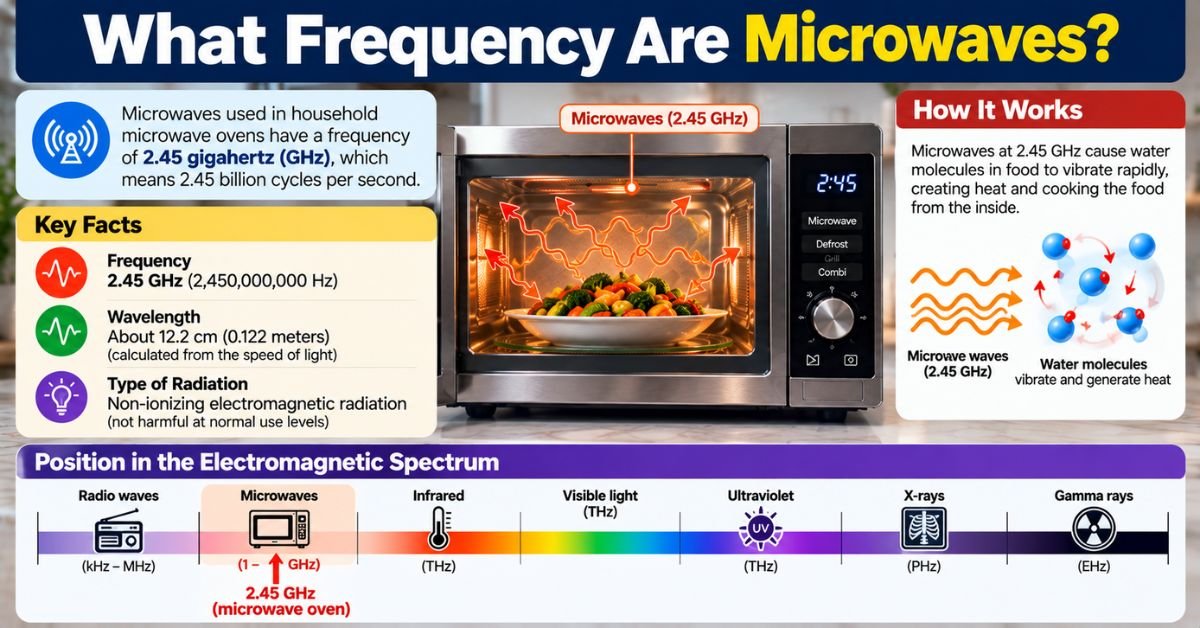
Most household microwaves use 2.45 gigahertz, while the microwave band spans roughly 300 megahertz to 300 gigahertz.
If you have ever wondered what frequency are microwaves, the answer depends on whether you mean microwave ovens or the wider radio spectrum. This guide explains the science in simple terms, compares common frequencies, and shares practical safety tips based on established physics and federal guidance.

What frequency are microwaves?
Microwaves are a type of electromagnetic radiation. They sit between radio waves and infrared radiation on the electromagnetic spectrum.
The microwave frequency range is usually defined as:
• 300 megahertz (MHz) to 300 gigahertz (GHz)
This range equals wavelengths from about 1 meter to 1 millimeter. A wave’s frequency tells us how many cycles pass a point each second. One gigahertz equals one billion cycles per second.
When people ask what frequency are microwaves, they often mean the frequency used by a kitchen microwave oven. Most household ovens in the United States use:
• 2.45 GHz
That frequency belongs to the industrial, scientific, and medical, or ISM, radio band. It is widely used because it can heat food well while allowing many devices to share the band under regulated conditions.
However, not every microwave device uses 2.45 GHz. Radar systems, satellites, wireless networks, medical equipment, and industrial heaters may use many other frequencies within the microwave range.

Source: ferriteinc.com
What frequency do microwave ovens use?
Most home microwave ovens use a frequency of 2.45 GHz. This means the electric and magnetic fields change direction about 2.45 billion times each second.
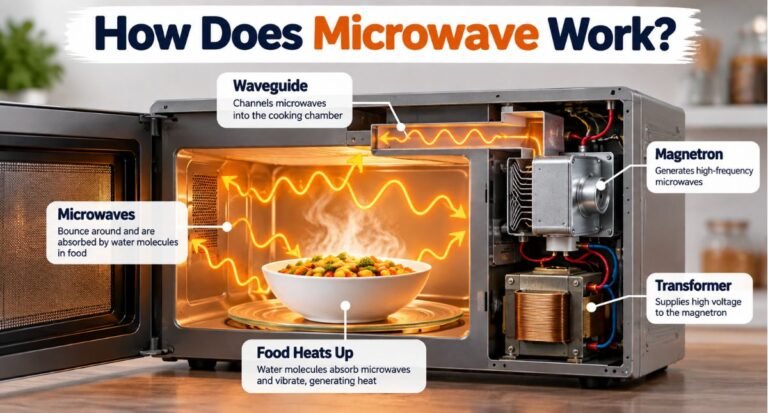
The oven creates this energy with a device called a magnetron. Newer models may use solid-state systems, but the goal is the same: produce microwave energy and guide it into the cooking chamber.
Inside the oven, the microwaves interact with molecules in food. Water molecules are polar, which means one side has a slight positive charge and the other side has a slight negative charge. The changing electric field makes these molecules move and rotate.
That motion creates heat. Still, it is not quite accurate to say that microwaves “match the exact resonant frequency of water.” Water molecules respond across a broad range of frequencies. The heating comes from energy loss as molecules move through the changing field.
Why 2.45 GHz is used
The 2.45 GHz frequency is useful for several reasons:
• It heats many foods that contain water, fats, and sugars.
• It works well with practical oven sizes.
• It is available for industrial, scientific, and medical use.
• It offers a balance between penetration and energy absorption.
• It fits established safety and manufacturing standards.
Microwave ovens do not heat food from the inside out. Energy enters the food from the surface and moves inward through a mix of microwave absorption and ordinary heat conduction. This is why thick foods can have cold centers.
A useful real-life tip is to let food rest after heating. That short pause allows heat to spread through the food and reduces cold spots.
Source: quora.com
How microwave frequency creates heat
To understand what frequency are microwaves, it helps to separate frequency from power. Frequency describes the type of wave. Power describes how much energy the oven delivers.
A 2.45 GHz microwave oven can heat food quickly because it sends a high amount of energy into a small space. The frequency helps determine how materials respond, but power controls how fast the temperature rises.
Microwave heating mainly involves dielectric loss. In simple terms, the electric field pushes charged or partly charged molecules. Those molecules cannot follow the field perfectly. Their movement lags behind the field, and that lost energy becomes heat.
The role of water
Water absorbs microwave energy, but food is not heated only because of its water content. Salts, fats, sugars, and other materials also affect how the energy moves and turns into heat.
This explains why two foods can heat at different speeds even when they seem equally moist. A bowl of soup may heat quickly, while a dry piece of bread may become hard before it feels hot.
Frozen food also behaves differently. Ice absorbs microwave energy less efficiently than liquid water at common oven frequencies. As ice melts, the liquid portions often begin heating more quickly.
Why food can heat unevenly
Uneven heating can happen because of:
• Food shape and thickness
• Moisture levels
• Uneven microwave patterns inside the oven
• Differences in ingredients
• The position of the food on the turntable
• The container’s shape and material
Turntables help move food through areas of stronger and weaker energy. Stirring, rotating, and spreading food into an even layer can improve heating.

Source: ferriteinc.com
Are all microwaves 2.45 GHz?
No. The answer to what frequency are microwaves changes by application. Household ovens commonly use 2.45 GHz, but other microwave systems use different frequencies.
Some commercial and industrial heating systems use 915 MHz. This frequency can penetrate certain materials more deeply than 2.45 GHz, so it may suit large food products, wood, rubber, textiles, and manufacturing processes.
Microwave communication systems also use many bands. Wi-Fi can use 2.4 GHz, 5 GHz, and 6 GHz bands, depending on the standard and device. Satellite links, radar, and cellular backhaul may operate at frequencies from a few gigahertz to several tens of gigahertz.
Here are common examples:
• Microwave ovens: Usually 2.45 GHz
• Industrial heating: Often 915 MHz or 2.45 GHz
• Wi-Fi: Commonly 2.4 GHz, 5 GHz, and 6 GHz
• Radar: Often several GHz to dozens of GHz
• Satellite communication: Frequently several GHz and above
• Radio astronomy: Many microwave bands, depending on the target
The terms may look similar, but a Wi-Fi signal and a microwave oven signal do not have the same power or purpose. Frequency alone does not tell you how dangerous, useful, or powerful a signal is.
Source: enwave.net
Microwave wavelength and frequency
Frequency and wavelength have an inverse relationship. As frequency rises, wavelength becomes shorter.
The basic relationship is:
wavelength = speed of light ÷ frequency
At 2.45 GHz, the wavelength in open air is about 12.2 centimeters, or 4.8 inches. Inside food, the effective wavelength is shorter because food changes how the energy travels.
This wavelength helps explain why microwave ovens have standing-wave patterns. Reflected waves can combine with incoming waves and create areas of stronger and weaker energy. The turntable helps reduce this uneven pattern.
The metal walls of the oven reflect microwave energy. They keep most of the energy inside the cooking chamber while allowing visible light from the oven lamp to behave differently.
The small holes in the oven door screen are also important. They are much smaller than the microwave wavelength, so they block most microwave energy while allowing you to see the food.
Source: enwave.net
What is the difference between microwaves and radio waves?
Microwaves are radio waves with higher frequencies and shorter wavelengths. They are not a completely separate form of energy from radio waves.
The radio-frequency spectrum includes a wide range of electromagnetic waves. Microwaves occupy the higher-frequency part of that spectrum, though exact boundary definitions can vary by technical field.
Both radio waves and microwaves can carry information. The main differences involve frequency, wavelength, antenna design, range, and how strongly the waves interact with the atmosphere and materials.
Microwaves are useful for:
• Wireless communication
• Radar and weather tracking
• Satellite links
• Navigation systems
• Medical treatment
• Industrial heating
• Cooking
Microwave signals can travel through air and space. Some frequencies pass through clouds and rain well, while higher frequencies may be more affected by weather. Engineers choose a frequency based on the job.

Source: differencebetween.net
Can microwaves harm people?
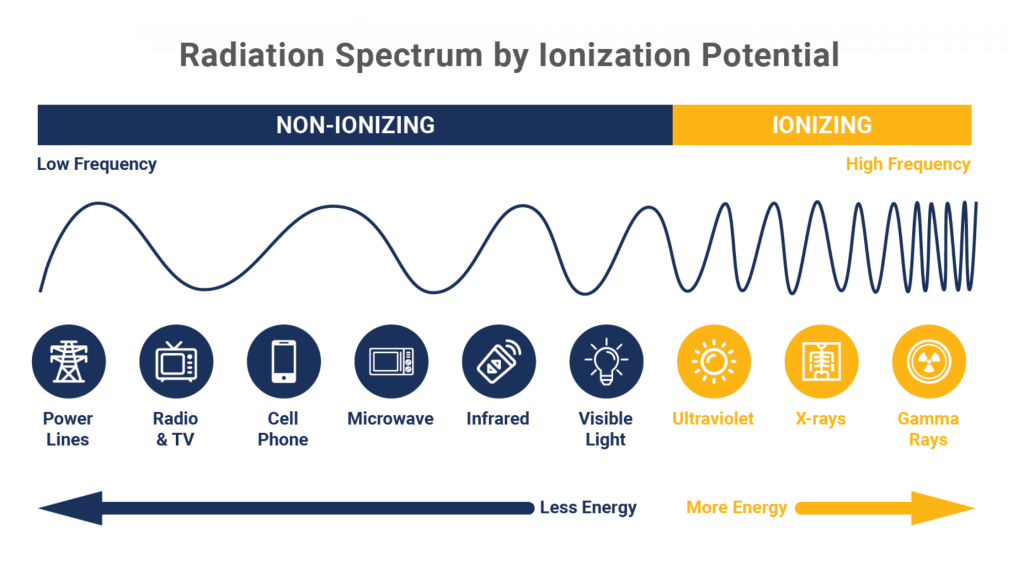
Microwave energy is nonionizing radiation. This means it does not have enough energy per photon to remove electrons from atoms in the way X-rays and gamma rays can.
At high power, microwave energy can heat body tissue. This is the main established hazard. Exposure limits are designed to keep energy absorption below levels known to cause harmful heating.
A properly operating microwave oven has shielding, door interlocks, and safety controls. The oven should stop producing microwave energy when the door opens.
Important safety habits include:
• Do not use an oven with a damaged door, hinge, seal, or latch.
• Never bypass the door safety switch.
• Follow the manufacturer’s instructions.
• Do not operate the oven while it is empty unless the manual allows it.
• Keep the door and seal clean.
• Avoid standing directly against the oven for long periods during operation.
A small amount of leakage can occur around any appliance, but compliant ovens are designed to stay within regulated limits. If the door is bent or does not close correctly, stop using the oven and arrange a professional inspection.
Microwaves do not make food radioactive. They also do not remain in food after the oven stops. The energy ends when the appliance stops generating the field.
Can microwave ovens cause fires?
Microwave ovens can cause fires when used incorrectly. The risk usually comes from the material being heated, excessive cooking time, or a damaged appliance rather than from the frequency itself.
Metal can reflect microwave energy. A small amount of metal may be safe in some cases, such as approved packaging or a rack designed for that oven. However, foil edges, twist ties, metal utensils, and decorative trim can create sparks.
Other risks include:
• Heating sealed containers
• Cooking eggs in their shells
• Overheating water
• Using non-microwave-safe plastic
• Running the oven empty
• Heating dry materials for too long
Superheated water can be especially surprising. Water may become hotter than its normal boiling point without forming visible bubbles. A sudden movement can make it boil rapidly and cause burns.
To reduce this risk, follow the appliance instructions and use care when removing heated liquids. Stirring after heating and allowing a short rest can help, but it does not remove every risk.
Microwave frequency and wireless technology
The question what frequency are microwaves also comes up in discussions about Wi-Fi and mobile devices. Wi-Fi signals are microwave-frequency radio waves, but they are not the same as the energy inside a cooking oven.
A microwave oven may deliver hundreds of watts of power into a small metal chamber. A Wi-Fi router usually sends a much lower power signal through an open area. Both may use frequencies near 2.4 GHz, but power, distance, exposure, and purpose are very different.
This is an important lesson: frequency by itself does not determine risk. A complete assessment also considers:
• Transmitted power
• Exposure time
• Distance from the source
• Antenna design
• Shielding
• Whether the energy is concentrated
• How the body absorbs the energy
Wireless devices are regulated under exposure standards. These standards use measurements such as specific absorption rate for some consumer devices and power density for other situations.
Common mistakes when using a microwave
Many microwave problems come from simple habits. The most common mistake is assuming that all food heats in the same way.
A thick, dense meal may need lower power and more time. A small amount of food may overheat quickly. Frozen food may need stirring and standing time because the ice and liquid parts absorb energy differently.
Practical tips include:
- Cover food with a vented microwave-safe lid to hold moisture.
- Stir food halfway through heating when possible.
- Rotate large or dense portions.
- Use lower power for delicate foods and thick meals.
- Let food stand before eating.
- Check the center, not only the surface.
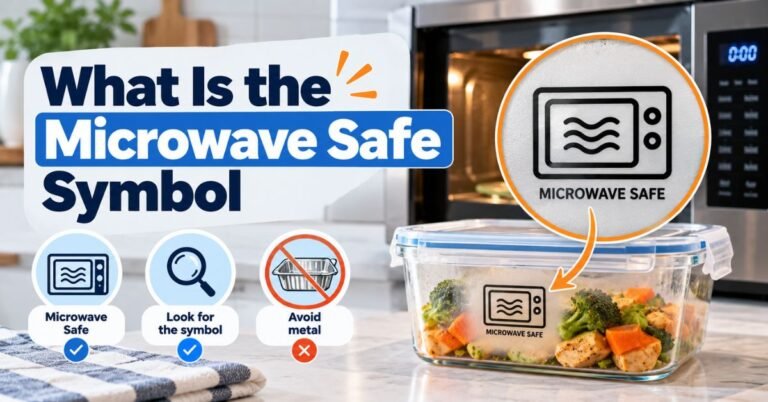
- Use containers labeled microwave-safe.
- Avoid sealed containers unless they are designed to vent.
One lesson worth remembering is that “hot outside” does not always mean “safe and hot inside.” This matters most with soups, leftovers, meat, baby food, and thick sauces.
How experts measure microwave exposure
Experts do not judge microwave safety by frequency alone. They measure how much energy reaches a person or object and how much energy the material absorbs.
For consumer devices, testing may involve standardized phantoms, probes, power measurements, and controlled distances. For microwave ovens, testing checks leakage around the door and cabinet while the appliance operates under set conditions.
Regulators set exposure limits with safety margins. These limits are based on research into tissue heating and other established biological effects.
There are also limits to what a simple home test can show. Smartphone apps, improvised sensors, and online claims may not measure microwave leakage accurately. A trained technician with calibrated equipment is better suited to inspect a questionable appliance.
If an oven has visible damage, unusual arcing, a door that does not close, or a broken latch, replacing or professionally repairing it is the sensible choice.
Frequently Asked Questions About What Frequency Are Microwaves
What frequency do household microwave ovens use?
Most household microwave ovens use 2.45 GHz, or 2,450 MHz. This frequency is part of the ISM band and is commonly used for food heating.
What is the full microwave frequency range?
Microwaves are commonly defined as electromagnetic waves from about 300 MHz to 300 GHz. Some technical fields use slightly different boundaries.
Why do microwave ovens use 2.45 GHz?
The 2.45 GHz band provides a practical balance of food absorption, oven size, equipment design, and regulatory access. It is effective for heating many foods without requiring an unusually large appliance.
Are microwaves the same as Wi-Fi?
Wi-Fi uses microwave-frequency radio waves, but Wi-Fi signals usually have far less power than a microwave oven. Similar frequency does not mean similar energy, exposure, or function.
Do microwaves make food radioactive?
No. Microwave energy is nonionizing and does not make food radioactive. The energy stops being produced when the oven turns off.
Can microwaves pass through the oven door?
The metal mesh in a microwave door blocks most microwave energy while allowing visible light through. A damaged or poorly closing door can reduce safety, so it should not be ignored.
Is 915 MHz also a microwave frequency?
Yes. 915 MHz falls within the commonly used microwave range and is used in some industrial heating systems. It can provide deeper penetration in certain materials than 2.45 GHz.
Conclusion
The answer to what frequency are microwaves depends on the device. Most kitchen microwave ovens use 2.45 GHz, while the broader microwave range extends from about 300 MHz to 300 GHz.
Frequency is only one part of the picture. Power, wavelength, material, exposure time, and shielding also determine how microwaves behave. Use microwave-safe containers, keep the door and seal in good condition, and follow the appliance manual.
With these basics, you can understand microwave heating without relying on confusing myths. Explore reliable science resources, check your appliance’s safety guidance, and share your questions or experiences in the comments.