How Does Microwave Work: Simple Science Explained
A microwave uses radio waves to make water molecules move, producing heat that warms food.
If you have ever watched leftovers heat in minutes, you may wonder how does microwave work without making the plate hot first. The answer involves electromagnetic waves, water molecules, a magnetron, and careful oven design. This guide explains the science in simple terms, shows why food heats unevenly, and shares safe tips for better results.
How does microwave work in simple terms?
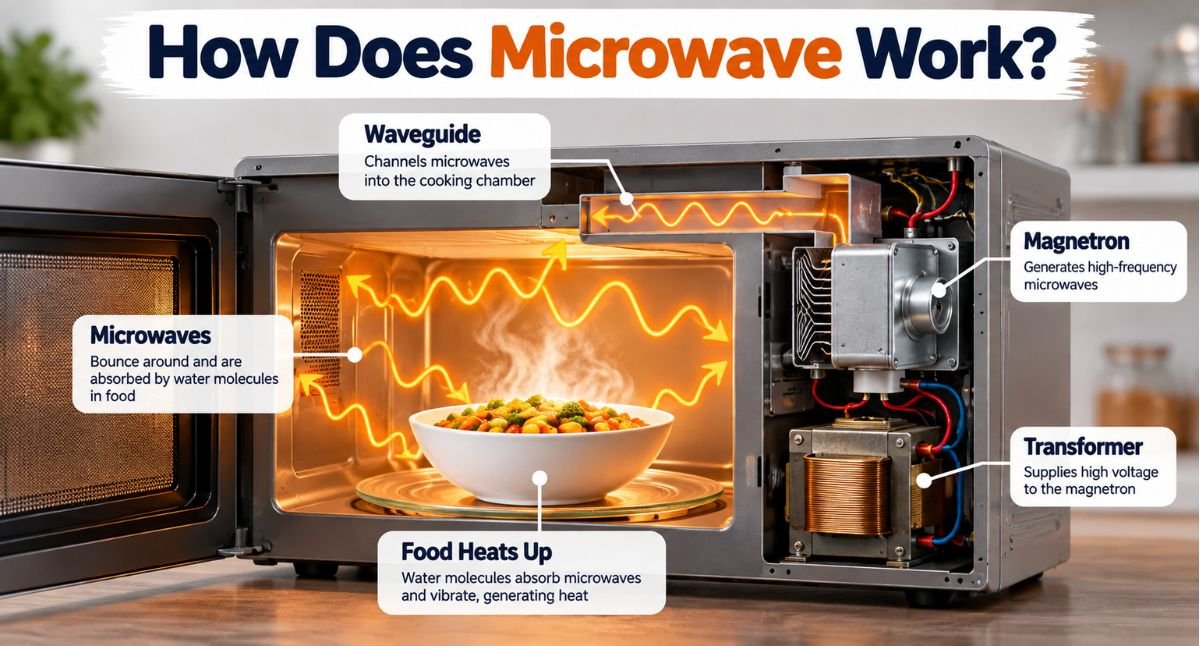
A microwave oven turns electrical energy into electromagnetic energy. That energy travels through the cooking chamber and reaches the food. It makes certain molecules move faster, and that movement creates heat.
The main target is water. Most foods contain some water, even if they look dry. Fats, sugars, and salts can also respond to microwave energy, but water usually plays the largest role in everyday cooking.
Here is the basic process:
- Electricity enters the microwave oven.
- A part called a magnetron changes electricity into microwave energy.
- A metal guide directs the energy into the cooking chamber.
- The waves bounce off the metal walls.
- Food absorbs some of that energy.
- Moving molecules create heat inside the food.
A microwave does not heat food in exactly the same way as a conventional oven. A regular oven heats air, cookware, and then the outside of the food. A microwave sends energy into the food itself, although the energy does not heat every part equally.
This is why a microwave can warm soup quickly while the bowl stays cooler at first. The bowl may become hot later because heat moves from the food into the bowl.

What are microwaves?
Microwaves are a type of electromagnetic radiation. They belong to the same broad family as radio waves, infrared light, visible light, and X-rays. The main difference between these types is their frequency and energy.
Household microwave ovens commonly use a frequency near 2.45 gigahertz. This frequency works well for heating food and can be produced with practical household equipment.
Microwaves are nonionizing radiation. This means they do not have enough energy to break chemical bonds in the way X-rays can. Their main effect in a microwave oven is molecular movement and heating.
You can think of microwave energy as an invisible rhythm. When the rhythm reaches water molecules, the molecules try to line up with the changing electric field. They rotate and move back and forth very rapidly. Their movement creates friction-like interactions with nearby molecules, which raises the temperature.
The word “friction” is useful for beginners, but it is not a perfect description. Heat comes from the way molecules absorb and release energy as they respond to the electromagnetic field.
How does microwave work inside the oven?
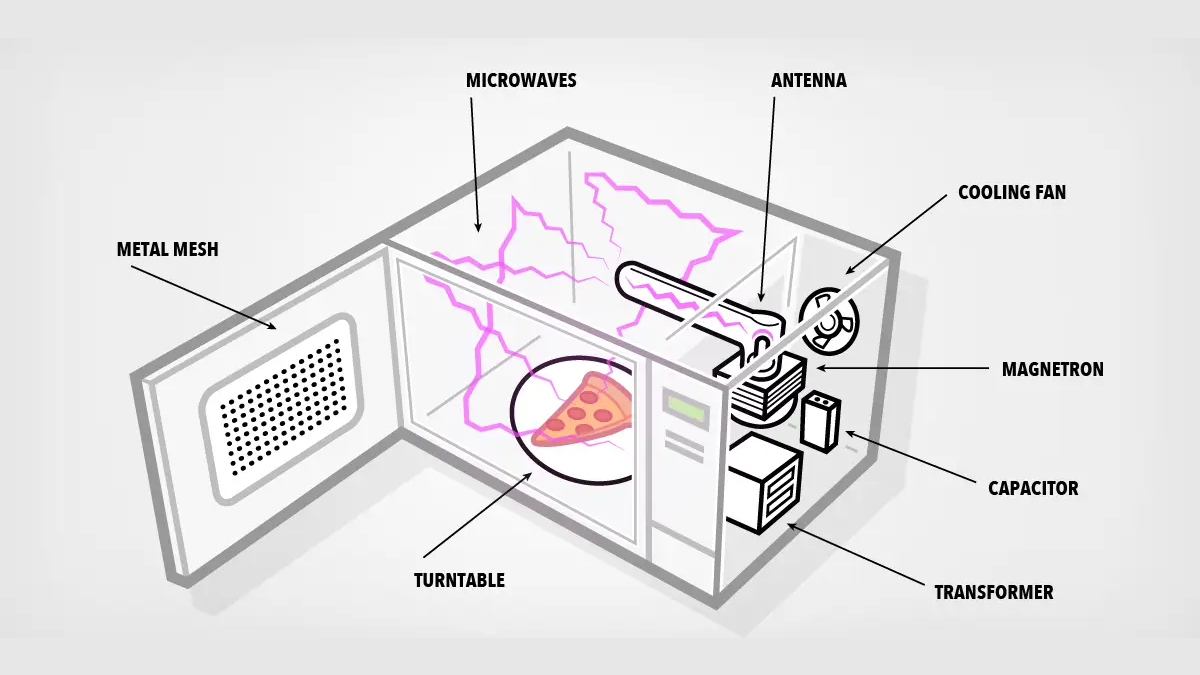
A microwave oven has several parts that work together. Each part has a specific job, much like instruments in a small orchestra.
The magnetron
The magnetron creates the microwave energy. It uses electricity, magnets, and a vacuum tube design to produce high-frequency electromagnetic waves.
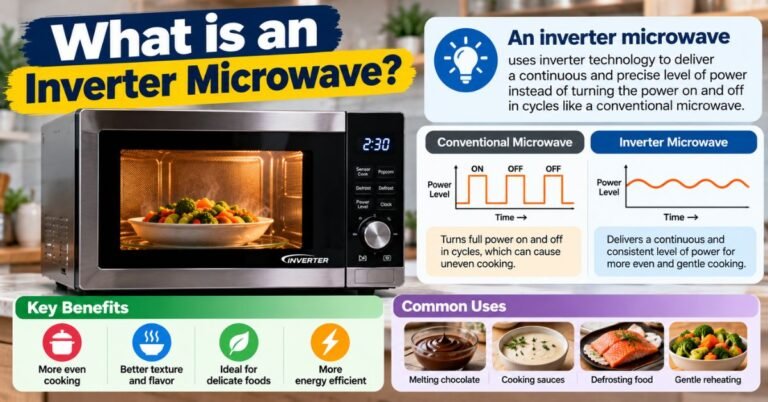
Modern microwave ovens may use inverter systems to control power more smoothly. Basic models often turn the magnetron on and off in cycles. For example, a setting marked 50% power may run at full power for part of the time and then pause.
The waveguide
the waveguide is a metal channel that carries microwave energy from the magnetron into the cooking chamber. It helps direct the waves toward the food.
The metal cooking chamber
The oven cavity has metal walls. These walls reflect microwaves rather than allowing them to pass through easily. The waves bounce around the chamber until food absorbs them.
The turntable
The turntable moves the food through areas with different microwave strengths. It does not make the energy perfectly even, but it helps reduce cold and hot spots.
The door screen
The door contains a metal mesh with very small holes. Visible light can pass through the holes, so you can see the food. Microwaves have much longer wavelengths, so they are reflected by the mesh.
The control system
The control panel sets cooking time, power, and special modes. Sensors in some models can detect steam, temperature changes, or food weight.

How do microwaves heat food?
The answer to how does microwave work depends on how molecules respond to an electric field.
Water molecules are polar. One side has a slight positive charge, and the other side has a slight negative charge. When the microwave field changes direction many millions of times per second, water molecules try to follow it.
That constant movement transfers energy through the food. The energy spreads as nearby molecules bump and interact. The result is heat.
Microwaves do not heat all foods at the same speed. Heating depends on several factors:
• Water content: Foods with more water often heat faster.
• Food shape: Thin parts may heat sooner than thick parts.
• Density: Dense foods may need more time for heat to move through them.
• Amount of food: A large portion needs more energy than a small portion.
• Starting temperature: Frozen food takes longer than refrigerated food.
• Container shape: A shallow dish often heats more evenly than a deep bowl.
• Cooking time: Longer heating allows more heat to move toward the center.
A potato offers a simple example. The outer part may become hot before the center. If you let the potato rest after cooking, heat moves inward. This resting period is part of the cooking process, not wasted time.

Why does microwave food heat unevenly?
Uneven heating is one of the most common limits of microwave cooking. The waves form patterns inside the oven. Some areas receive stronger energy, while other areas receive less.
The turntable helps, but it cannot remove every hot or cold spot. Food shape also matters. A thick block of food takes longer for heat to reach its center than a thin layer.
The best way to improve even heating is to change the food’s shape and position:
- Spread food in a ring around the plate.
- Keep the center area less full when possible.
- Place thicker pieces near the outside of the dish.
- Cover the food with a vented lid or damp paper towel.
- Stir food halfway through heating.
- Rotate the dish if the oven has no turntable.
- Let the food rest before eating.
Stirring is especially helpful for soup, sauces, rice, and pasta. It moves hot liquid into cooler areas and helps balance the temperature.
A practical kitchen lesson is easy to remember: do not judge the temperature of food by touching the top. A dish may feel warm while the center remains cold. Always stir, check the center, and allow resting time.

Does a microwave cook from the inside out?
People often say that a microwave cooks from the inside out. That statement is only partly true.
Microwaves can penetrate food to a limited depth. In many foods, the energy may reach about an inch or more, depending on the food’s composition and shape. After that, heat spreads through the food by normal conduction.
This means a microwave does not heat the deep center of every food directly. A thick roast, for example, may have a warm outer layer and a cool center. The center becomes warmer as heat moves inward during and after cooking.
Thin foods may heat more evenly because microwave energy can reach much of their structure. Thick foods need lower power, longer time, stirring, turning, or standing time.
A good rule is to use short cooking periods. Heat the food, stir or rotate it, and then continue. This approach gives heat more time to spread and lowers the chance of overheated edges.

Why do some foods spark in a microwave?
Sparking is called arcing. It happens when an electric field becomes concentrated around metal, sharp edges, or certain minerals.
Common causes include:
• Metal forks, spoons, or foil
• Gold or silver trim on dishes
• Crumpled foil with sharp points
• Twist ties with exposed metal
• Certain decorative ceramics
• Grapes or other foods placed close together
Small amounts of metal are not always dangerous in the same way. For example, some microwave instructions allow smooth foil to shield part of a food. However, foil must never touch the oven walls, and it should be used only when the manufacturer permits it.
If you see sparks, stop the oven at once. Remove the item after it cools, and check for damage. Do not continue using the oven if you see burn marks, damaged paint, a broken door, or unusual sounds.

Is microwave cooking safe?
A properly working microwave oven is considered safe when used as directed. The metal chamber and door are designed to contain the microwave energy. Safety regulations also limit the amount of leakage allowed from a working appliance.
Microwave energy does not make food radioactive. Once the oven stops, the microwave energy stops as well. Food does not store microwave radiation.
The main risks come from heat, steam, fire, and food safety mistakes. These risks are similar to those found with other cooking methods.
Follow these safety habits:
• Use containers labeled microwave-safe.
• Never run the oven empty.
• Do not heat sealed jars, closed bottles, or whole eggs in their shells.
• Pierce foods with skins, such as potatoes and sausages.
• Open covered food away from your face.
• Use oven mitts when removing hot containers.
• Stir food before tasting it.
• Follow safe cooking and storage times for meat, eggs, and leftovers.
Sealed containers can explode because steam expands inside them. Eggs in shells can also build pressure and burst. These accidents can cause burns and create a difficult cleanup.
Microwave heating may leave cold areas in food. For foods that can carry harmful bacteria, use a food thermometer when accuracy matters. Reheating should bring the food to a safe, steaming temperature throughout, not just on the surface.
Which containers are safe in a microwave?
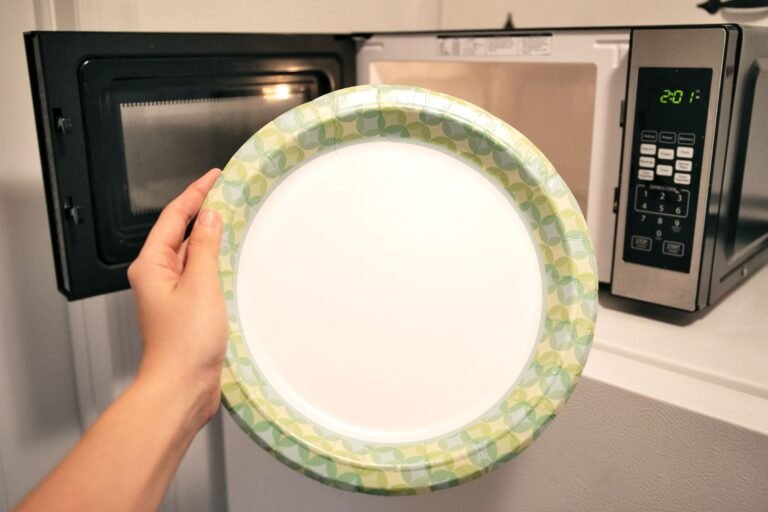
The safest choices are containers labeled for microwave use. Glass, ceramic, and some plastics can work well. The label matters because not every plastic behaves the same way when heated.
Avoid using:
• Takeout containers unless they are labeled microwave-safe
• Foam trays
• Single-use plastic tubs
• Plastic bags not made for microwave cooking
• Containers with metal decorations
• Crystal or unknown glass
Plastic can soften, warp, or release unwanted substances when it is not designed for heat. A container that looks fine after one use may still be unsuitable for repeated heating.
Do not heat food in a tightly closed container. Leave a vent or use a loose cover. This allows steam to escape and reduces pressure.
A useful habit is to transfer food from a disposable container to a glass or ceramic dish. This also makes it easier to stir the food and check its temperature.
How does microwave power affect cooking?
Microwave power controls how much energy the oven delivers over time. High power delivers energy quickly. Lower power gives heat more time to spread through the food.
Low power is useful for:
• Defrosting meat
• Softening butter
• Melting chocolate
• Heating delicate sauces
• Cooking thick foods more evenly
• Warming food without drying the edges
Many ovens do not reduce the strength of every microwave pulse. Instead, they switch full power on and off. An inverter microwave may provide a steadier lower output, depending on its design.
When melting chocolate, use short bursts of 10 to 20 seconds. Stir between each burst. Chocolate can keep its shape while becoming very hot, so visual clues may be misleading.
For leftovers, use medium power and stir once or twice. This often produces a better result than using full power for a shorter time.
How does microwave defrost food?
Microwave defrosting uses lower power or short heating cycles. The goal is to soften frozen food without cooking the edges.
Ice absorbs microwave energy differently from liquid water. As parts of the food thaw, those areas can begin heating faster. This is why the edges of frozen meat may start cooking while the center remains hard.
For better results:
- Remove food from foam trays and store packaging.
- Place it on a microwave-safe plate.
- Use the defrost setting or low power.
- Turn and separate pieces often.
- Cook the food immediately after thawing.
Do not refreeze raw meat that has been fully thawed in a microwave unless you cook it first. Some areas may have warmed enough for bacteria to multiply.
For the best texture, thaw food in the refrigerator when time allows. Microwave defrosting is useful, but it demands close attention.
How does microwave differ from a conventional oven?
A microwave oven and a conventional oven transfer heat in different ways.
A conventional oven heats air and surfaces. That heat slowly moves into the food. This process supports browning, crisping, and roasting.
A microwave sends electromagnetic energy into the food. It is fast and efficient for heating moist foods, but it usually does not create a crisp brown crust.
Here are the main differences:
• Speed: Microwaves are usually faster for small portions.
• Browning: Conventional ovens brown food more effectively.
• Moisture: Microwaves can dry food if it is overheated.
• Texture: Conventional ovens create crisp surfaces.
• Energy use: A microwave often uses less energy for small heating jobs because it does not warm a large oven cavity.
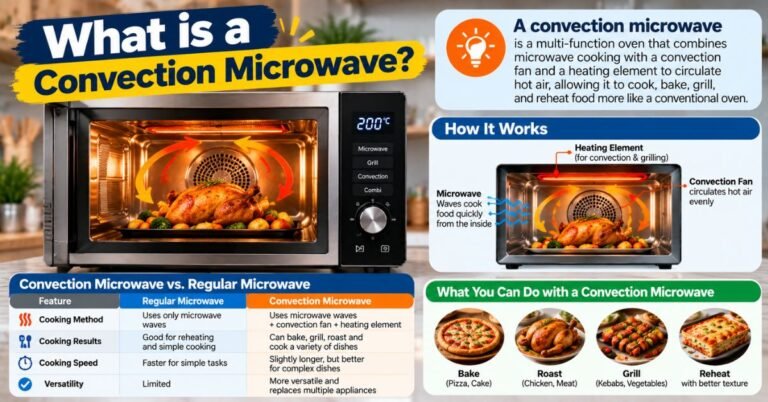
Some appliances combine microwave energy with convection or grill heat. These combination ovens can brown food while using microwave energy to shorten cooking time.
For crisp foods, use a toaster oven, skillet, air fryer, or combination setting when available. A microwave is best for speed, moisture, reheating, steaming, and softening.
Common microwave myths
Several myths make microwave cooking seem more mysterious than it is.
Microwaves cook food from the inside out
They can penetrate food, but only to a limited depth. Heat still moves toward the center through conduction.
Microwaved food is radioactive
It is not. Microwave energy stops when the oven stops.
A microwave destroys all nutrients
No cooking method protects every nutrient. Some nutrients decline with heat, while others become easier for the body to absorb. Because microwaves often cook food quickly with little water, they may preserve some nutrients well.
Standing beside a microwave is dangerous
A properly maintained oven is designed to contain microwave energy. Still, do not use an oven with a damaged door, loose hinges, or broken seals.
Metal always causes a fire
Metal can reflect microwave energy and may cause arcing, especially when it has sharp points or touches the oven wall. Some smooth metal parts may be allowed in specific designs, but follow the appliance manual.
Practical tips for better microwave results
Learning how does microwave work makes everyday cooking easier. You can use that knowledge to control moisture, shape, power, and time.
Try these simple methods:
• Use a round or shallow dish for more even heating.
• Arrange food in a ring instead of a tall pile.
• Add a small amount of water to rice or vegetables before reheating.
• Cover food loosely to hold moisture.
• Stir thick foods halfway through cooking.
• Use short bursts for delicate foods.
• Let food stand for one to five minutes when appropriate.
• Keep a food thermometer nearby for meat and other high-risk foods.
• Clean spills quickly so they do not absorb energy or create smoke.
• Read the manufacturer’s instructions for unusual containers and modes.
One mistake many people make is setting the highest power for every task. High power is useful, but it can create dry edges, tough meat, and overheated sauces. Lower power often gives better control.
Another mistake is trusting the timer alone. Cooking times vary by wattage, portion size, food shape, and starting temperature. Treat package instructions as a starting point, then adjust based on your oven.
Frequently Asked Questions About How Does Microwave Work
How does microwave work without heating the air first?
Microwaves send electromagnetic energy directly into food. The food absorbs the energy, while the air remains mostly unaffected.
Why does a microwave heat water so quickly?
Water molecules respond strongly to the changing electric field inside the oven. Their rapid movement transfers energy through the liquid and raises its temperature.
Can a microwave cook frozen food?
Yes, but frozen food may heat unevenly. Use lower power, turn or stir the food, and allow standing time so heat can spread.
Why does food keep cooking after the microwave stops?
Heat continues moving from warmer areas to cooler areas through conduction. This is why standing time helps finish cooking and reduce cold spots.
Can you use aluminum foil in a microwave?
Only if the manufacturer’s instructions allow it and the foil is smooth, small, and away from the walls. Crumpled foil or foil with sharp edges can spark.
Does a microwave destroy nutrients?
Microwave cooking does not automatically destroy all nutrients. Nutrient loss depends on the food, heat level, cooking time, and amount of water used.
Why should you cover food in a microwave?
A loose cover holds moisture and helps food heat more evenly. It also reduces splatters, but the cover must allow steam to escape.
Conclusion
A microwave oven uses electromagnetic waves to move molecules in food and create heat. The magnetron produces the waves, the metal cavity reflects them, and the food absorbs part of their energy. Water-rich foods heat quickly, while thick or dense foods need stirring, lower power, and resting time.
Use microwave-safe containers, avoid sealed foods and unsafe metal, and check the center of your meal before eating. Once you understand how does microwave work, you can reheat, defrost, and cook with far more control. Try these tips in your kitchen, explore your oven’s settings, and share your best microwave lesson or recipe in the comments.