What Is Over The Range Microwave: Complete Guide
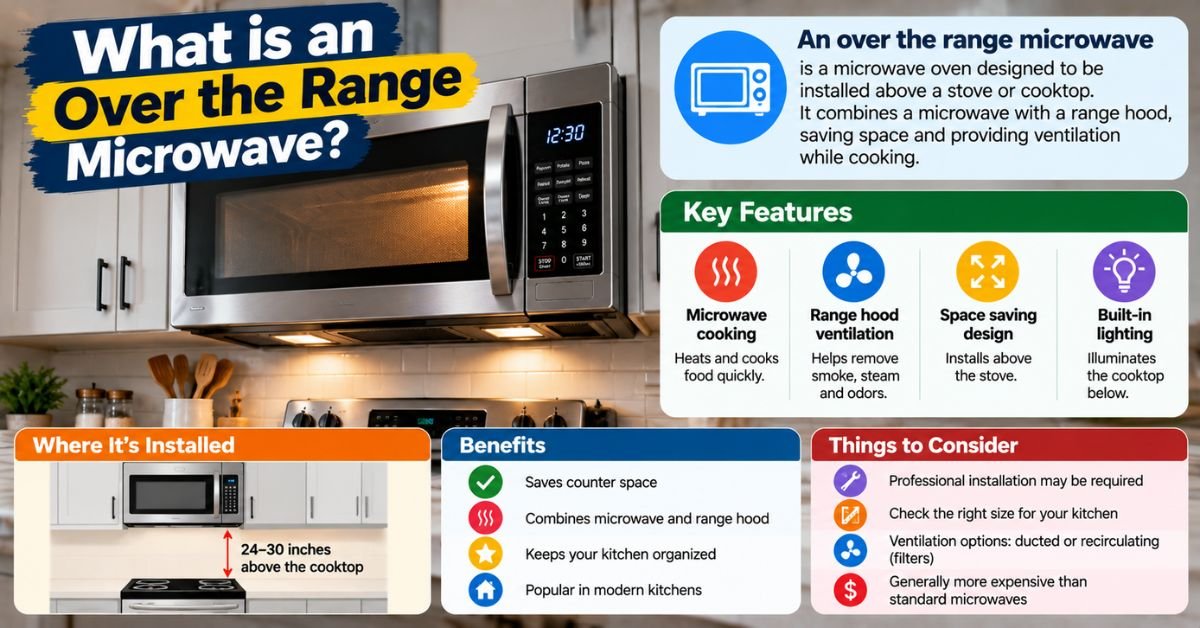
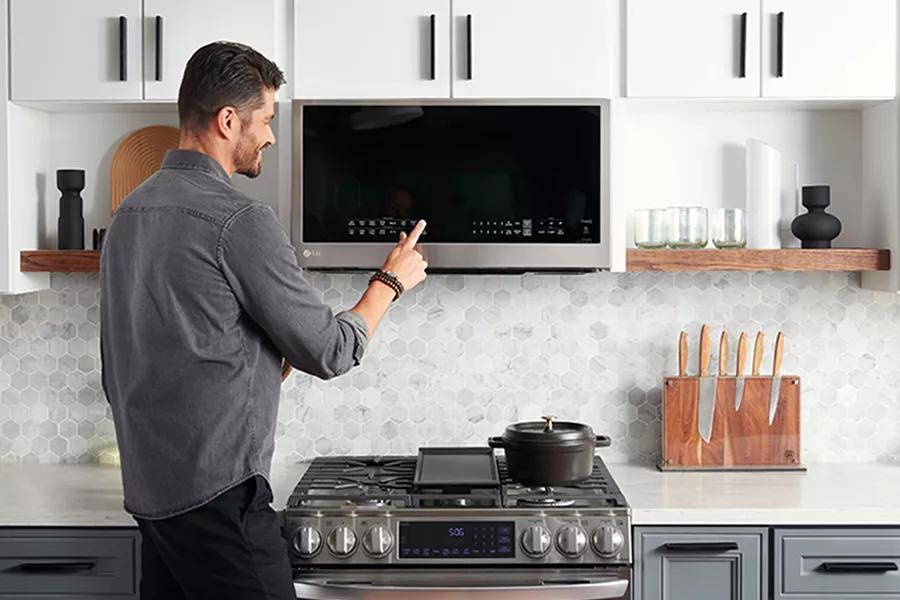
An over-the-range microwave combines a microwave oven, cooktop light, and ventilation fan above your stove.
If you are short on counter space, an over-the-range microwave can solve several kitchen problems at once. This guide explains how it works, where it fits, its benefits and limits, installation needs, safety tips, and how to choose the right model.
What Is an Over-the-Range Microwave?
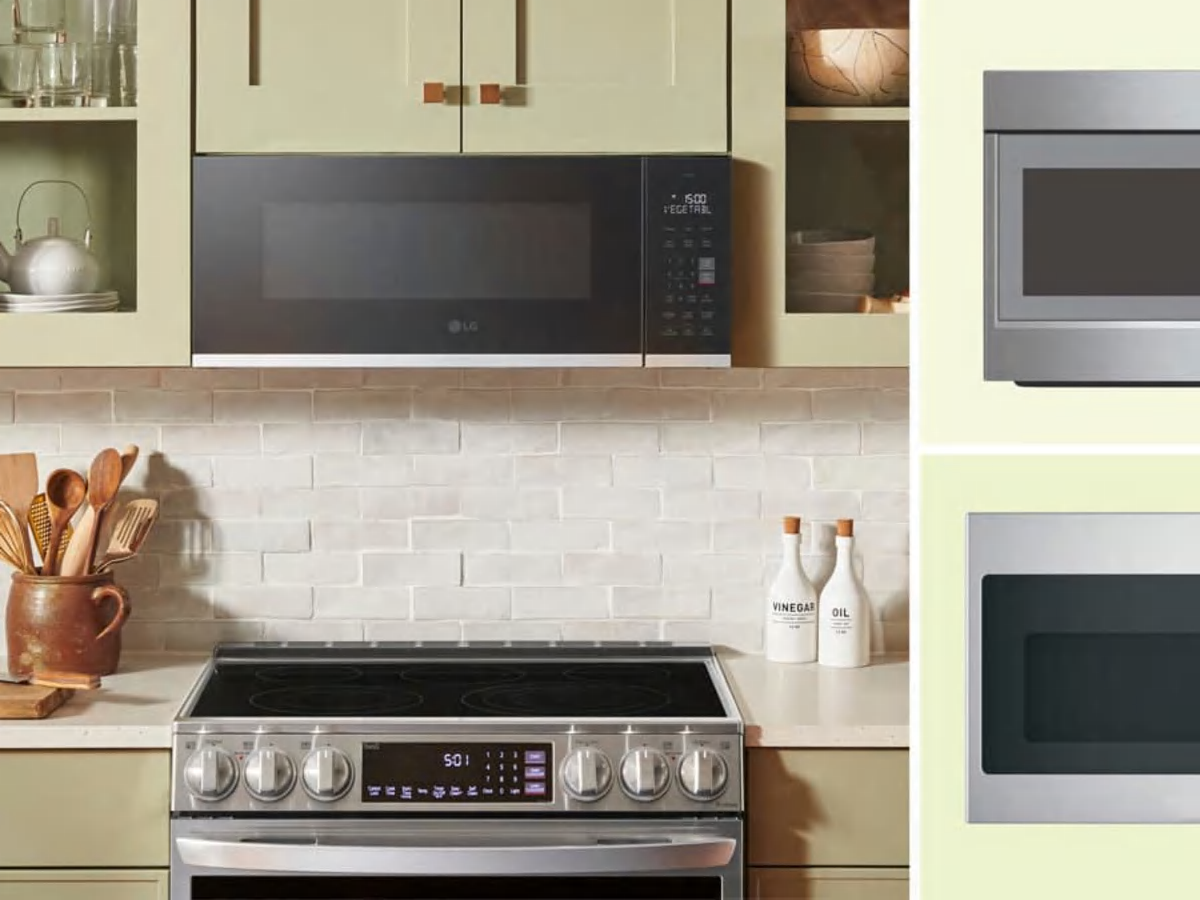
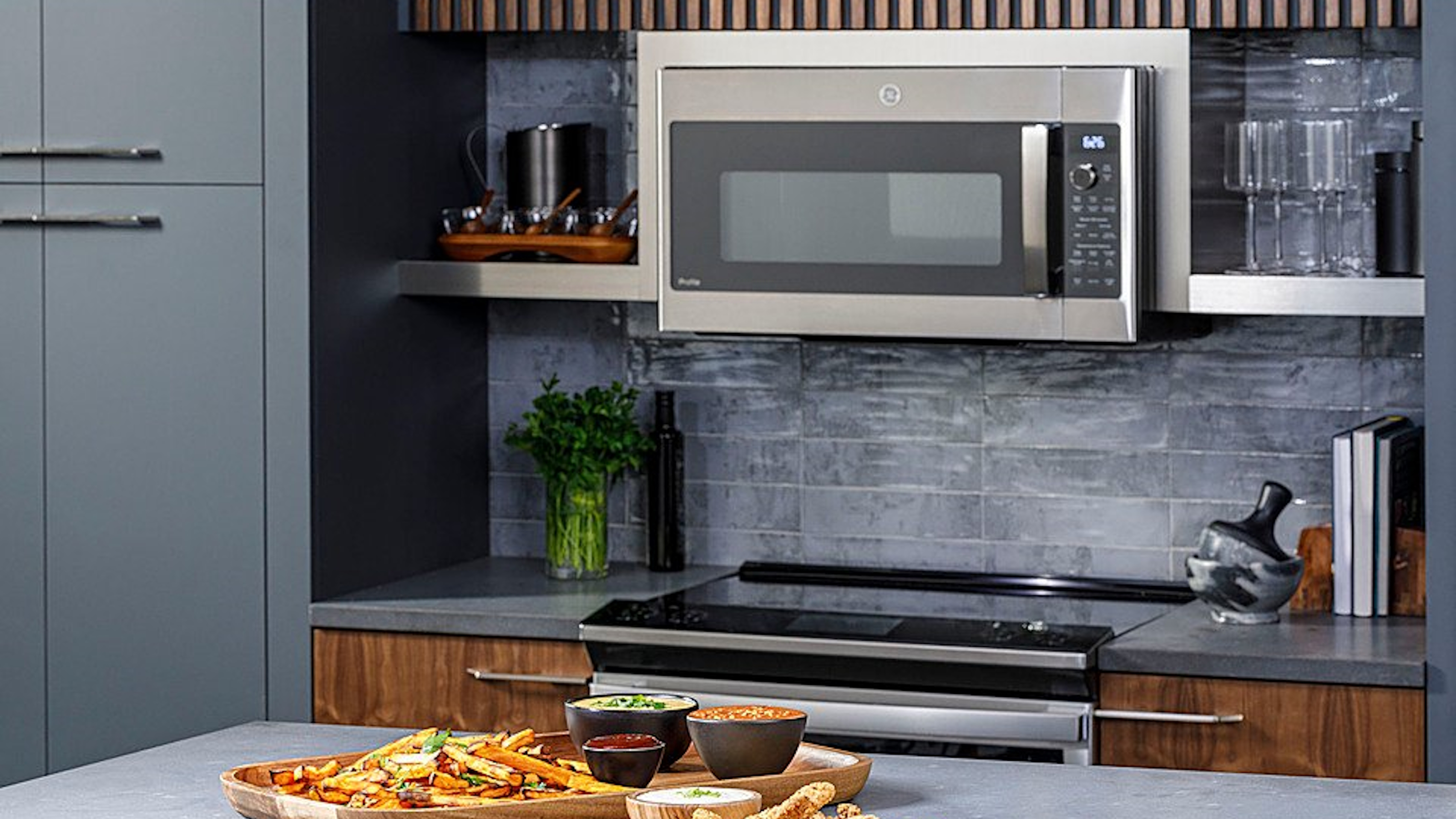
An over-the-range microwave, often called an OTR microwave, is a microwave oven installed above a kitchen range or cooktop. It usually replaces the range hood and sits between the upper cabinets.
Unlike a countertop microwave, it is mounted to the wall and connected to the kitchen’s electrical system. Most models include three main features:
• Microwave cooking for reheating, defrosting, and cooking food
• A ventilation fan that pulls steam, smoke, and cooking odors away from the stovetop
• A light that shines over the cooking surface
The microwave sits high enough to leave the counter clear. It also gives the kitchen a neat, built-in look. In many homes, an over-the-range microwave is chosen because it acts like three appliances in one.
The ventilation system may work in one of two ways. A ducted model sends air outdoors through a wall or roof vent. A recirculating model passes air through filters and releases it back into the kitchen.
How Does an Over-the-Range Microwave Work?
An over-the-range microwave uses electromagnetic energy to heat food. This energy makes water molecules inside the food move quickly, which creates heat. The process is fast, but it does not brown or crisp food as well as a traditional oven.
The fan works separately from the microwave cooking system. When you turn it on, it pulls air from above the cooktop through a grease filter. In a ducted setup, the air then travels outside. In a recirculating setup, a charcoal filter helps reduce odors before the air returns to the room.
The cooktop light is usually mounted on the bottom of the appliance. It may have a low setting for evening use and a brighter setting for cooking. Some models also include automatic fan controls, sensor cooking, convection cooking, or a grill element.
A typical over-the-range microwave includes:
• A control panel on the front or bottom edge
• A turntable or flat cooking surface
• Grease filters under the appliance
• Optional charcoal filters for recirculating ventilation
• A bottom light for the range
• A mounting bracket secured to the wall
The microwave function and ventilation function can often run at the same time. However, the user manual may limit certain combinations, especially when using high heat on the cooktop.
Source: lakesidedentistrymn.com
Over-the-Range Microwave vs. Countertop Microwave
The main difference is placement. A countertop microwave sits on a work surface, while an over-the-range microwave is mounted above the cooktop.
A countertop microwave is usually easier to install. You can plug it into a suitable outlet and move it when needed. An over-the-range microwave needs careful measuring, wall support, electrical access, and proper ventilation.
Here is a simple comparison:
| Feature | Over-the-range microwave | Countertop microwave |
|---|---|---|
| Placement | Above a range or cooktop | On a counter or shelf |
| Counter space | Saves counter space | Uses counter space |
| Ventilation | Usually included | Not included |
| Installation | More complex | Usually simple |
| Portability | Low | High |
| Cost | Often higher overall | Often lower |
| Access height | Higher | Easier for children and shorter users |
An over-the-range microwave makes sense in a small kitchen or a kitchen with limited counter space. A countertop model may be better for renters, older adults, children, or anyone who wants easy access.
One lesson from many kitchen layouts is that convenience depends on height. If the microwave is too high, lifting a hot bowl can be risky. Always think about who will use it before choosing the location.

Source: nytimes.com
Benefits of an Over-the-Range Microwave
An over-the-range microwave offers more than microwave cooking. Its biggest value comes from combining several kitchen functions in one space.
It saves counter space
The appliance uses wall space instead of valuable counter space. This can make food preparation easier, especially in a small apartment or compact kitchen.
It includes ventilation
The built-in fan helps remove steam, smoke, heat, and cooking smells. It cannot replace a powerful professional hood in every situation, but it is useful for everyday cooking.
It provides task lighting
The bottom light improves visibility over the range. This is helpful when reading a recipe, checking a simmering sauce, or cooking at night.
It creates a built-in appearance
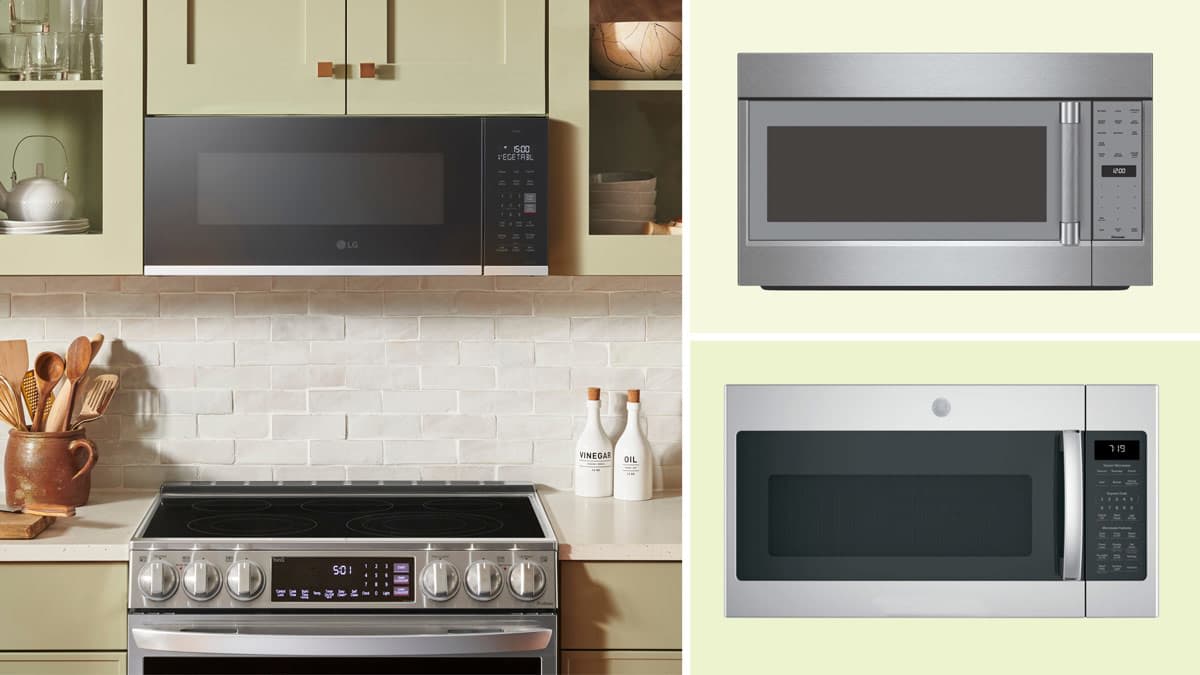
An over-the-range microwave can make a kitchen look more organized. Matching stainless steel, black, white, or custom finishes can help the appliance blend with the other appliances.
It can offer extra cooking features
Many models include features such as:
• Sensor cooking that detects moisture and adjusts cooking time
• Preset buttons for popcorn, potatoes, vegetables, and beverages
• Convection cooking for browning and roasting
• Rack systems for multi-level cooking
• Steam cooking settings
• Child lock controls
• Quiet ventilation modes
The exact performance varies by model. A microwave with many buttons is not always better. Choose features that match the way you cook.
Source: consumerreports.org
Limitations of an Over-the-Range Microwave
An over-the-range microwave is useful, but it is not ideal for every kitchen. Understanding its limits can prevent an expensive mistake.
The first concern is height. The bottom of the microwave may be too high for some users. Hot liquids can be difficult to remove safely, especially for children or people with limited reach.
The second concern is ventilation power. A built-in fan may reduce odors and light steam, but it may not remove all smoke from high-heat cooking. Deep frying, searing steak, and wok cooking can create more smoke than a basic system can handle.
Other limitations include:
• Installation may require a professional
• The appliance can be difficult to move later
• The microwave may block sight lines in a small kitchen
• Replacement can be harder if cabinet sizes change
• Recirculating fans do not remove moisture from the room
• The fan may be louder than a separate hood
• The appliance may not fit above every cooktop
A ducted over-the-range microwave usually provides better air removal than a recirculating model. Still, duct size, duct length, bends, and outdoor termination all affect performance.
Source: toptenreviews.com
Ducted and Recirculating Ventilation
The ventilation style is one of the most important choices when buying an over-the-range microwave.
Ducted ventilation
A ducted system sends air outside through a vent. It generally removes smoke, heat, grease, and moisture more effectively than a recirculating system.
Ducted installation may require:
• An exterior wall or roof opening
• Correct duct sizing
• A damper to prevent outside air from entering
• Proper sealing around the vent
• Permission from a landlord or building manager
Recirculating ventilation
A recirculating system filters the air and returns it to the kitchen. It is easier to install because it does not need an outdoor duct.
This setup depends on clean filters. Grease filters should be washed as directed by the manufacturer. Charcoal filters must usually be replaced at regular intervals because they lose their odor-absorbing ability.
A recirculating microwave does not truly remove heat or humidity. It only filters part of the air. If your cooking creates frequent smoke, a ducted system may be the better choice.
Source: consumerreports.org
How to Choose an Over-the-Range Microwave
Start by measuring the space. Measure the width between the cabinets, the available height, and the depth from the wall to the front of the cabinet. Also check the distance between the cooktop and the bottom of the microwave.
Most over-the-range microwaves are designed for a standard range width, but cabinet openings can vary. Never assume that a new model will fit because the old one did.
Consider these points:
• Width: Match the appliance to the range and cabinet opening
• Height: Make sure the controls and cooking area are easy to reach
• Capacity: Choose enough interior space for the dishes you use
• Wattage: Higher wattage often means faster cooking
• Ventilation: Select ducted or recirculating operation
• Fan speed: More speeds provide better control
• Filter access: Choose filters that are easy to remove and clean
• Noise: Look for a lower sound rating if the kitchen connects to living areas
• Controls: Pick clear buttons that are easy to read
• Safety: Look for a child lock and sturdy door operation
• Cooking modes: Decide whether you need convection or sensor cooking
A model with about 1.5 to 2.2 cubic feet of space suits many households. A larger family may prefer a wider interior, while a small kitchen may benefit from a compact design.
Before buying, read the installation guide. It will show required clearances, outlet placement, mounting height, duct options, and cabinet requirements.

Source: baillypaysageetjardin.com
Installation and Safety Requirements
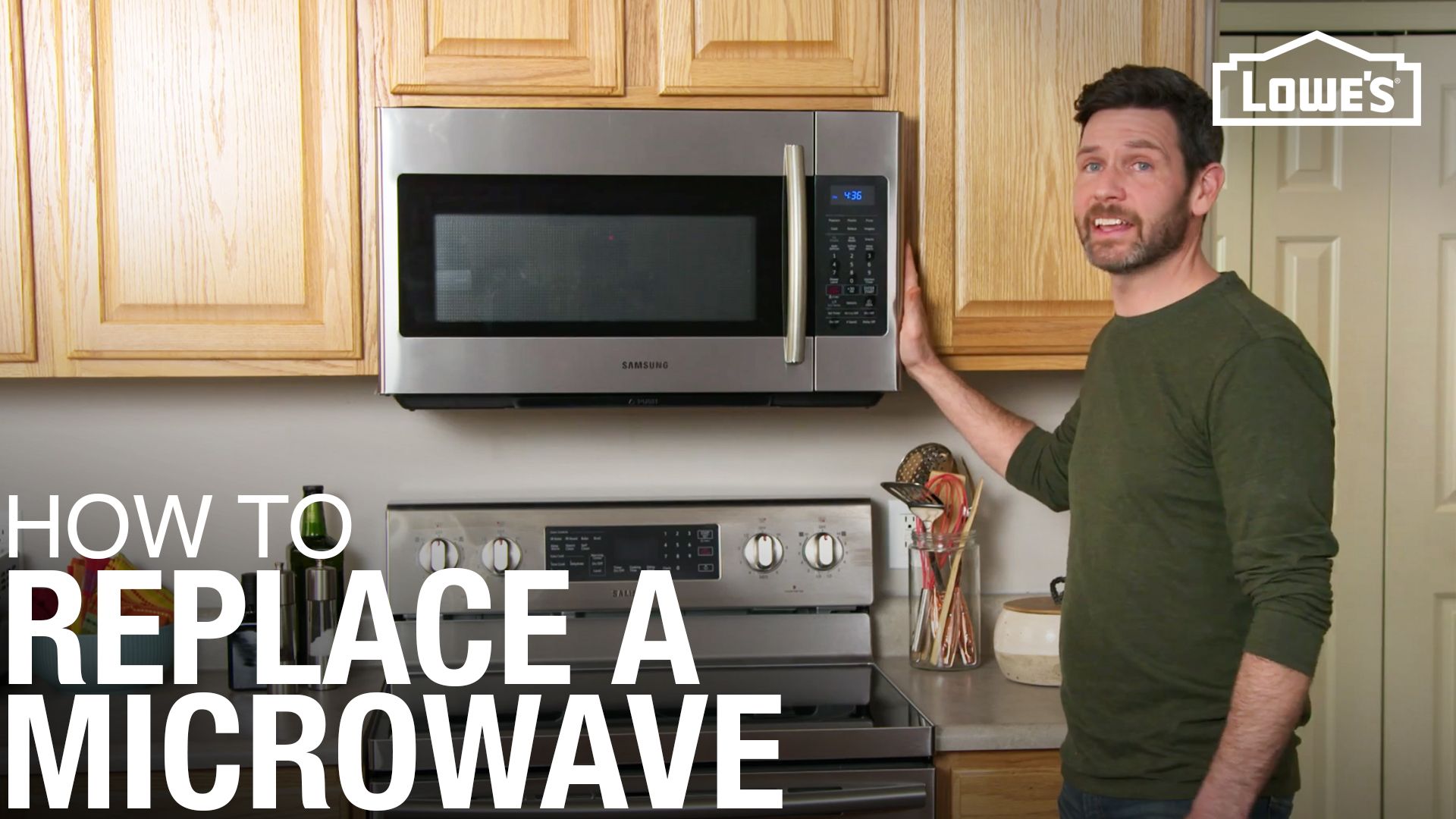
Installing an over-the-range microwave is more involved than placing a countertop model. The appliance must be supported by a wall bracket and, in many cases, the cabinet above it.
The wall must be strong enough to support the unit. Installers often locate wall studs before securing the mounting bracket. If the wall is tiled, the installer must also use the correct anchors and account for the tile thickness.
Electrical safety matters as well. Use a grounded outlet that meets local electrical rules. Avoid extension cords unless the manufacturer and local code specifically allow them.
The range below also affects safety. Keep the required clearance between the cooktop and the microwave. The correct distance depends on the product instructions, local building rules, and the type of cooking surface.
Important safety habits include:
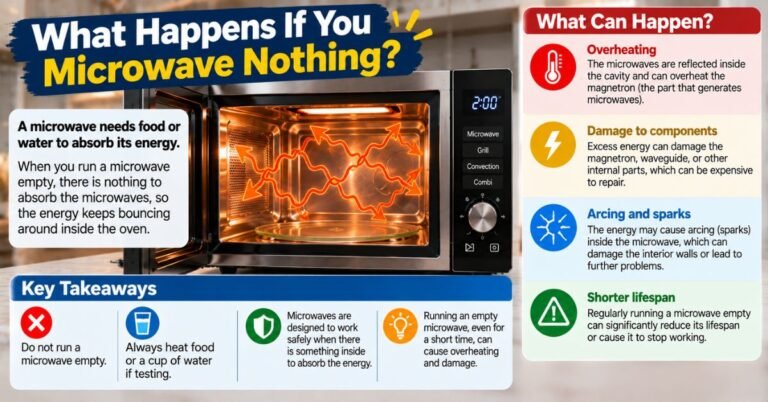
• Do not operate the microwave empty
• Never heat sealed containers without venting them
• Do not use metal unless the manual says it is safe
• Clean grease filters often
• Keep the door seal clean and undamaged
• Do not block the ventilation openings
• Supervise children when they use the appliance
• Have damaged doors, cords, or seals inspected
The U.S. Food and Drug Administration states that microwave ovens that meet applicable safety standards and are used correctly are safe. The key phrase is “used correctly.” Never bypass safety switches or continue using a microwave with a damaged door.

Source: sharpusa.com
Cleaning and Maintenance Tips
Regular cleaning helps an over-the-range microwave work well and reduces grease buildup. Wipe spills soon after they happen because dried food is harder to remove.
For routine care:
- Unplug the appliance when cleaning areas near electrical parts.
- Wipe the interior with a soft cloth and mild cleaner.
- Clean the turntable and support ring as directed.
- Wash metal grease filters with warm, soapy water.
- Replace charcoal filters according to the manual.
- Wipe the control panel with a slightly damp cloth.
- Clean the door seal without using rough tools.
Do not spray cleaner directly into vents, openings, or control panels. Avoid abrasive pads because they can damage the finish and make future cleaning harder.
A simple monthly filter check can prevent many problems. If the fan becomes weak, the kitchen smells greasy, or the filter looks coated, it is time to clean or replace it.
Common Mistakes to Avoid
One common mistake is choosing the appliance by appearance alone. A microwave may look perfect in a showroom but fail to fit the cabinet opening or provide enough clearance above the range.
Another mistake is ignoring the vent path. A long duct with several sharp bends can reduce airflow. If outdoor venting is important to you, plan the duct route before ordering the appliance.
Other mistakes include:
• Installing the microwave too high
• Forgetting to check the electrical outlet location
• Assuming a recirculating fan removes humidity
• Failing to replace a charcoal filter
• Ignoring the user manual
• Using the wrong mounting hardware
• Placing heavy cookware on the open door
• Blocking the bottom air intake with objects
A practical tip is to mark the microwave’s bottom edge on the wall with painter’s tape before installation. Stand in front of the range and pretend to remove a hot dish. This quick test can reveal height problems before any holes are drilled.
Is an Over-the-Range Microwave Right for You?
An over-the-range microwave may be a good choice if you want to save counter space, need basic ventilation, and can safely reach the controls and cooking cavity.
It may not be the best choice if:
• You already have a strong, separate range hood
• The microwave would be too high
• You cook with heavy smoke or high heat
• You rent and cannot modify the wall or cabinets
• You need a portable appliance
• A household member has limited reach or mobility
For some homes, a microwave drawer or countertop model offers better access. For others, an over-the-range microwave is the most efficient use of space.
Think of the decision as a balance. You gain counter space and built-in ventilation, but you give up some flexibility and easy access.
Frequently Asked Questions About What Is an Over-the-Range Microwave
What is an over-the-range microwave used for?
An over-the-range microwave is used to cook or reheat food while also providing a cooktop light and ventilation fan. It is installed above a range or cooktop to save counter space.
Does an over-the-range microwave replace a range hood?
It can replace a basic range hood because it includes a ventilation fan. However, its airflow may be weaker than a dedicated hood, especially during high-heat cooking.
Do all over-the-range microwaves vent outside?
No. Some models vent through a duct to the outdoors, while others use filters and recirculate air into the kitchen. Check the installation guide before buying.
How high should an over-the-range microwave be?
The required height depends on the appliance instructions, cooktop type, and local code. Follow the manufacturer’s clearance rules rather than using a general measurement.
Can an over-the-range microwave be installed over a gas stove?
Yes, many models can be installed over a gas range, but the required clearance and ventilation rules must be followed. A qualified installer should check the setup before installation.
Is an over-the-range microwave hard to install?
Installation can be difficult because the unit is heavy and must be secured correctly. Electrical work, wall support, ducting, and cabinet clearance may require a qualified professional.
How long does an over-the-range microwave last?
Many models last about 7 to 10 years, but lifespan depends on use, cleaning, ventilation, and maintenance. A damaged door, weak heating, or failing control panel may signal the need for replacement.
Conclusion
An over-the-range microwave is a wall-mounted appliance that combines microwave cooking, cooktop lighting, and ventilation. It can save counter space and create a clean kitchen layout, but height, airflow, installation, and access deserve careful attention.
Measure your space, choose the right venting type, follow the installation guide, and consider how every person in your home will use the appliance. With the right model and proper care, an over-the-range microwave can be a practical part of your kitchen for years. Explore reliable models, compare installation requirements, and choose the option that best fits your cooking habits.