What Is A Convection Microwave: How It Works And Uses
A convection microwave combines microwave speed with hot-air circulation for faster, more even cooking and browning.
If you have ever wished your microwave could bake a crisp pizza, roast vegetables, or brown chicken, a convection microwave may be the answer. It works like a standard microwave, a small convection oven, or both at once. In this guide, you will learn how a convection microwave works, what it can cook, its benefits and limits, and how to use one safely.
What Is a Convection Microwave?
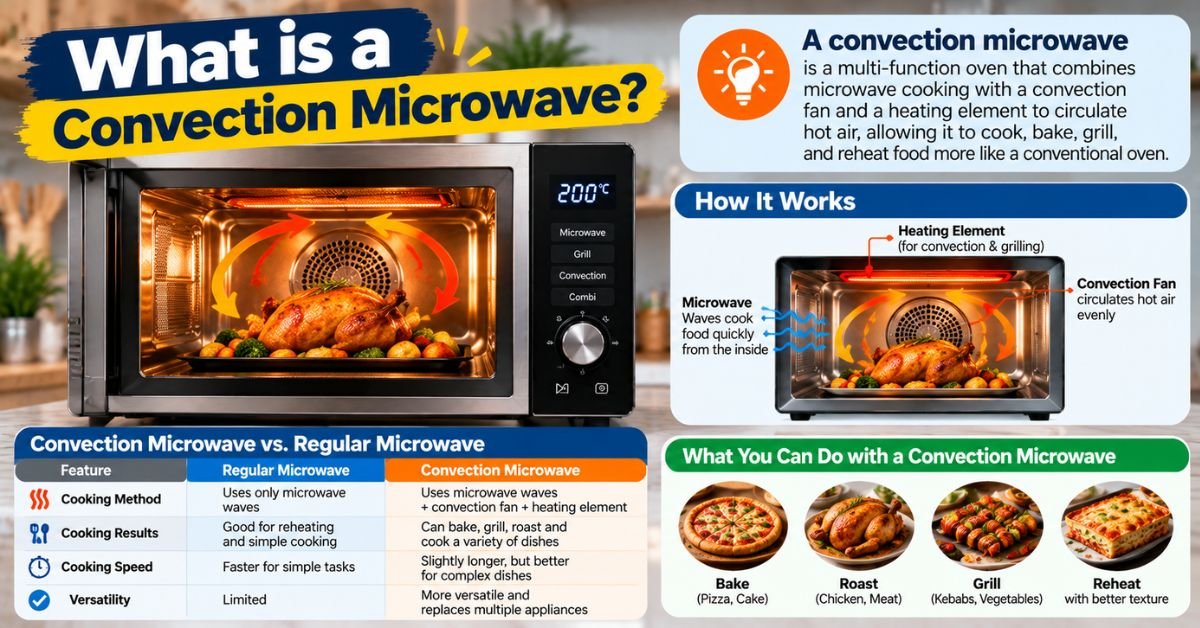
A convection microwave is a kitchen appliance that combines microwave energy with oven-style hot-air circulation. It uses microwaves to heat food quickly and a heating element with a fan to bake, roast, and brown food.
A standard microwave mainly heats water molecules inside food. This makes it fast, but it does not usually create a crisp crust. A convection microwave adds dry, moving heat, much like a traditional oven.
Think of it as three appliances in one:
• A microwave for fast reheating and cooking
• A convection oven for baking and roasting
• A combination oven for speed plus browning
The exact features vary by model. Some units offer separate microwave and convection settings. Others let you use both functions at the same time.
In simple terms, a convection microwave gives you the quick cooking power of a microwave and the browning power of an oven.

How Does a Convection Microwave Work?
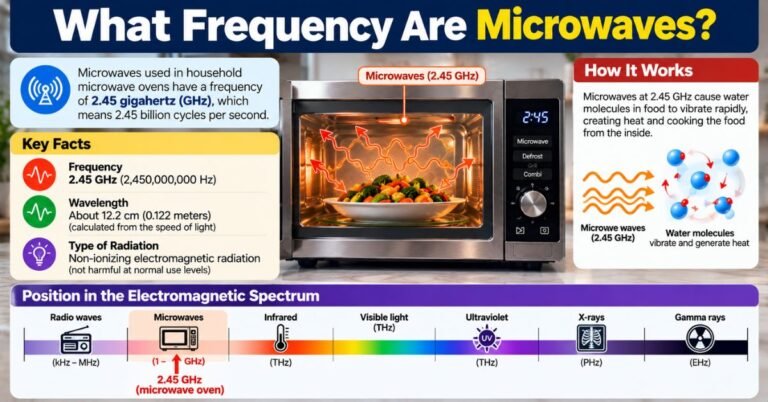
A convection microwave uses two main cooking systems. The microwave system creates electromagnetic energy that excites water molecules in food. This produces heat throughout the food instead of heating only the outer surface.
The convection system uses a heating element to warm the air inside the oven. A built-in fan moves this hot air around the food. This airflow helps cook food more evenly and forms a browned, crisp surface.
Microwave cooking
Microwave energy is useful for foods that need speed. It can heat leftovers, steam vegetables, cook potatoes, and soften frozen foods.
Microwaves do not always heat food evenly. Thick foods may have hot and cold spots. For this reason, stirring, turning, and resting food are important.
Convection cooking
Convection cooking uses dry heat. It works well for foods that need a firm texture or golden color.
You can use the convection setting for:
• Cookies
• Cakes
• Biscuits
• Roasted vegetables
• Chicken
• Fish
• Frozen fries
• Pizza
• Casseroles
Combination cooking
Combination mode uses microwave energy and convection heat together. The microwave cooks the inside quickly, while hot air browns the outside.
For example, a chicken breast may cook faster in combination mode than in a traditional oven. The hot air still helps the surface look and feel roasted.
What Can You Cook in a Convection Microwave?
A convection microwave can handle many everyday meals. It is especially useful in small kitchens, apartments, offices, and homes where a full-size oven is not always needed.
You can use it to:
• Reheat leftovers without making them soggy
• Bake small batches of cookies or muffins
• Roast chicken pieces
• Cook fish fillets
• Brown macaroni and cheese
• Crisp frozen snacks
• Roast potatoes and vegetables
• Bake a small pizza
• Toast nuts and breadcrumbs
• Cook casseroles and pasta dishes
The oven size matters. A compact model may not fit a large casserole dish or a whole chicken. Always check the interior width, height, and turntable size before buying cookware.
In my experience, the biggest surprise for new users is how well a convection microwave handles small baked dishes. A small batch of biscuits or roasted vegetables often cooks faster than expected. The main mistake is treating it exactly like a large oven.
Small ovens heat quickly. They can also brown food fast. Start checking your food several minutes before the recipe’s suggested time.
Convection Microwave vs. Regular Microwave
A regular microwave is designed mainly for quick heating and cooking. A convection microwave adds oven functions, so it can do more than heat food.
| Feature | Regular microwave | Convection microwave |
|---|---|---|
| Reheating | Yes | Yes |
| Microwave cooking | Yes | Yes |
| Baking | No or limited | Yes |
| Roasting | No | Yes |
| Browning | Limited | Yes |
| Crisping | Limited | Better |
| Cooking speed | Very fast | Fast |
| Appliance size | Often smaller | Often larger |
| Price | Usually lower | Usually higher |
A regular microwave may be the better choice if you only reheat food or make simple meals. A convection microwave is more useful if you want one appliance that can replace some oven tasks.
The cooking results are not always identical to those from a full-size oven. A full oven offers more space and steadier heat for large meals. A convection microwave is best for small portions and quick cooking.
Convection Microwave vs. Air Fryer
A convection microwave and an air fryer both use moving hot air. However, they are built for different tasks.
An air fryer usually has a small cooking chamber and strong airflow. It is excellent for crisping foods such as fries, wings, vegetables, and breaded snacks.
A convection microwave offers more cooking options. It can microwave, bake, roast, and combine microwave power with hot air. Some models also include broiling or grilling functions.
Choose a convection microwave when you want:
• One appliance for many cooking methods
• Fast reheating
• Baking and roasting
• A larger cooking space than many air fryers
• Less countertop clutter
Choose an air fryer when your main goal is fast, dry, crisp cooking. Some households use both because each appliance has a clear strength.
Benefits of a Convection Microwave
A convection microwave can save time, space, and energy in the right kitchen. Its main value comes from combining cooking methods in one appliance.
Faster cooking
Microwave energy heats food quickly. Convection heat then helps cook and brown the outside. This combination can shorten cooking time for many small meals.
Cooking time depends on the food, its size, its starting temperature, and the appliance’s power. A thick frozen dish will still need more time than a small portion of vegetables.
Better browning
Microwaves alone do not create the same dry surface as an oven. The convection fan and heating element help produce browning, crisp edges, and a firmer texture.
This makes the appliance more useful for pizza, baked pasta, roasted vegetables, and pastries.
Saves kitchen space
A convection microwave can reduce the need for a separate countertop oven. This is helpful in small apartments, dorms, RVs, and office kitchens.
Uses one appliance for several tasks
You can reheat soup in the morning, bake a small dish at lunch, and roast vegetables at dinner. That flexibility is one of the strongest reasons people buy a convection microwave.
May use less energy for small meals
Heating a small convection microwave may require less energy than heating a large oven. The actual savings depend on the model, cooking time, food quantity, and energy source.
A large oven can still be more efficient for a big meal because it can cook many servings at once.
Limitations of a Convection Microwave
A convection microwave is versatile, but it is not perfect. Knowing its limits helps you avoid disappointment.
Smaller cooking space
Most convection microwaves have less interior space than full-size ovens. Large baking sheets, tall roasting pans, and wide dishes may not fit.
Learning curve
Each model has different controls, power levels, rack positions, and temperature settings. You may need a few cooking attempts to learn how quickly it heats and browns.
Higher price
A convection microwave usually costs more than a basic microwave. You are paying for the heating element, fan, sensors, and extra controls.
Uneven results with crowded food
Hot air needs room to move. If you pack the oven too tightly, food may cook unevenly or brown poorly.
Not always ideal for large meals
A full-size oven is better for holiday meals, large roasts, multiple trays, and family-sized baking. A convection microwave works best for small or medium portions.
Some foods still need careful handling
Microwave cooking can create hot spots. Dense foods may look done on the outside while remaining cool inside. Use a food thermometer for meat, poultry, fish, and leftovers.
The safe internal temperature for poultry is 165°F. Ground meats should reach 160°F, while whole cuts of beef, pork, lamb, and veal should reach 145°F with a rest period. Check current food safety guidance because cooking advice can change.
How to Use a Convection Microwave
The best results come from choosing the right cooking mode. Do not use microwave power, convection heat, and combination mode as if they were the same.
Use microwave mode for speed
Choose microwave mode for:
• Reheating soups and stews
• Cooking vegetables
• Heating drinks
• Softening butter
• Cooking potatoes
• Defrosting food
Cover food loosely to reduce splatter. Stir food halfway through when possible.
Use convection mode for browning
Choose convection mode for:
• Cakes
• Cookies
• Biscuits
• Roasted meat
• Pizza
• Crispy vegetables
• Frozen snacks
Preheat the appliance if the manual or recipe recommends it. Preheating gives baked food a more stable start.
Use combination mode for speed and texture
Combination mode can work well for:
• Chicken pieces
• Baked pasta
• Casseroles
• Meatloaf
• Stuffed vegetables
• Frozen meals that need browning
Use a lower microwave power if your manual suggests it. High microwave power may dry the edges before the center is ready.
A simple cooking process
- Read the appliance manual before using a new cooking mode.
- Select the correct setting.
- Use cookware approved for that setting.
- Leave space around the food for airflow.
- Turn or stir food when needed.
- Check the internal temperature of meat and poultry.
- Let the food rest before serving.
- Clean spills once the oven cools.
One lesson I learned early is that recipe times are only starting points. A convection microwave can cook faster than the recipe expects, especially with small portions. Watch the food, check it early, and adjust the time in short steps.
Safe Cookware for a Convection Microwave
Cookware safety depends on the selected mode. A dish that is safe for microwave cooking may not be safe for convection cooking.
For microwave mode, use containers labeled microwave-safe. Glass, ceramic, and some plastics may be suitable. Avoid metal unless the manufacturer specifically allows it.
For convection mode, use oven-safe cookware. Metal baking pans may be allowed during convection-only cooking, but the manual must confirm this.
Avoid:
• Plastic containers that are not heat-safe
• Foam trays
• Containers with hidden metal trim
• Damaged glass
• Twist ties with metal
• Aluminum foil used against the manual’s instructions
Never place metal in combination mode unless the manufacturer clearly states that it is safe. Metal can reflect microwave energy and may cause sparks or damage.
Use oven mitts when removing dishes. The turntable, rack, cookware, and food can become very hot during convection cooking.
Cleaning and Maintenance Tips
Food residue can affect cooking performance and create smoke or odors. Clean the interior after spills, especially after cooking greasy foods.
Follow these simple steps:
• Unplug the appliance before deep cleaning.
• Wipe the interior with a soft, damp cloth.
• Use mild soap for stubborn residue.
• Remove and wash the turntable as directed.
• Keep the air vents clear.
• Do not use harsh scouring pads.
• Never spray cleaner into vents or control panels.
Do not operate the appliance when the door seal is damaged. A damaged door, hinge, or latch needs professional inspection or repair.
Regular cleaning also makes it easier to notice problems. If you see repeated sparking, unusual smoke, a burning smell, or poor heating, stop using the appliance and check the manual or contact a qualified service provider.
How to Choose the Best Convection Microwave
Think about your cooking habits before comparing brands. The most expensive model is not always the best fit.
Look for these features:
• Interior capacity that fits your usual dishes
• Clear temperature controls
• Easy-to-clean surfaces
• A removable turntable
• A useful convection temperature range
• Multiple power levels
• Combination cooking controls
• A rack designed for the model
• A reliable door and handle
• Automatic cooking sensors
• A child lock if needed
• Good warranty coverage
Measure your counter space first. Leave room around the unit as required by the manual. A convection microwave needs proper ventilation to operate safely.
Also consider the controls. Touch panels can look modern, but simple dials may be easier to use. If you often cook at night, a bright display and quiet buttons may matter more than extra programs.
Common Mistakes to Avoid
Many poor results come from small mistakes rather than a weak appliance.
Avoid these common errors:
• Using microwave-only cookware during high-heat convection cooking
• Blocking the fan or ventilation openings
• Crowding food in one thick layer
• Skipping the preheat step for baked foods
• Using the same time as a full-size oven
• Forgetting to turn or stir food
• Cooking meat without checking its internal temperature
• Leaving food unattended during the first few uses
• Using metal in a setting that does not allow it
• Ignoring the user manual
Another common mistake is expecting combination mode to make every food crisp. Moist foods may still need a short convection finish. For the best texture, use combination cooking for speed, then convection heat for extra browning when the appliance allows it.
Frequently Asked Questions About What Is a Convection Microwave
Is a convection microwave the same as an oven?
No. A convection microwave can perform some oven tasks, but it is usually smaller than a full-size oven. It also uses microwave energy, which gives it extra speed and flexibility.
Can you bake in a convection microwave?
Yes, you can bake in a convection microwave when convection mode is available. Use oven-safe cookware, follow the manual, and check baked food early because the smaller chamber may heat quickly.
Can you use metal in a convection microwave?
It depends on the cooking mode and the model. Metal may be safe during convection-only cooking in some units, but it can be unsafe during microwave or combination cooking, so always follow the manufacturer’s instructions.
Is a convection microwave better than a regular microwave?
It is better when you want baking, roasting, browning, and microwave cooking in one appliance. A regular microwave may be a better value if you only need to reheat food and cook simple meals.
Does a convection microwave cook faster than a regular oven?
Often, yes, especially for small meals. Microwave energy speeds up cooking, while convection heat helps brown the surface, but cooking time still depends on the food and the appliance.
Can you air fry in a convection microwave?
Some models include an air-fry setting or a special crisping tray. A standard convection mode can brown food, but it may not produce the same strong airflow as a dedicated air fryer.
Is a convection microwave worth buying?
It can be worth buying if you have limited space or want one appliance for reheating, baking, and roasting. Compare the capacity, controls, safety features, and price with your actual cooking needs.
Conclusion
A convection microwave combines microwave energy with hot-air circulation. It can reheat food quickly, bake small dishes, roast meat, and brown foods better than a standard microwave. Its main strengths are speed, flexibility, and space savings.
It also has limits. The cooking area is smaller than a full oven, cookware rules matter, and recipes may need shorter cooking times. Use the right mode, leave room for airflow, check food temperatures, and learn your model through small test meals.
If you are considering one, measure your space and list the meals you cook most often. Then compare models based on capacity, safety, controls, and cooking functions. Explore more kitchen guides, and share your favorite convection microwave tips in the comments.