Can Microwave Kill Bacteria: What Really Works
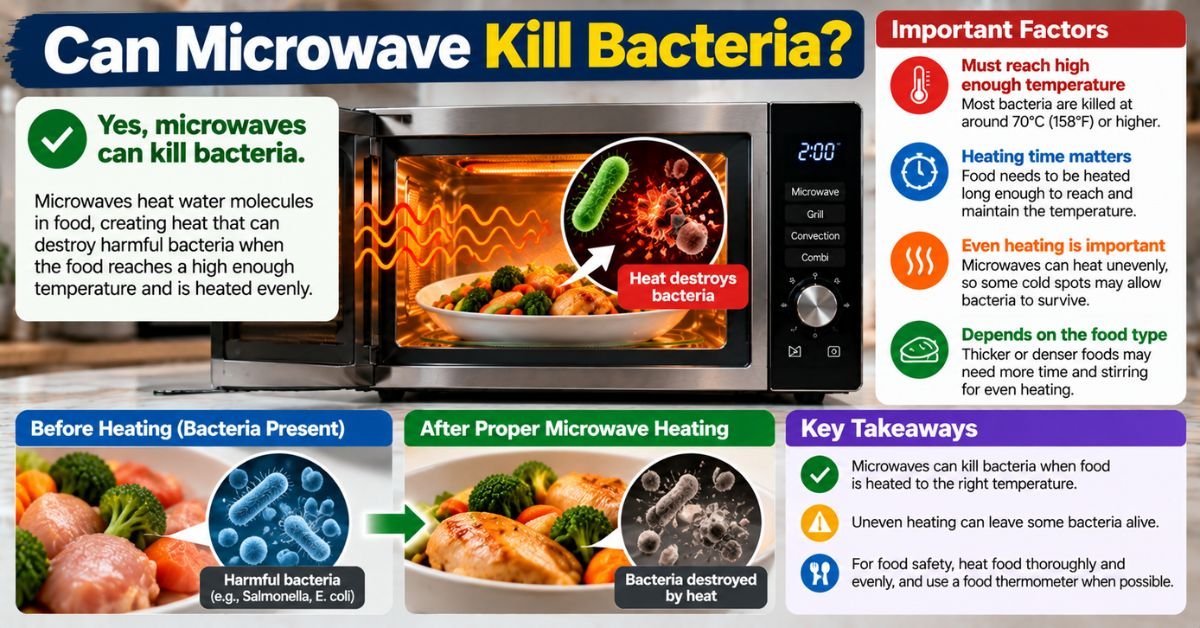
Yes, a microwave can kill bacteria when food heats evenly to a safe internal temperature.
The answer depends on heat, time, moisture, and even heating—not simply on pressing the “Start” button. This guide explains when a microwave reduces harmful bacteria, why cold spots are risky, and how to reheat food safely using trusted food safety advice.
How a Microwave Kills Bacteria
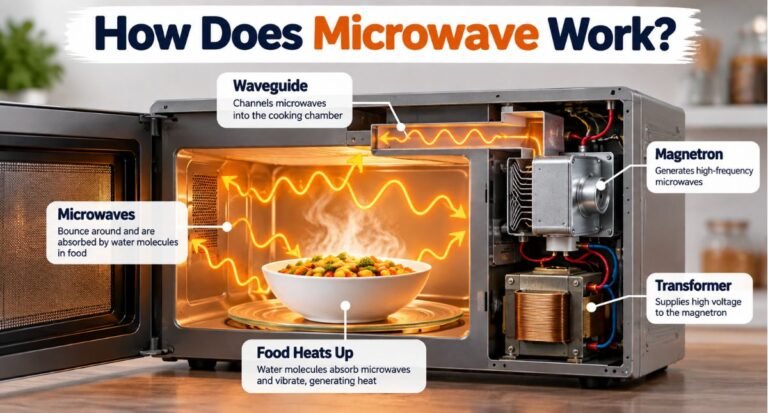
A microwave oven uses electromagnetic energy to make water molecules move. This movement creates heat inside the food. When the food becomes hot enough, that heat can damage and kill many bacteria.
So, can microwave kill bacteria? Yes, but the microwave itself does not clean or sterilize food. Heat does the work. The food must reach a safe temperature throughout, including the center and any thick parts.
Microwave heating can be uneven. One area may be steaming hot while another stays cool. These cool spots can protect bacteria, much like a small umbrella shields a person from rain.
Several factors affect how well a microwave reduces bacteria:
• Food moisture: Foods with more water often heat faster.
• Food size: Thick or dense foods take longer to heat through.
• Food shape: A round, shallow layer heats more evenly than a tall pile.
• Microwave power: A higher wattage oven may heat food faster.
• Stirring and standing time: These help spread heat after cooking.
• Starting temperature: Frozen food needs more time than chilled food.
The key lesson is simple: microwave safety depends on the internal temperature of the food, not just the cooking time shown on the package.
Can Microwave Kill Bacteria in Leftovers?
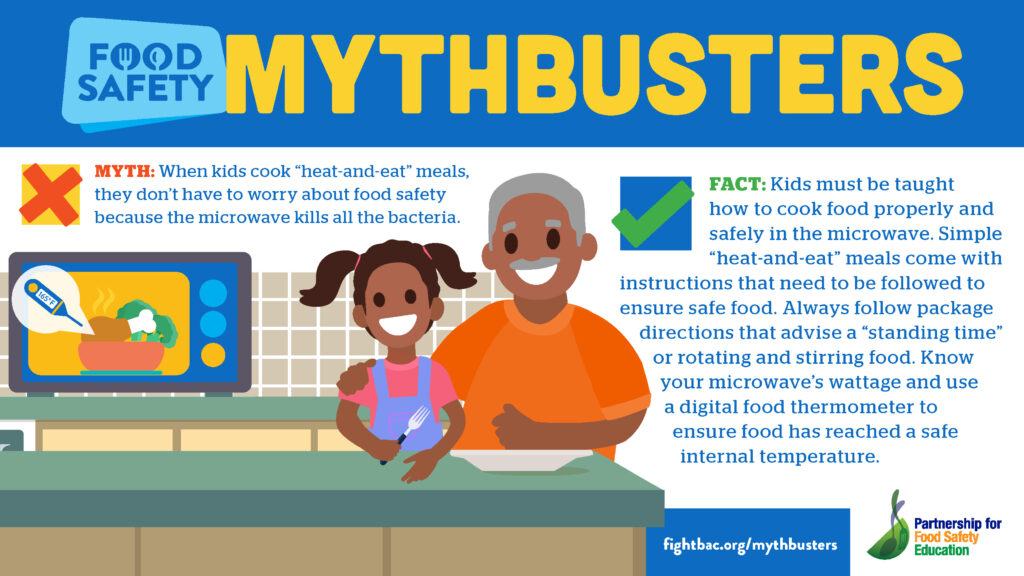
Yes, can microwave kill bacteria in leftovers if you reheat them evenly and thoroughly. The United States Department of Agriculture recommends reheating leftovers to 165°F. Use a food thermometer when possible, especially for meat, poultry, rice, pasta, casseroles, and thick sauces.
Cover the dish with a microwave-safe lid or a loose, damp paper towel. The cover holds in steam and helps the food heat more evenly. Stir food halfway through heating, then let it stand for a short time before checking the temperature.
Use these steps for safer reheating:
- Place the food in a shallow, microwave-safe dish.
- Spread thick food into an even layer.
- Cover the dish loosely to trap steam.
- Heat the food on high power.
- Stir or rotate it halfway through heating.
- Check several spots with a food thermometer.
- Let the food stand for one to two minutes.
- Reheat only the amount you plan to eat.
Can microwave kill bacteria in leftovers that have spoiled? No. Heating may kill some living bacteria, but it may not destroy toxins that bacteria already made. If food smells strange, looks unusual, feels slimy, or sat out too long, throw it away.
Most perishable leftovers should be refrigerated within two hours. On a very hot day, refrigerate them within one hour. Store them in shallow containers so they cool quickly.

Source: youtube.com
Does microwaving Food Make It Safe?
Microwaving can make food safer, but it does not fix every food safety problem. Safe results require enough heat, enough time, and good handling before and after heating.
For example, microwaving soup can reduce bacteria when the soup reaches a full, even heat. But a cold center may remain if the soup is thick or the bowl is overfilled. Stirring is one of the easiest ways to reduce this risk.
Microwaves also do not work like medical sterilizers. Sterilization means removing or destroying all forms of microbial life, including some highly resistant spores. A home microwave is not designed or tested for that purpose.
Do not use a microwave to sterilize:
• Baby bottles unless the product instructions approve microwave sterilization
• Medical tools
• Laboratory equipment
• Reusable food containers not labeled microwave-safe
• Sponges that contain metal fibers
• Sealed jars, cans, or closed containers
The safest approach is to treat a microwave as a cooking and reheating tool. It can lower the number of harmful bacteria, but it is not a substitute for clean hands, safe storage, or proper cooking.
Can Microwave Kill Bacteria in Meat and Poultry?
Can microwave kill bacteria in meat and poultry? Yes, if every part reaches the correct safe temperature. However, raw meat can heat unevenly, so microwave cooking needs extra care.
The recommended minimum internal temperatures include:
• Poultry, leftovers, and casseroles: 165°F
• Ground meats: 160°F
• Whole cuts of beef, pork, lamb, and veal: 145°F, followed by a three-minute rest
Microwave instructions may tell you to rotate or turn the food. Follow those directions. Arrange meat so thicker parts face the outside of the dish, where they may receive more energy.
After heating, check the thickest part with a food thermometer. Do not rely on color alone. Meat can look cooked while remaining too cool inside, and some meat can stay pink even after reaching a safe temperature.
A useful habit is to check at least two or three spots. If one reading is below the safe temperature, continue heating and check again.
Never partially microwave raw poultry or meat and then leave it on the counter. If you start cooking raw food in the microwave, finish the cooking process at once.
 microwaving Food Make It Safe?”
style=”max-width: 100%; height: auto; border: 2px solid black; border-radius: 10px; display: block; margin: 0 auto;”
loading=”lazy”
/>
Source: thesouthfirst.com
Can Microwave Kill Bacteria in Rice and Pasta?
Can microwave kill bacteria in rice and pasta? It can kill many bacteria during thorough reheating, but storage is just as important as heating.
Cooked rice and pasta can support the growth of Bacillus cereus, a bacterium that forms heat-resistant spores. If cooked grains sit at room temperature for too long, the bacteria may produce toxins. Reheating may not remove those toxins.
Handle rice and pasta safely:
• Refrigerate them soon after cooking.
• Use shallow containers for fast cooling.
• Keep them cold until reheating.
• Reheat them until they are steaming hot throughout.
• Stir them during microwave heating.
• Eat them soon after reheating.
• Do not reheat the same portion many times.
This is a good example of why the question “can microwave kill bacteria?” does not have a simple yes-or-no answer. The microwave may kill active bacteria, but it cannot always reverse unsafe storage.
Can Microwave Kill Bacteria in a Sponge?
Can microwave kill bacteria in a sponge? Sometimes, but this method has limits and can create a fire hazard. A microwave may reduce some germs in a wet, nonmetal sponge, yet it may not remove every type of bacteria, virus, mold, or spore.
Never microwave a dry sponge. It can catch fire. Do not microwave a sponge that contains metal, such as a scrub pad with metallic fibers.
If the sponge smells bad, has visible mold, or has been used to clean raw meat juices, replacing it is safer. A sponge can hold food particles deep inside, where heat may not spread well.
Better cleaning habits include:
• Use separate cloths for counters and dishes.
• Wash reusable cloths often.
• Let sponges dry fully between uses.
• Replace worn or foul-smelling sponges.
• Use paper towels for raw meat spills when practical.
Kitchen hygiene works best as a system. A microwave cannot make up for a dirty sponge, contaminated hands, or a counter that was not cleaned properly.
Source: kimecopak.ca
How to Microwave Food Safely
Safe microwave use is easy when you follow a repeatable routine. These steps help reduce cold spots and lower the chance of foodborne illness.
1. Use the right container
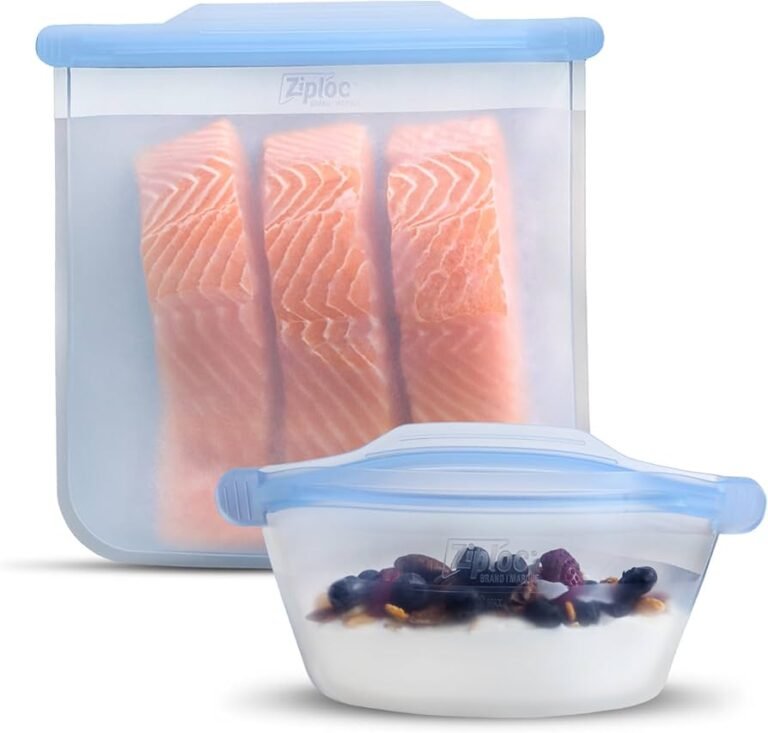
Choose glass, ceramic, or packaging marked microwave-safe. Avoid metal, foil, and containers that can melt or release unwanted chemicals when heated.
Do not microwave food in foam trays, takeout containers, or plastic tubs unless the label says they are microwave-safe. Transfer the food to a suitable dish when unsure.
2. Arrange food evenly
Spread food around the plate instead of placing it in one tall pile. Put dense or thick pieces near the outer edge. Leave the center slightly open when possible.
3. Cover the food
A loose cover holds moisture and helps the food heat more evenly. Never seal a container tightly because steam can build pressure and cause burns or an explosion.
4. Stir and rotate
Stir soups, sauces, vegetables, rice, and pasta during heating. Turn large pieces of meat or poultry so all sides receive heat.
5. Allow standing time
Food continues to heat after the microwave stops. Standing time lets heat move from hot areas into cooler areas. Follow the package directions or wait one to two minutes before checking.
6. Check the temperature
Place a food thermometer in the thickest part. Check more than one location when the food is large, dense, or unevenly shaped.
7. Handle leftovers promptly
Return unused food to the refrigerator within two hours. Do not leave reheated food sitting at room temperature for a long period.
These habits matter more than microwave wattage alone. A lower-power microwave can heat food safely when you use enough time and stir the food well.
Source: thedoublewave.com
Common Mistakes That Limit Bacteria Control
Many people ask can microwave kill bacteria after seeing food bubble or steam. Visible steam is a useful sign of heat, but it does not prove that every part of the food reached a safe temperature.
Avoid these common mistakes:
• Heating food only until the edges are hot
• Trusting the microwave timer without checking the center
• Overfilling a container
• Leaving food uncovered when it dries and heats unevenly
• Using a tightly sealed container
• Reheating food that was left out overnight
• Mixing cold food into a hot dish and assuming the whole meal is safe
• Reheating the same leftovers again and again
• Using a damaged plastic container
• Touching the food with dirty utensils after heating
One practical lesson is worth remembering: rotate, stir, rest, and check. This four-step habit solves many problems linked to uneven microwave heating.
Also, avoid tasting food to decide whether it is safe. Harmful bacteria may not change the smell, taste, or appearance of food. A thermometer and safe storage rules are more reliable than your senses.

Source: kimecopak.ca
What a Microwave Cannot Do
Can microwave kill bacteria that are hidden in food? It may reduce them if heat reaches that area. However, a microwave cannot guarantee that every microorganism is destroyed.
A microwave cannot reliably:
• Sterilize food or household items
• Remove toxins produced by some bacteria
• Make spoiled food safe
• Replace refrigeration
• Remove chemicals or allergens
• Ensure even heating without stirring or rearranging
• Protect food from contamination after heating
Microwaves also do not make food radioactive. The energy stops when the oven stops, and the food does not become radioactive.
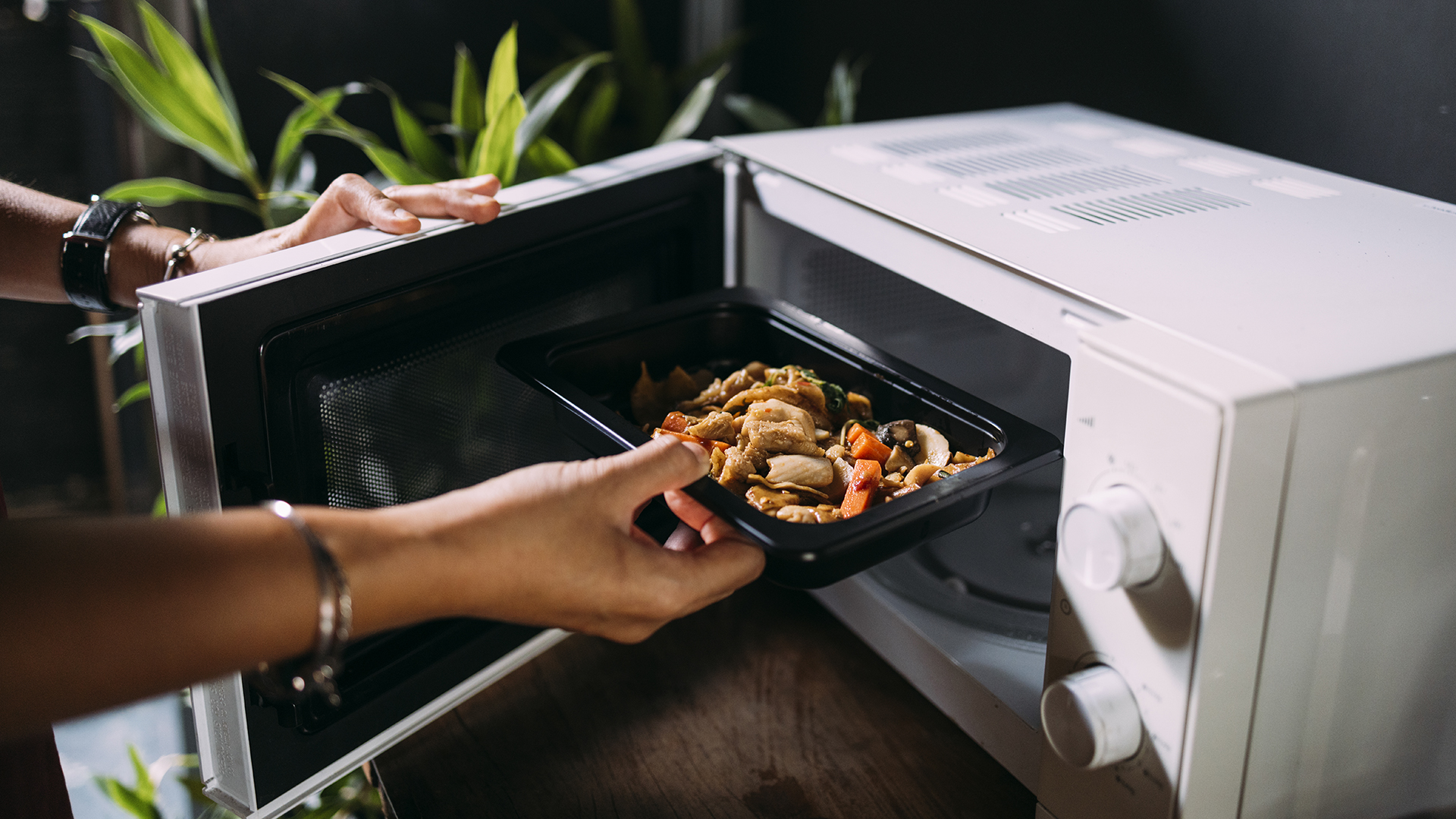
The greatest risks usually come from uneven heating and poor food handling. Think of microwave energy as a warm blanket: it may cover most of the food, but a thick lump underneath can stay cold. Breaking up that lump helps the heat reach every part.
Source: toptenreviews.com
Frequently Asked Questions About Can Microwave Kill Bacteria
Can microwave kill bacteria in food?
Yes, microwave heat can kill many harmful bacteria when food reaches a safe internal temperature. Uneven heating can leave cold spots, so stirring, standing, and checking with a thermometer are important.
Does microwaving kill all bacteria?
No. Microwaving does not guarantee the destruction of every bacterium, spore, or toxin. It also cannot make spoiled food safe to eat.
Can microwave kill bacteria in leftovers?
Yes, reheating leftovers to 165°F can reduce many harmful bacteria. The leftovers must also have been refrigerated promptly and stored correctly.
How long should I microwave food to kill bacteria?
There is no single safe time because food size, moisture, shape, starting temperature, and microwave power vary. Heat food until it is hot throughout, stir it, let it stand, and verify the internal temperature when possible.
Can microwaving rice kill bacteria?
Thorough reheating can kill many active bacteria in rice, but it may not destroy toxins made during unsafe storage. Refrigerate cooked rice quickly and discard rice that sat at room temperature for too long.
Can I microwave a sponge to kill bacteria?
A wet, nonmetal sponge may be microwaved in some cases, but the method is not perfect and can cause a fire if the sponge dries out. Replacing a dirty sponge is often the safer option.
Does a microwave sterilize baby bottles?
A regular microwave does not automatically sterilize baby bottles. Use a microwave steam sterilizer only when the bottle maker approves it and follow the product instructions carefully.
Conclusion
So, can microwave kill bacteria? Yes, microwave heat can reduce many harmful bacteria when food heats evenly and reaches the right internal temperature. It cannot sterilize food, remove every toxin, or rescue food that was stored unsafely.
Use a microwave-safe container, cover the food, stir it, allow standing time, and check thick foods with a thermometer. Pair these steps with quick refrigeration and clean handling for better protection against foodborne illness. Share this guide with someone who reheats leftovers often, and explore more food safety resources to keep every meal safer.