What Happens If You Microwave Nothing: Safe Or Risky?
Microwaving nothing can reflect microwave energy back into the appliance, causing damage, sparks, or even a fire.
Knowing what happens if you microwave nothing can help you avoid a common but costly mistake. A microwave oven needs food, water, or another safe load to absorb its energy. Without that load, the oven may overheat internally, especially when it runs for more than a few seconds. This guide explains the science, risks, warning signs, and safe steps to take.

What Happens if You Microwave Nothing?
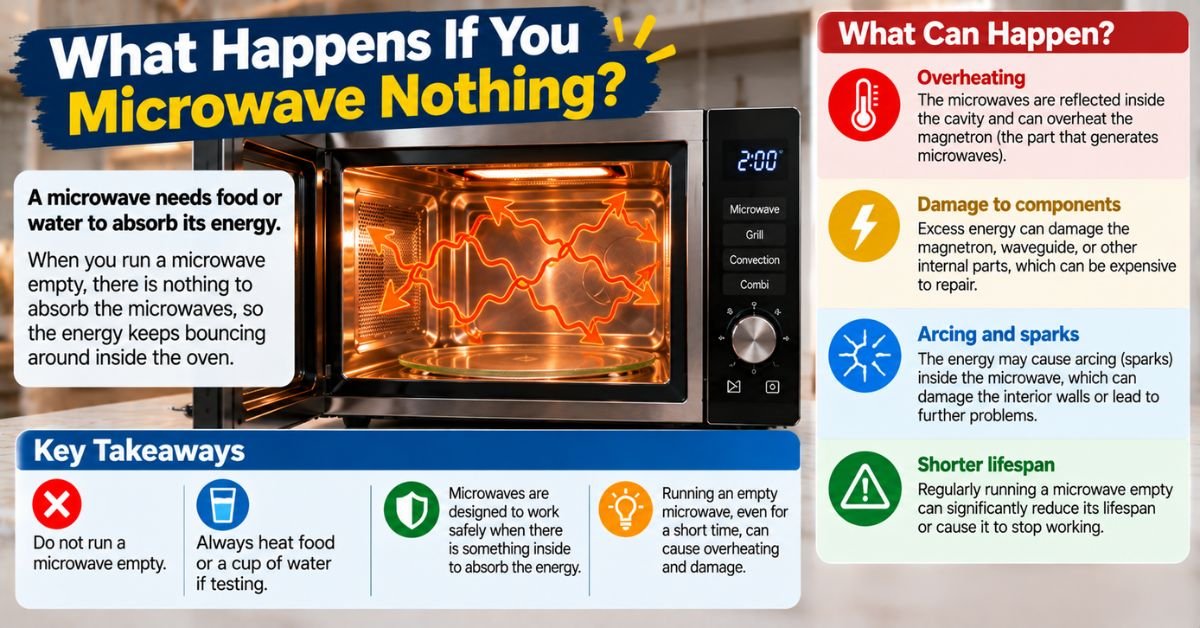
When you microwave nothing, the oven still produces microwave energy. Normally, water, fats, and sugars in food absorb much of that energy and turn it into heat. If the cooking chamber is empty, very little energy gets absorbed.
Instead, much of the energy can bounce around inside the metal cavity. This creates reflected energy, also called reverse power, that can travel back toward the magnetron. The magnetron is the part that creates microwaves.
The result depends on several factors:
• A few seconds may cause no clear harm.
• A longer run can overheat the magnetron.
• Reflected energy can damage internal parts.
• Sparks may appear if metal, food residue, or damaged coating is present.
• Severe overheating may create smoke or a fire risk.
The microwave may look normal from the outside. That does not mean it is safe inside. Damage can begin before you notice a strange sound, smell, or visible spark.
Source: reddit.com
Why Does an Empty Microwave Get Damaged?
A microwave oven works much like a flashlight aimed into a mirror-lined box. Food acts like a sponge that absorbs the energy. With no food inside, the energy has nowhere useful to go.
The metal walls reflect microwaves. Some energy forms standing waves inside the cavity, while some returns toward the magnetron. This can raise electrical and thermal stress on the system.
The role of the magnetron
The magnetron is the high-power component that produces microwave energy. It needs proper operating conditions to stay cool and stable.
During normal use, the food load helps absorb energy. The oven’s fan and airflow also help manage heat. When you microwave nothing, the magnetron may receive reflected energy instead of sending most of its power into food.
That stress can shorten the magnetron’s life or cause it to fail. Magnetron repairs can be expensive, and some damage may cost more to fix than the microwave is worth.
Why some ovens survive
Not every empty microwave fails at once. Modern ovens can have better cooling, sensors, and protective circuits. A brief accidental start may end with no obvious problem.
Still, the design does not make empty operation safe. Protective features can reduce risk, but they cannot guarantee that the appliance will tolerate long periods without a load.

Source: reddit.com
Is It Ever Safe to Run a Microwave Empty?
In general, you should not run a microwave empty. The safest rule is simple: always place a suitable load inside before pressing Start.
A short accidental run may not damage the appliance. For example, someone may open the door just after starting the oven, or a child may press the button for one or two seconds. Stop the oven as soon as you notice it.
Some manufacturers allow specific testing steps. These instructions may involve a cup of water or a special service procedure. Always follow the manual for your exact model.
Do not use online tricks that tell you to test an empty microwave for a set number of seconds. Microwave designs vary, and a test that seems harmless on one model may harm another.
A safe test load is usually:
• A microwave-safe cup or bowl filled with water.
• A small amount of food that contains moisture.
• A manufacturer-approved test item.
Water is useful because it absorbs microwave energy. However, water can become extremely hot, so handle it with care.

Source: fredsappliance.com
What Can Happen During a Long Empty Microwave Run?
The longer an empty microwave runs, the greater the chance of trouble. Damage is not always instant. Heat and reflected energy can build over time.
Possible outcomes include:
The microwave stops heating
The oven may still turn on, count down, and run its fan. However, it may no longer heat food. This can happen when the magnetron or its related parts fail.
The oven makes a loud buzzing sound
A new hum, buzz, crackle, or popping sound can signal electrical stress or arcing. Turn the appliance off and unplug it if you can do so safely.
Sparks or flashes appear
Sparks may come from metal, chipped paint, grease, food crumbs, or damaged waveguide covers. An empty cavity can make these problems more likely to cause arcing.
Smoke or a burning smell develops
A burning plastic or electrical smell is a warning. Stop using the microwave. Do not keep testing it with food.
Internal parts overheat
The magnetron, diode, capacitor, and wiring may experience excess heat. Some damage may remain hidden until the next cooking cycle.
In my practical appliance checks, the most important lesson is not to judge safety by appearance alone. A microwave can look fine after an empty run yet heat unevenly or fail later.

Source: reddit.com
What Should You Do if You Accidentally Microwaved Nothing?
Stay calm. A brief mistake does not always mean the microwave is ruined.
Follow these steps:
- Stop the microwave immediately.
- Open the door and remove anything inside, if present.
- Let the oven cool for several minutes.
- Check for smoke, sparks, burning smells, or unusual sounds.
- Inspect the inside for scorch marks, melted areas, chipped paint, or a damaged waveguide cover.
- If the oven seems normal, test it with a microwave-safe cup of water for a short cycle.
- Stop the test if you notice sparks, loud buzzing, smoke, or a burning odor.
- Unplug the microwave and arrange professional service if anything seems unusual.
Never touch exposed electrical parts. A microwave contains high-voltage components that can hold a dangerous charge even after the appliance is unplugged.
If there is active smoke or fire, keep the door closed if possible. Turn off the power and call emergency services if the situation does not stop quickly. Do not pour water into an electrical appliance.

Source: dinnersdonequick.com
How to Test a Microwave After an Empty Run
A cup-of-water test can show whether the microwave still produces heat. It cannot prove that every internal component is safe.
Use this basic method:
- Fill a microwave-safe cup with about 8 ounces of water.
- Place the cup in the center of the turntable.
- Run the microwave for about one minute on high.
- Watch and listen from a safe distance.
- Check whether the water becomes noticeably hot.
Stop at once if you see sparks or smell burning. Do not keep increasing the time to “see what happens.”
A microwave that runs but does not heat may have a damaged magnetron or another failed part. Uneven heating, repeated tripping of the circuit breaker, or a new electrical smell also calls for service.
This test has limits. Water may heat even when the oven has other faults, such as a damaged door seal, faulty controls, or poor turntable operation. When in doubt, use a qualified appliance technician.

Source: youtube.com
Does an Empty Microwave Cause Radiation Exposure?
A microwave oven does not create nuclear radiation. It uses nonionizing electromagnetic energy, similar in broad category to radio waves.
A properly working microwave has a metal cooking chamber, a screened door, and safety interlocks. These parts are designed to keep microwave energy inside the oven.
Running the oven empty does not normally make it leak microwave energy through the door. The bigger concern is appliance damage, overheating, arcing, or fire.
Never use an oven with:
• A broken or badly bent door.
• A damaged door seal.
• Missing or loose door-screen parts.
• A cracked viewing window.
• Severe rust or holes in the cooking cavity.
If the door does not close correctly, stop using the appliance. Do not try to repair safety parts with tape or household glue.

Source: dinnersdonequick.com
Common Reasons People Microwave Nothing
Many empty runs happen by accident. Understanding the cause can help prevent a repeat.
Common examples include:
• Pressing Start after removing food.
• Setting the timer without placing a dish inside.
• Letting a child use the controls without supervision.
• Running the oven while cleaning or testing it.
• Starting the microwave with only a dry item inside.
• Leaving the microwave running after food has been removed.
A dry item is not always a safe load. A paper towel, cracker, bread slice, or small dry herb may absorb too little energy and could scorch. The risk depends on moisture, mass, time, and the item’s position.
Keep the control panel locked when your model offers a child-lock feature. Also, teach children that a microwave needs food or water inside before it starts.

Source: substack.com
Can a Microwave Run With Only a Cup of Water?
Yes, a cup of water provides a load that absorbs microwave energy. This is much safer than running the oven empty, but it still requires care.
Use a microwave-safe container. Do not seal it. Water can become very hot, and superheated water may erupt when disturbed in rare cases.
Use a container with a wide opening and let it stand briefly before moving it. Use an oven mitt because the cup and water may be hot.
Never heat water for an excessive time without checking it. Follow your appliance manual and use sensible heating intervals.
A cup of water is useful for a simple function check, but it is not a cure for an already damaged microwave. If the oven sparks or smells burnt, stop using it.
How to Prevent Empty Microwave Damage
A few simple habits can protect the oven and your home.
• Check the cavity before pressing Start.
• Leave a microwave-safe item inside only when the manual supports that practice.
• Use a cup of water when testing a suspected heating problem.
• Do not operate the oven with a broken door or damaged interior.
• Clean away grease and food residue.
• Replace a damaged waveguide cover through the manufacturer or a qualified technician.
• Keep children away from unsupervised appliance use.
• Avoid metal unless the manufacturer specifically allows it.
• Stop the oven if you hear new buzzing, popping, or crackling.
One useful habit is to pause before pressing Start and ask, “What is inside?” That small check prevents most cases of what happens if you microwave nothing.
Empty Microwave Versus Dry Food
An empty microwave and a microwave containing dry food are not exactly the same. Dry food may absorb some energy, but it may not absorb enough to prevent hot spots.
Dry foods can heat, burn, smoke, or catch fire. Popcorn kernels, bread, crackers, spices, and paper products can become dangerous when overheated.
Food with water absorbs microwave energy more effectively. That is why soups, vegetables, sauces, and many leftovers heat well.
Still, moisture does not remove every risk. Food can splatter, containers can overheat, and steam can cause burns. Use suitable containers and follow the cooking directions.
The key point is that “something inside” does not always mean “safe to run.” The load must be suitable for microwave cooking.
When Should You Replace the Microwave?
A technician may repair some problems, but replacement can make more sense when the oven is old or badly damaged.
Consider replacing it if:
• It repeatedly runs without heating.
• It produces smoke or a strong electrical odor.
• The cavity has rust holes or severe corrosion.
• The door is bent or will not close securely.
• The circuit breaker trips during use.
• Repair costs approach the price of a new model.
Do not attempt to bypass door switches or safety interlocks. These parts are essential. A microwave that has been modified can expose users to serious electrical and safety hazards.
If you are unsure, contact the manufacturer or a qualified appliance repair professional. A professional can check the high-voltage system and confirm whether the oven is safe.
Frequently Asked Questions About What Happens if You Microwave Nothing
Can microwaving nothing ruin a microwave?
Yes, a long empty run can damage the magnetron and other internal parts because microwave energy has no proper load to absorb it. A very short accidental run may cause no visible harm, but you should still check the appliance before using it again.
How long can you run a microwave empty?
There is no safe universal time for running a microwave empty. Even if a short run causes no problem, the safest practice is never to operate it without a suitable load.
Will an empty microwave catch fire?
It can, especially if reflected energy causes overheating or if grease, metal, food residue, or damaged interior coating creates sparks. Turn the oven off immediately if you see smoke, flames, or repeated arcing.
What should I put in a microwave to test it?
Place a microwave-safe cup filled with water inside and run it for about one minute. Stop the test if you notice sparks, unusual noise, smoke, or a burning smell.
Does microwaving nothing cause radiation leakage?
An empty run does not automatically cause radiation leakage. However, you should never use a microwave with a damaged door, broken seal, or faulty safety interlock.
Can a microwave still work after being run empty?
Yes, it may continue to operate normally after a brief empty run. Even so, hidden damage may appear later, so test it carefully and stop using it if heating, sound, or smell changes.
Conclusion
Microwaving nothing gives the oven’s energy no proper load to absorb it. That energy can reflect inside the cavity, stress the magnetron, create sparks, and cause overheating or fire in serious cases.
A brief mistake may not destroy the appliance, but an empty microwave should never be treated as safe. Use a suitable load, test with a cup of water when needed, and stop immediately if you notice smoke, sparks, unusual sounds, or a burning smell.
Make the simple “what is inside?” check part of your routine. For more practical appliance safety tips, explore related guides or share your microwave experience in the comments.