How To Find Microwave Wattage: Easy Ways To Check
Check the label, manual, or model number first; most microwaves list cooking power in watts.
Knowing how to find microwave wattage helps you choose the right cooking time, avoid cold centers, and prevent overcooking. I have checked many microwave labels and manuals, and the most common mistake is confusing power consumption with cooking power. This guide explains each reliable method, shows how to test an oven at home, and helps you adjust recipes with confidence.
Why Microwave Wattage Matters
Microwave wattage means the amount of microwave energy an oven sends into food during cooking. A higher wattage usually heats food faster, while a lower wattage may need more time.
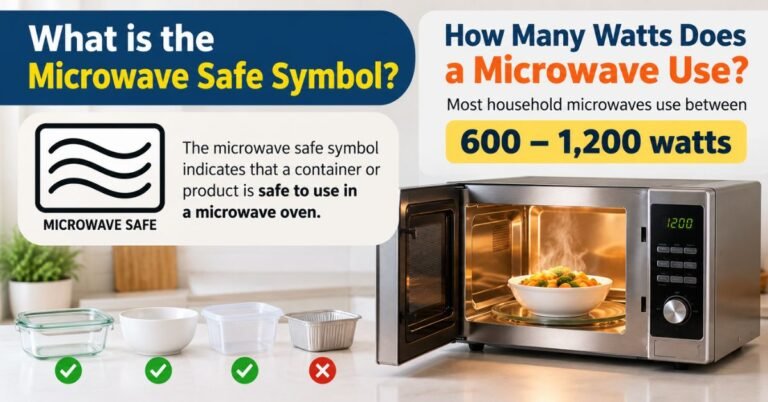
Most home microwaves range from about 600 to 1,200 cooking watts. Compact models often use 600 to 900 watts. Full-size countertop and over-the-range models may provide 1,000 watts or more.
Cooking instructions often assume a specific oven power. For example, a frozen meal designed for a 1,100-watt microwave may take longer in a 700-watt model. Using the wrong setting can leave food cold in the middle or make the edges dry and hot.
Microwave wattage also matters for:
• Reheating leftovers evenly
• Following package directions
• Cooking rice, vegetables, and potatoes
• Melting chocolate without burning it
• Choosing the right power level
• Comparing a new microwave with an older one
The wattage number is a guide, not a promise of exact cooking speed. Food shape, moisture, container type, starting temperature, and oven age also affect results.
Check the Microwave Label
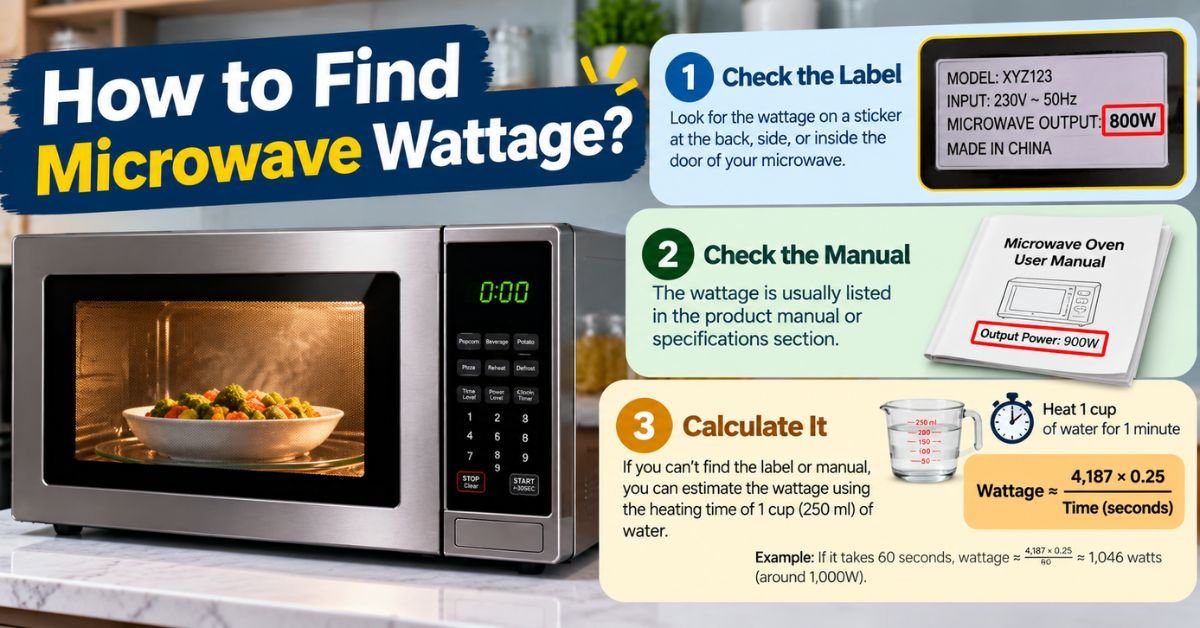
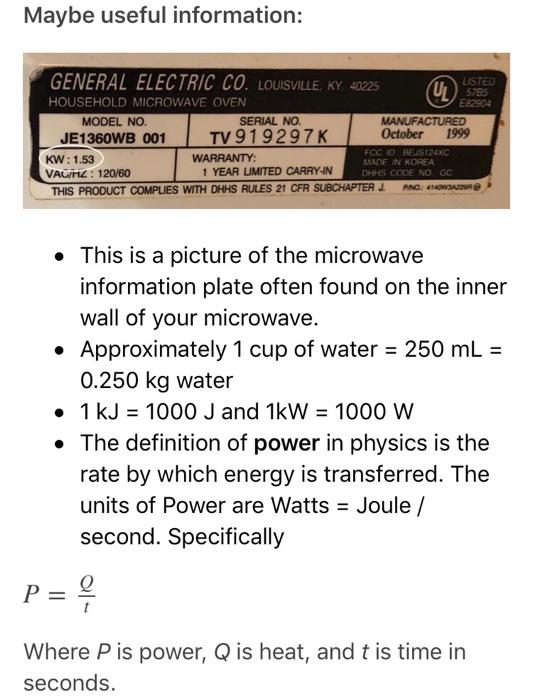
The easiest way to find microwave wattage is to look for a label on the oven. Start with the front, sides, back, or inside the cooking area near the door frame.
Look for terms such as:
• Cooking power
• Output power
• Microwave output
• Rated output
• Watts
• W
A label may show a number such as 700 W, 900 W, or 1,100 W. If the label says “microwave output: 1,000 W,” that is usually the cooking wattage you need for recipe adjustments.
Some labels show two different numbers. One may say “input: 1,500 W,” while another says “output: 1,000 W.” Use the output number when you need to know how strongly the microwave cooks.
The input number tells you how much electricity the appliance draws from the wall. It does not directly tell you how much microwave energy reaches the food.
Before moving the oven, unplug it and ask for help if it is heavy. Over-the-range microwaves can be difficult and unsafe to remove without proper support.
Source: ankersolix.com
Read the Owner’s Manual
If the wattage label is hard to read, check the owner’s manual. The manual often lists the microwave’s cooking power in the specifications section.
Search the manual for these terms:
• Microwave output power
• Rated microwave power
• Power consumption
• Electrical rating
• Technical specifications
Be careful with the phrase “power consumption.” It may describe electrical input rather than cooking output. If the manual lists only input power, do not assume it is the same as cooking wattage.
Many manuals also list the model number and product code. Write these numbers down before searching for a replacement manual. A single product line may include several versions with different wattages.
If you no longer have the manual, look for a digital copy on the manufacturer’s support page. Use the full model number, including letters and numbers. Searching only the brand name may produce the wrong model.
In my experience, the manual is often more accurate than a quick internet search. Retail listings sometimes use rounded numbers or copy specifications from a similar model.
Source: tasteofhome.com
Find the Model Number Online
The model number can help you find microwave wattage when the label and manual are missing.
You may find the model number:
• On the inside left wall
• Around the door opening
• On the back panel
• On the side of the control panel
• Inside the cabinet frame
• On the original sales receipt
Enter the full model number into the manufacturer’s website or a trusted appliance database. Then open the specifications page or download the user guide.
Check that the listing matches your oven’s:
• Door style
• Control panel
• Capacity
• Color
• Vent design
• Serial or product series
Do not rely on the oven’s size alone. Two 1.1-cubic-foot microwaves can have different wattages. A compact 0.7-cubic-foot model might use 700 watts, while another model of the same size could use 900 watts.
If you find several wattage numbers, choose the one labeled output power or cooking power. This is the number used for most cooking time comparisons.
Source: epicurious.com
Use the Product Label Correctly
A microwave product label may use technical terms that seem confusing. Understanding those terms makes it easier to find microwave wattage accurately.
Cooking power or output power describes the energy used to heat food. This is the most useful number for recipes.
Input power describes electricity drawn from the wall outlet. It is often higher than output power because some energy is lost as heat or used by the fan, light, turntable, and other parts.
For example, a label may show:
• Microwave output: 1,000 watts
• Electrical input: 1,500 watts
In this example, use 1,000 watts when adjusting a cooking time. The 1,500-watt figure helps with electrical planning, but it is not the correct cooking wattage.
Some labels show amps and volts instead of a clear output number. You can estimate electrical input with this formula:
Volts × amps = input watts
A microwave rated at 120 volts and 12 amps may draw about 1,440 input watts. This calculation still does not reveal the exact microwave cooking output.
That distinction is important. Estimating output from volts and amps can produce a rough guess, but it cannot replace the manufacturer’s rated output.

Source: whirlpool.com
Test Microwave Wattage With Water
A water test can give you a practical estimate when you cannot find the specifications. It does not replace the manufacturer’s rating, but it can show whether the microwave performs near its expected power.
You will need:
• A microwave-safe glass measuring cup
• 1 cup of cool water
• A kitchen thermometer
• A timer
Use the same cup and the same amount of water each time. Follow these steps:
- Pour 1 cup of cool water into the measuring cup.
- Measure and record the starting temperature.
- Place the cup in the center of the microwave.
- Heat it on high for 2 minutes.
- Measure the water temperature right away.
- Stir the water and check the temperature again.
Water heats by about 1 degree Fahrenheit per watt-minute under controlled conditions. A common estimate is:
Estimated watts = temperature rise in Fahrenheit × 30
For example, if the water rises by 30 degrees Fahrenheit in 2 minutes:
30 × 30 = 900 watts
This suggests an output near 900 watts. The result is only an estimate because the cup, room temperature, water volume, turntable, and thermometer can change the result.
For a safer comparison, repeat the test two or three times and average the results. Stop if the water boils aggressively, and handle the cup carefully because heated water can cause burns.
Never run a microwave empty. Also, do not heat sealed containers, metal cups, or objects that are not marked microwave-safe.

Source: sharpusa.com
Adjust Cooking Time With Wattage
Once you find microwave wattage, you can adjust a recipe made for a different oven. The basic formula is:
Adjusted time = package time × recipe wattage ÷ your microwave wattage
Suppose a package gives a cooking time of 4 minutes at 1,000 watts, but your microwave produces 800 watts:
4 × 1,000 ÷ 800 = 5 minutes
The estimated time is 5 minutes. Start with less time, however, because food can cook unevenly and manufacturers use different testing methods.
A safer method is to cook in short stages:
• Start with about 80 to 90 percent of the calculated time.
• Stir or rotate the food when possible.
• Let the food stand for one or two minutes.
• Check the center temperature.
• Add 15 to 30 seconds if needed.
For food safety, use a food thermometer when heating meat, poultry, eggs, leftovers, and prepared meals. The U.S. Department of Agriculture recommends checking internal temperatures rather than trusting appearance alone.
Low-wattage microwaves may need more time. High-wattage models may need less time. However, do not reduce cooking time for raw foods without confirming that the center reaches a safe temperature.
Source: thetakeout.com
Understand Microwave Power Levels
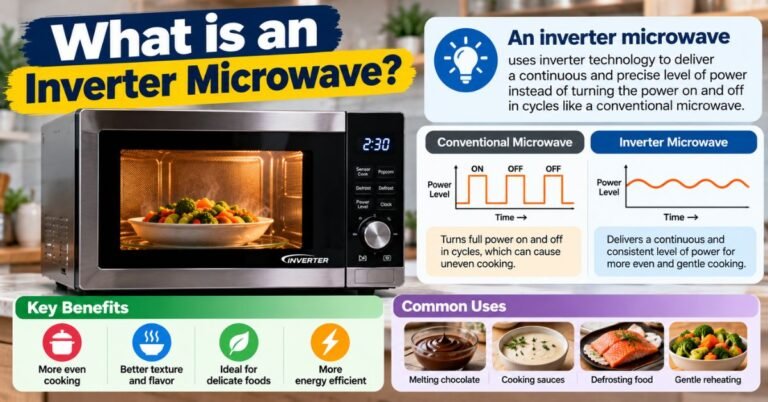
A microwave’s power level is not the same as its wattage. Wattage describes the oven’s maximum cooking output. Power level controls how much energy the oven uses over time.
For example, a 1,000-watt microwave set to 50 percent power may turn the magnetron on and off during the cooking cycle. It does not always produce a steady 500-watt stream.
Power levels are useful for foods that need gentle heating. Use lower settings for:
• Butter and chocolate
• Softening cream cheese
• Defrosting meat
• Simmering sauces
• Heating delicate leftovers
Use high power for quick reheating, boiling water, and cooking foods that need strong heat. Always follow the food package instructions when available.
A microwave rated at 700 watts can still cook well. It simply may need more time than a 1,200-watt model. Think of wattage like water from a tap: a stronger flow fills the cup faster, but both taps can fill it.

Source: sharpusa.com
Common Mistakes When Finding Microwave Wattage
Several mistakes can lead to the wrong wattage number or poor cooking results.
• Using input watts instead of output watts: Input power measures wall electricity, not cooking strength.
• Guessing from oven size: Capacity does not determine wattage.
• Trusting a retailer listing without checking the model: Similar models may have different outputs.
• Reading the label upside down or partially: A worn label can make 900 look like 600.
• Treating a water test as exact: Home tests provide an estimate, not a laboratory result.
• Ignoring food temperature: Frozen food needs more time than refrigerated food.
• Using metal cookware: Metal can spark and damage the oven.
• Running the microwave empty: This may harm the appliance.
• Heating sealed containers: Pressure can build and cause an explosion.
One mistake I have seen often is changing the time but not checking the food. A recipe adjustment is only a starting point. Stirring, standing time, and a final temperature check are just as important.
When Microwave Wattage Seems Too Low
If food takes much longer than expected, the microwave may have a lower output than the recipe assumes. It may also have a performance problem.
Possible causes include:
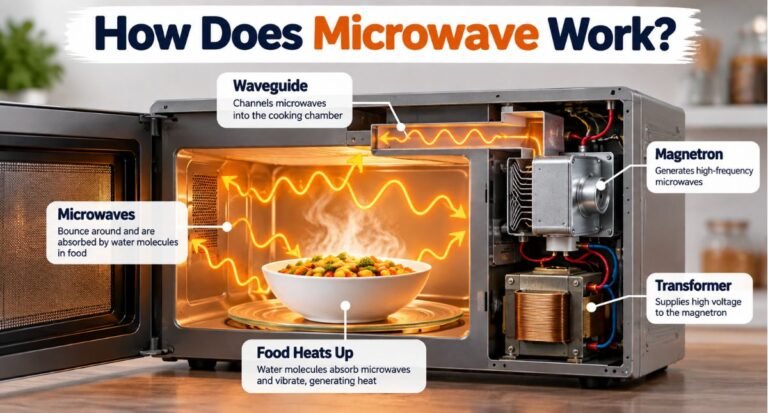
• A dirty waveguide cover
• A damaged door seal
• A failing magnetron
• Poor ventilation
• An aging electrical component
• Incorrect power settings
Clean the inside with a soft, damp cloth. Keep the vents clear, and make sure the door closes fully. Do not remove the cabinet or attempt electrical repairs yourself. Microwaves contain high-voltage parts that can remain dangerous even after the appliance is unplugged.
If the oven sparks, smells burnt, makes unusual sounds, or heats very slowly, stop using it and contact a qualified appliance technician. The FDA advises consumers not to use a microwave with a damaged door, hinge, latch, or seal.
A water test can help confirm a performance concern, but it cannot identify the failed part. Professional testing is the safest option.
How to Find Microwave Wattage for Recipe Use
For everyday cooking, you usually need the oven’s output wattage rather than a perfect technical measurement. Check the label first, then the manual, and finally the model number.
If you still cannot find microwave wattage, perform the water test for a reasonable estimate. Record the result on a small label near the oven or save it in your phone.
Here is a simple routine:
- Find the output wattage.
- Check the wattage assumed by the recipe.
- Adjust the time with the wattage formula.
- Start with a shorter time.
- Stir or rotate the food.
- Check the center before serving.
This routine works well for frozen meals, leftovers, vegetables, and drinks. It also reduces the chance of burning food while you learn how your specific microwave behaves.
Remember that microwave wattage is only one part of cooking performance. A clean oven with a working turntable may heat more evenly than a higher-wattage oven with a damaged part.
Frequently Asked Questions About How to Find Microwave Wattage
Where is the wattage listed on a microwave?
Look on the inside door frame, back, side, or product label. You can also check the owner’s manual or search the full model number on the manufacturer’s website.
Is microwave input power the same as cooking wattage?
No. Input power measures electricity drawn from the wall, while output power measures energy used to heat food. Use the output or cooking power number for recipe adjustments.
How can I find microwave wattage without a label?
Check the manual or search the model number online. If those options fail, heat one cup of water for two minutes and estimate the output from the temperature increase.
Can I use a 700-watt microwave for a 1,000-watt recipe?
Yes, but the food may need more time. Use the wattage adjustment formula, then cook in short stages and check the center before serving.
Does a bigger microwave always have more watts?
No. Microwave size and cooking wattage are separate specifications. Always check the rated output instead of guessing from the oven’s capacity.
Is a water test an exact way to measure microwave wattage?
No. A water test gives a useful estimate, but cup shape, water temperature, thermometer accuracy, and oven design affect the result. The manufacturer’s output rating is more reliable.
Conclusion
The best way to find microwave wattage is to check the cooking output on the label, manual, or model specification. If the number is missing, a careful water test can provide a practical estimate.
Use output watts, not input watts, when adjusting cooking times. Start with less time, stir the food, allow standing time, and use a food thermometer for safety. Take a few minutes to find your microwave wattage today, then save the number for future recipes and share your results in the comments.