What Is An Inverter Microwave: How It Works
An inverter microwave delivers steady cooking power instead of switching full power on and off.
If you have ever found cold centers, dry edges, or overheated soup in a microwave, the cooking method may be the reason. An inverter microwave uses electronic power control to maintain a more even heat level, which can improve results when you defrost meat, soften butter, cook delicate foods, or reheat leftovers. This guide explains how inverter technology works, where it helps, its limits, and how to decide if one belongs in your kitchen.
What Is an Inverter Microwave?
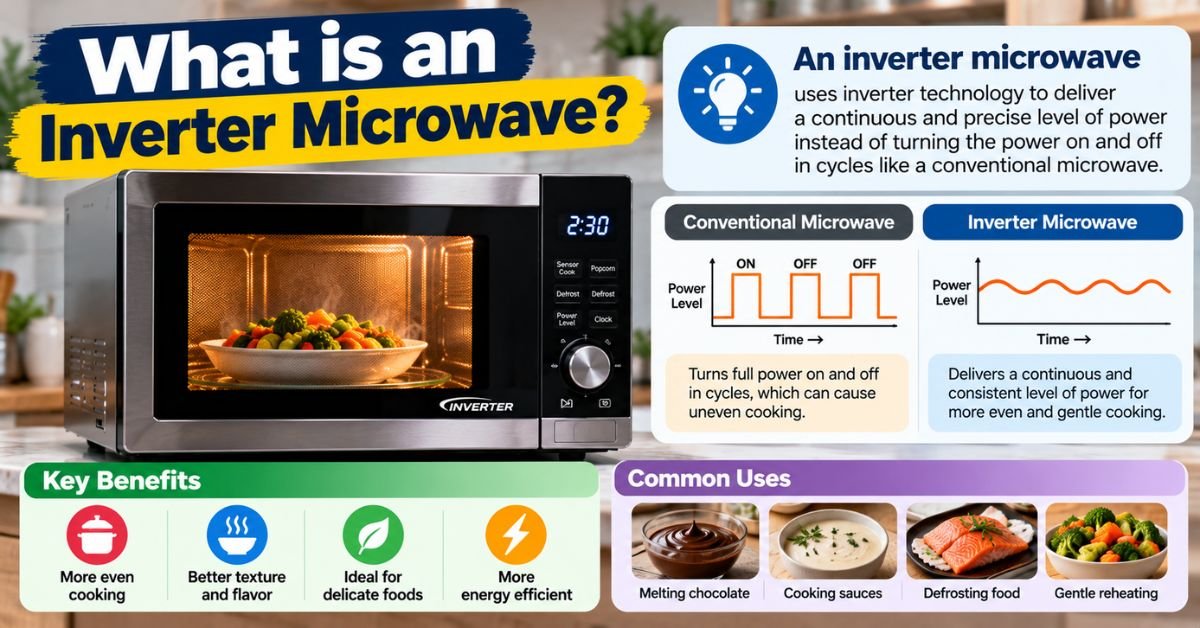
An inverter microwave is a microwave oven that can provide a steady level of power throughout the cooking cycle. It uses an electronic inverter circuit to control the energy sent to the magnetron, the part that creates microwave energy.
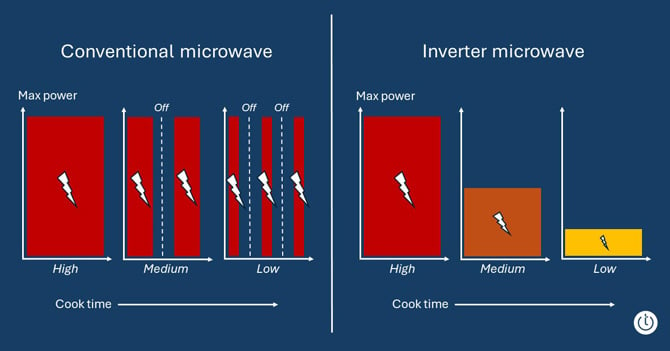
In a standard microwave, the magnetron often runs at full power for short periods. It then stops for a moment before starting again. This pattern is called duty-cycle cooking.
For example, a standard microwave set to 50% power may work like this:
- Run at full power for 10 seconds.
- Stop for 10 seconds.
- Repeat until the cooking time ends.
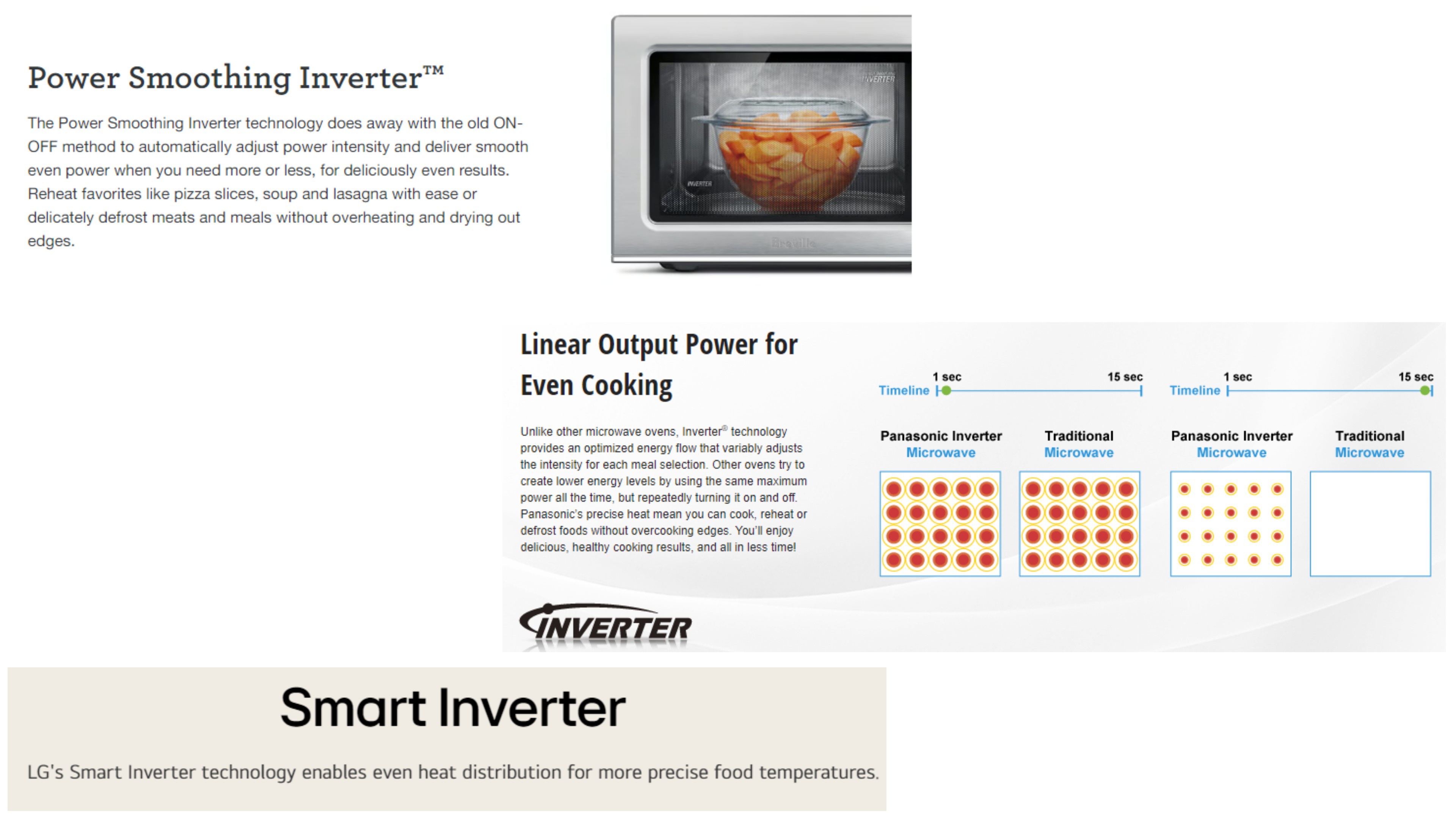
An inverter microwave can run at a lower, steady output. At 50% power, it may produce about half power continuously instead of using repeated bursts of full power.
A simple way to picture it is a light switch. A traditional microwave often behaves like a switch that is either fully on or fully off. An inverter microwave acts more like a dimmer. It can adjust the energy level with greater control.
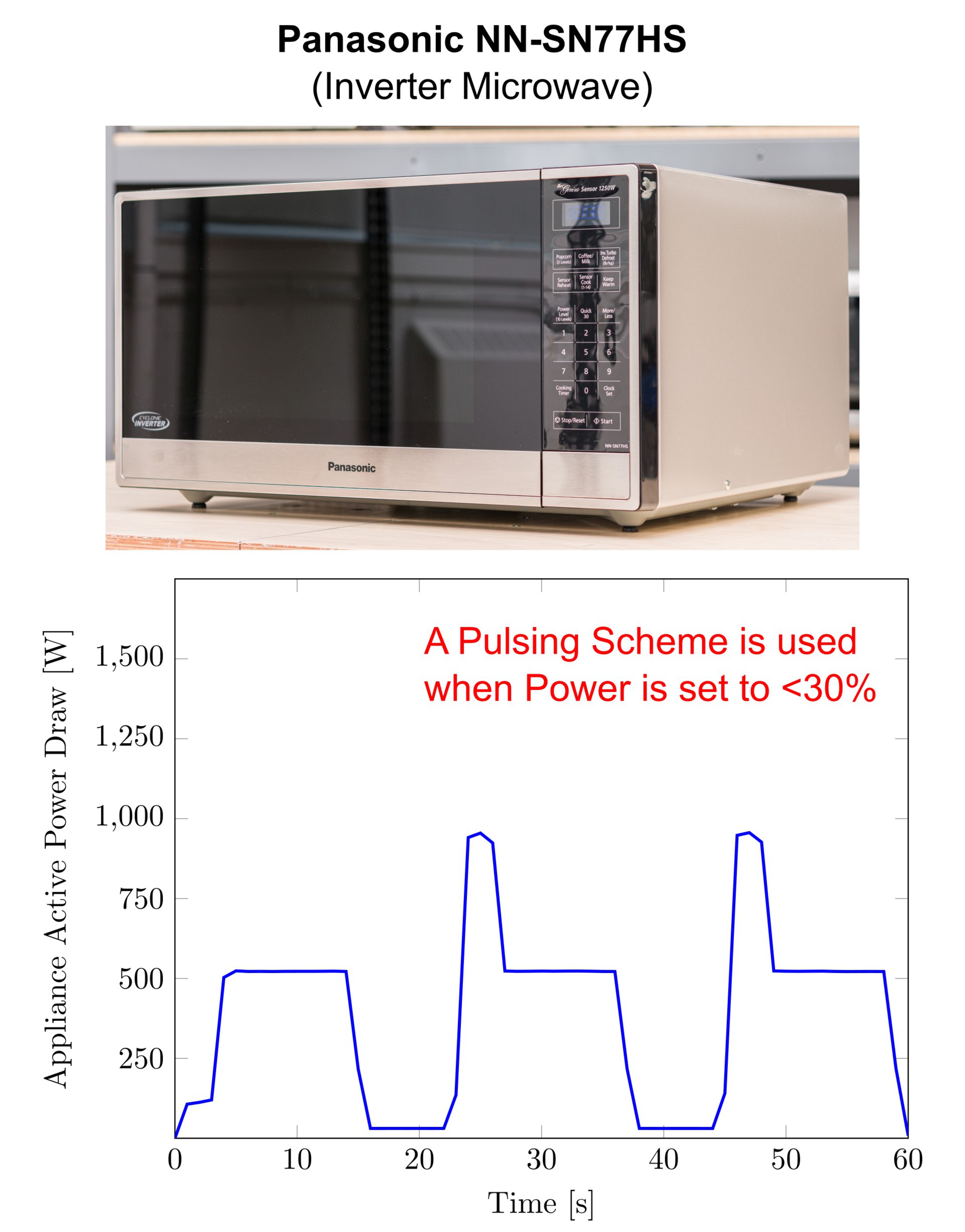
The exact design differs by brand and model. Some inverter microwaves may still use cycling at certain settings, but the main goal is smoother power control.
How Does Inverter Microwave Technology Work?
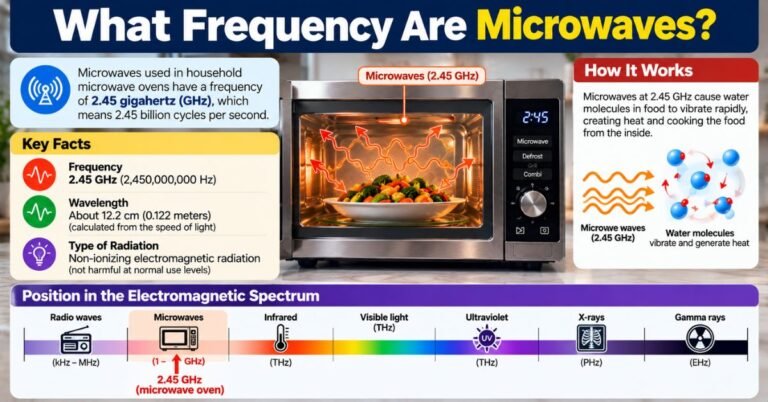
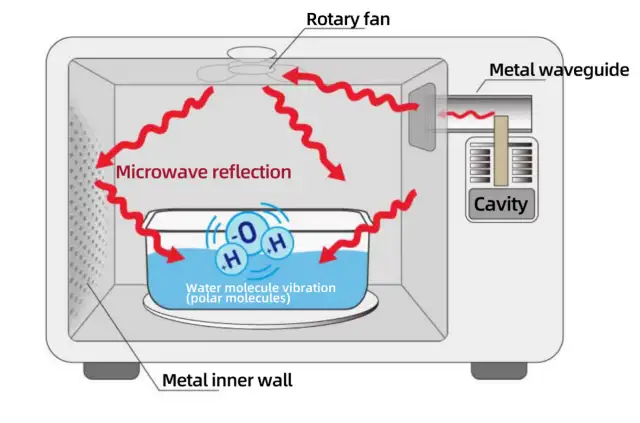
Inside every microwave oven, the magnetron changes electrical energy into microwave energy. These waves excite water, fat, and some other molecules in food, creating heat.
A conventional microwave usually relies on a transformer and capacitor system. This system is reliable, but it generally runs the magnetron at a fixed high output. Lower settings are created by turning that output on and off.
An inverter microwave uses a power supply with electronic controls. The circuit can reduce the voltage and current sent to the magnetron. This lets the magnetron operate at a lower, more consistent level.
The result is not necessarily faster cooking. Instead, it is more controlled cooking. That difference matters because food does not always need maximum heat.
Gentle, steady power can help:
- Melt chocolate without scorching it.
- Soften butter without creating a hot liquid center.
- Defrost chicken with fewer cooked edges.
- Warm baby food more evenly, followed by careful stirring.
- Reheat rice, pasta, and casseroles with less drying.
- Cook delicate dishes that can split or overheat.
Microwaves still heat food unevenly because of food shape, moisture, container size, and the position of the food inside the oven. Inverter technology improves power control, but it does not remove the need to stir, rotate, stand, and check food.
Source: rtings.com
Inverter Microwave vs. Traditional Microwave
The key difference is how each oven creates lower power levels.
| Feature | Inverter microwave | Traditional microwave |
|---|---|---|
| Power control | Often steady and adjustable | Usually full power in repeated cycles |
| Defrosting | More gradual and controlled | May create warm or cooked edges |
| Reheating | Can reduce overheating | May create hot spots |
| Low-power cooking | Better suited to delicate foods | Less precise |
| Price | Often higher | Usually more affordable |
| Repair cost | May be higher because of electronic parts | Often uses simpler parts |
| Cooking speed | Not always faster | Can be equally fast at full power |
A traditional microwave is not a bad appliance. It may be the better value if you mainly heat coffee, canned soup, frozen meals, or leftovers for short periods.
An inverter microwave becomes more useful when you care about texture and control. It is especially helpful for frozen meat, seafood, sauces, custards, and foods that become tough when overheated.
One common mistake is assuming that every microwave labeled “sensor” or “smart” uses inverter technology. These terms describe different features. A sensor microwave measures steam or humidity to estimate cooking time. An inverter microwave describes how the oven controls electrical power.
Some ovens have both features.

Source: sharpusa.com
Benefits of an Inverter Microwave
More even low-power cooking
The main benefit of an inverter microwave is its ability to provide a more consistent low-power setting. Food can warm gradually rather than taking repeated blasts of intense heat.
This is useful for foods that are easy to damage. Chocolate, cheese, butter, fish, and cream-based sauces may scorch or separate when they receive too much heat at once.
Still, you should use short cooking times and stir when possible. Good power control helps, but it cannot replace careful cooking.
Better defrosting
Defrosting is one of the clearest advantages. With a standard microwave, the outside of frozen food may begin to cook while the center remains frozen.
A steady lower output gives the ice more time to melt without overheating the surface. You should still turn the food, separate pieces, and allow a standing period.
For meat and poultry, follow safe food handling practices. If part of the food becomes warm, cook it right away rather than returning it to the refrigerator for later use.
Improved reheating
An inverter microwave can reheat food more gently. This may help leftovers keep a better texture, especially rice, pasta, chicken, vegetables, and casseroles.
In my own kitchen testing, the biggest difference appears with dense foods. A bowl of chilled rice can become hot in the middle while the edges dry out in a conventional microwave. Lower, steady power and one good stir usually produce a more balanced result.
The container still matters. A shallow, wide dish often heats more evenly than a deep bowl.
Better control for delicate foods
Some foods need warmth rather than intense cooking. An inverter microwave gives you more control during tasks such as:
- Melting butter.
- Warming tortillas.
- Softening ice cream.
- Heating milk.
- Preparing oatmeal.
- Reheating gravy.
- Cooking eggs with supervision.
Use a lower setting and check the food often. Microwaves can continue to heat after the cycle ends, especially in thick foods.
Potentially quieter operation
Many inverter microwaves are quieter during operation because they may not use the same large transformer found in older designs. However, the fan, turntable motor, cooling system, and magnetron can still make noise.
Noise levels vary by model. If quiet operation matters, check independent reviews and listen to the appliance in a showroom when possible.

Source: rtings.com
Limitations of Inverter Microwaves
An inverter microwave is not perfect, and it is not automatically better for every household.
Higher purchase price
Inverter models often cost more than basic microwaves. You are paying for electronic power control, additional components, and sometimes premium features such as convection cooking or sensor programs.
If your microwave only heats drinks and frozen meals, the extra cost may not provide much practical value.
More complex repairs
Electronic inverter circuits can be more complex than traditional microwave power systems. If a major component fails after the warranty ends, repair costs may be higher.
Never try to repair a microwave yourself. Even when unplugged, a microwave can contain parts that hold dangerous electrical charges. Use a qualified appliance technician.
No guarantee of perfectly even heating
An inverter microwave still uses microwave energy, so hot and cold spots can occur. Food shape and water content affect heating. A thick block of food will not heat exactly like a thin layer.
For safer and more even results:
- Spread food around the outer part of the dish.
- Leave the center slightly open when heating a ring-shaped portion.
- Cover food with a vented lid or damp paper towel.
- Stir halfway through cooking.
- Rotate the dish if the oven does not have a turntable.
- Let food stand before eating.
- Check the internal temperature when food safety matters.
Some settings can be confusing
The word “inverter” does not mean the oven can cook every food better without adjustment. You still need to understand power levels, cooking time, and standing time.
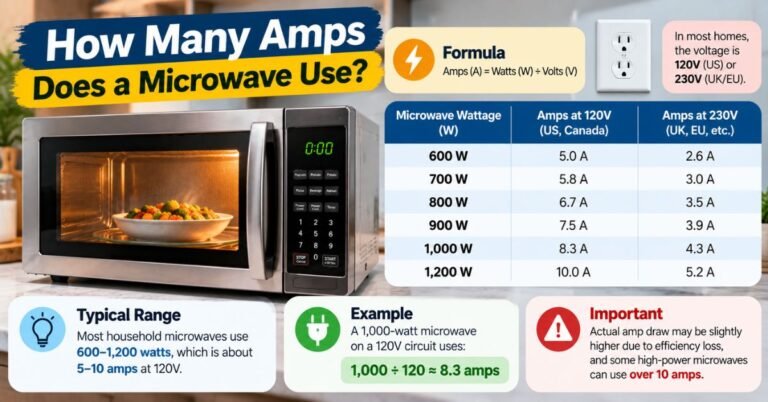
The wattage listed on the appliance also matters. A 1,200-watt inverter microwave may cook much faster than a 700-watt model. Always follow the package directions as a starting point, then adjust for your oven.

Source: panasonic.com
What Can You Cook in an Inverter Microwave?
An inverter microwave works well for many daily kitchen tasks. It can heat, defrost, soften, melt, and cook food when you use microwave-safe dishes and suitable settings.
Good uses include:
- Reheating leftovers at medium power.
- Defrosting meat and poultry.
- Melting chocolate at low power.
- Softening butter without fully melting it.
- Cooking oatmeal and rice-based dishes.
- Steaming vegetables in a covered container.
- Heating soup and sauces.
- Warming bread and tortillas.
- Cooking small portions of fish.
- Preparing simple mug cakes and egg dishes.
An inverter microwave does not replace a conventional oven for every job. It cannot create the same browning, crispness, or roasted flavor unless it also includes grill or convection functions.
For example, a plain microwave can heat a slice of pizza, but the crust may stay soft. A convection microwave with a crisping tray may improve the texture, but results depend on the design and instructions.
Avoid using metal unless the manufacturer specifically says it is safe for that exact function. Do not use containers with metallic trim, sealed jars, or tightly closed lids.

Source: alexandrekitching.com
How to Use an Inverter Microwave Correctly
You do not need special cooking skills, but a few habits make a major difference.
- Check the wattage. Compare it with the instructions on the food package.
- Choose a microwave-safe container. Glass, ceramic, and labeled microwave-safe plastic are common options.
- Use lower power for delicate foods. Medium or low settings are useful for defrosting and gentle reheating.
- Cover the food loosely. A vented cover helps retain moisture and reduce splatter.
- Arrange food evenly. Spread thick food into a thinner layer when possible.
- Stir or rotate the food. This helps correct natural hot spots.
- Let the food stand. Heat continues to move inward after the microwave stops.
- Check the temperature. Use a food thermometer for meat, poultry, leftovers, and other foods where safety is important.
- Clean spills quickly. Food residue can absorb microwave energy and may cause odors or damage over time.
One lesson I learned during appliance testing is that people often blame the oven when the real problem is the dish. A deep, narrow container can leave the center cold. A shallow container with a loose cover often improves results more than adding extra cooking time.
Do not run an empty microwave. Without food or a suitable load to absorb the energy, the oven may damage itself.

Source: panasonic.com
Is an Inverter Microwave Energy Efficient?
An inverter microwave may use power more smoothly, but you should not assume it will always use dramatically less electricity. Energy use depends on cooking time, wattage, standby power, food quantity, and the selected program.
At full power, an inverter microwave and a traditional microwave may use similar electrical power. The main advantage is control, not guaranteed energy savings.
Better cooking control can sometimes prevent overcooking and reduce the need to reheat food. That may save a small amount of energy in daily use, but the difference varies by model and cooking habits.
When comparing models, look for:
- Rated cooking wattage.
- Standby energy information.
- Automatic shutoff features.
- Sensor cooking programs.
- A clear power-level system.
- A reputable warranty.
- Independent performance testing.
A smaller oven can also be practical for energy use. Heating a small portion in a microwave often uses less energy than heating a full-size oven, especially for short tasks.
Source: rtings.com
How to Choose the Best Inverter Microwave
Start with your cooking habits rather than the feature list. The best inverter microwave is the one that solves your actual kitchen problems.
Consider these points:
- Capacity: A compact model may suit one person, while a larger family may need room for wide plates.
- Wattage: Higher wattage usually means shorter cooking times, but it may require more adjustment.
- Controls: Physical buttons can be easier to use than a glossy touch panel.
- Sensor cooking: This can help estimate cooking time for common foods.
- Turntable size: Make sure your regular dishes fit comfortably.
- Cleaning: A smooth interior and removable turntable save effort.
- Ventilation: Over-the-range models may include a hood fan and cooktop light.
- Convection function: Choose this if you want baking or browning as well as microwave cooking.
- Warranty: Check coverage for the inverter power system.
- Door design: The latch should feel firm, and the seal should look even.
Avoid choosing a model based only on the word “inverter.” Read the manual before buying if you have specific needs, such as low-power cooking, sensor reheating, or defrosting large cuts of meat.
It is also wise to check replacement costs. A low purchase price may not be a bargain if the warranty is short and electronic repairs are expensive.

Source: sharpusa.com
Is an Inverter Microwave Safe?
An inverter microwave is safe when it is installed and used according to the manufacturer’s instructions. The oven door, safety interlocks, and protective casing are designed to keep microwave energy inside the cooking chamber.
Basic safety rules include:
- Never operate the oven with a damaged door, hinge, latch, or seal.
- Do not use the microwave when the door does not close firmly.
- Never heat eggs in their shells.
- Pierce foods with thick skins, such as potatoes, before cooking.
- Do not heat sealed containers.
- Be careful with superheated water, which can erupt after removal.
- Use oven mitts because containers can become very hot.
- Stir baby food and test its temperature before serving.
- Follow food safety temperatures for meat and poultry.
- Keep the interior clean and dry.
Microwave-safe plastic is designed for microwave use, but it is not suitable for every heating task. Very hot, fatty, or sugary foods can stress some plastics. When unsure, use glass or ceramic.
Frequently Asked Questions About What Is an Inverter Microwave
Is an inverter microwave better than a regular microwave?
An inverter microwave is better for steady low-power cooking, defrosting, and gentle reheating. A regular microwave may be the better choice if you mainly heat simple foods and want the lowest purchase price.
Does an inverter microwave cook faster?
Not always. An inverter microwave may cook at the same speed as a traditional model at full power, but its main benefit is more consistent control at lower power levels.
Can an inverter microwave replace an oven?
A basic inverter microwave cannot fully replace a conventional oven because it does not brown or roast food in the same way. A convection inverter microwave can perform more oven-like tasks, but capacity and results still vary.
Are inverter microwaves worth the extra money?
They can be worth the extra cost if you often defrost food, reheat leftovers, melt delicate ingredients, or want better control. If you only heat drinks and packaged meals, a basic microwave may meet your needs.
Do inverter microwaves use less electricity?
They may use electricity more smoothly, but lower energy use is not guaranteed. Cooking time, wattage, food amount, and standby power have a greater effect on total consumption.
What does inverter mean on a microwave?
“Inverter” refers to the electronic power supply that controls energy sent to the magnetron. It allows the microwave to produce a lower, steadier power level instead of relying only on full-power bursts.
Conclusion
An inverter microwave uses electronic power control to deliver steadier heat, especially at lower settings. This can improve defrosting, reheating, melting, and cooking delicate foods, although it does not guarantee faster cooking or perfect heat distribution.
The right choice depends on your habits, budget, kitchen space, and need for control. Use microwave-safe containers, stir food, allow standing time, and compare wattage and warranty details before buying. If better texture and gentler reheating matter to you, explore reputable inverter microwave models and choose one that fits your daily routine.