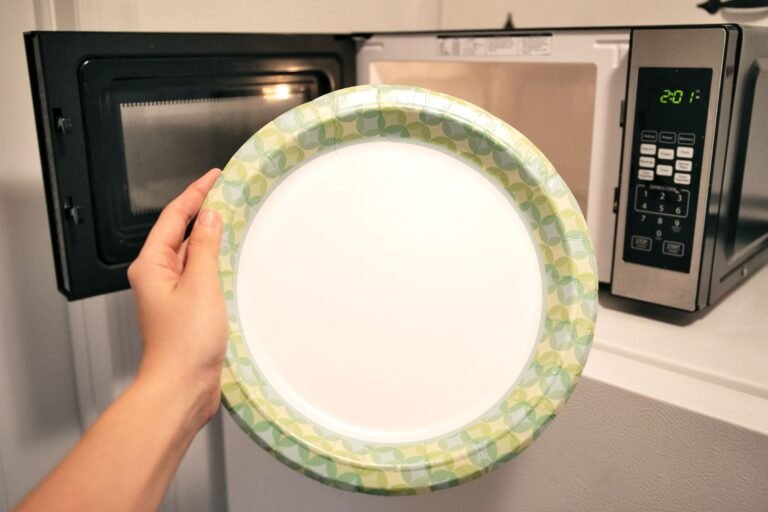
Can You Put Aluminum Foil In The Microwave: Safe Guide
Usually, you should not put aluminum foil in the microwave because it can spark, arc, or cause a fire.
The answer to “can you put aluminum foil in the microwave” is more nuanced than a simple yes or no. Small, smooth pieces may be allowed in some microwave manuals, but foil can become dangerous when it is crumpled, touches the oven wall, or sits near metal. This guide explains the risks, safe exceptions, better options, and what to do if foil starts sparking.

Can you put aluminum foil in the microwave?
In most cases, no. You should not put aluminum foil in the microwave unless the manufacturer’s instructions clearly allow it and you follow the safety rules.
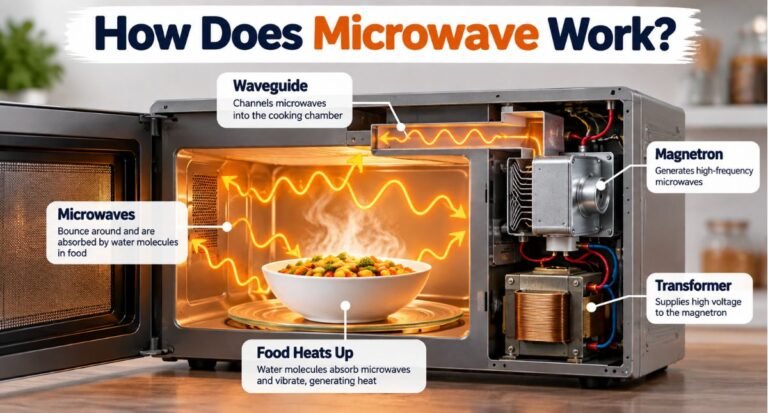
A microwave oven uses electromagnetic waves to heat food. Aluminum foil reflects these waves instead of absorbing them like food does. That reflection is not always harmful, but sharp edges, wrinkles, and loose pieces can create strong electrical fields.
Those fields may cause sparks, also called arcing. A spark can ignite food, paper towels, grease, or other items inside the microwave. It may also damage the oven’s inner walls or waveguide cover.
The safest rule is simple: use a microwave-safe plate, bowl, lid, or paper towel instead of aluminum foil.

Why aluminum foil can spark in a microwave
To understand why aluminum foil is risky, think of electricity moving around the foil’s surface. Smooth metal spreads the electrical charge across a broad area. Sharp points and folded edges concentrate that charge in a small space.
That concentrated charge can jump through the air. This jump creates the bright flash and snapping sound many people notice when metal sparks in a microwave.
Several factors increase the risk:
• Crumpled foil has many sharp points and uneven surfaces.
• A large sheet can reflect too much microwave energy.
• Foil touching the oven wall can create a direct path for arcing.
• Foil near another metal object can produce sparks.
• Foil covering most of the food can block energy and cause uneven heating.
• Thin foil can overheat and burn faster than thicker, smooth foil.
The microwave itself does not “explode” simply because metal is present. However, sparks can start a fire or damage key parts of the appliance. That is why many microwave makers recommend keeping metal and foil out of the oven.

When aluminum foil may be allowed
Some microwave manufacturers allow a small amount of smooth aluminum foil for specific purposes. For example, foil may be used to shield a small portion of food that would otherwise overcook, such as the tip of a chicken wing or the edge of a casserole.
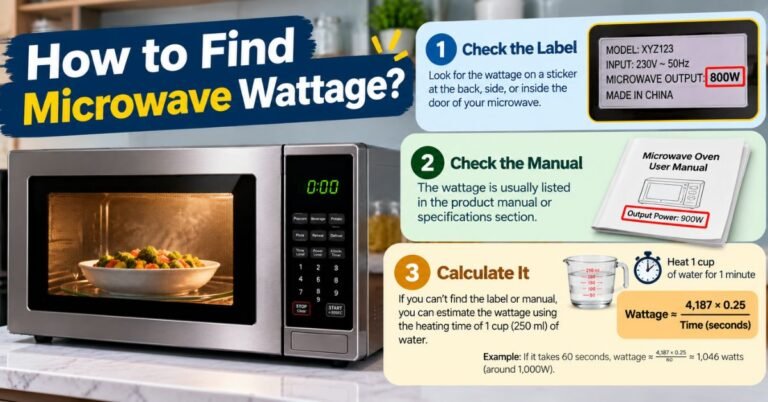
This exception is not universal. Always check the manual for your exact microwave model before using foil.
If the manual permits it, follow these rules:
-
Use only a small, smooth piece of foil.
-
Cover only a small part of the food.
-
Keep the foil at least one inch away from the oven walls, ceiling, floor, and door.
-
Do not let foil touch another metal item.
-
Remove any wrinkles, folds, or sharp points.
-
Stay near the microwave and watch it while it runs.
-
Stop the microwave immediately if you see sparks or hear loud popping.
Do not use foil to wrap food completely. A fully wrapped item can block microwave energy and may heat poorly. It can also create a greater chance of arcing.
Even when a manual allows foil, the safer choice is usually a microwave-safe cover or a small piece of parchment paper labeled for microwave use.
What happens if you put aluminum foil in the microwave?
The result depends on the amount of foil, its shape, its location, and the microwave’s design. You may see no problem, or you may see sparks within seconds.
Possible results include:
• No visible reaction when a small, smooth piece is used correctly.
• Uneven cooking because the foil reflects microwave energy.
• A buzzing, popping, or snapping sound.
• Bright blue or yellow sparks near foil edges.
• Smoke or a burnt smell.
• Damage to the microwave’s interior coating.
• A fire if sparks reach food, grease, or packaging.
A common mistake is assuming that one safe-looking test proves aluminum foil is always safe. It does not. A different shape, a larger sheet, or a slightly different position can change the result.
Microwave safety is a bit like using a campfire. A controlled flame may be useful, but a loose spark near dry paper can quickly become a problem.
Is it safe to microwave food covered with foil?
Usually, no. Covering a dish with aluminum foil can prevent microwave energy from reaching the food. The food may remain cold in the center while the foil becomes hot or begins to spark.
Foil can also trap steam when it covers food tightly. If steam has no way to escape, the container or food may burst when opened.
Use one of these safer options instead:
• A microwave-safe glass lid with a vent.
• A microwave-safe plastic cover.
• A damp paper towel.
• Microwave-safe parchment paper.
• A microwave-safe ceramic plate placed loosely over the dish.
Leave a small opening for steam unless the cover is designed with a vent. Be careful when removing the cover because hot steam can burn your hands and face.

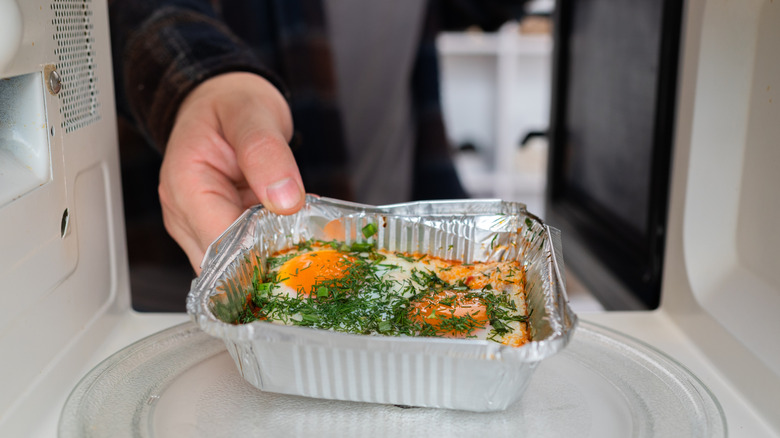
Can you microwave aluminum foil trays?
Many frozen meals and takeout foods come in aluminum trays. The answer depends on the tray, the food, and the package instructions.
Some aluminum trays are designed for microwave use. Others are made only for conventional ovens. Never guess based on appearance. Look for clear wording such as “microwave-safe” or specific heating instructions.
If the package says the tray is microwave-safe:
• Remove any foil lid unless the instructions say to keep it on.
• Place the tray in the center of the turntable.
• Make sure it does not touch the microwave walls.
• Use the recommended power level and time.
• Stop the oven if you see sparks.
• Transfer the food to glass or ceramic if the instructions are unclear.
Do not microwave a takeout container with a metal rim, foil lining, or hidden metal handle unless the packaging specifically says it is safe. When in doubt, move the food to a microwave-safe dish.

Can you put aluminum foil in the microwave with food?
It is best not to do so unless the microwave manual and food package both permit it. Food can make the situation less predictable because moisture, grease, salt, and food particles may affect how heat moves around the foil.
For example, a small piece of foil on a dry, smooth surface may act differently from foil touching salty sauce. A folded corner may spark even when a flat piece does not.
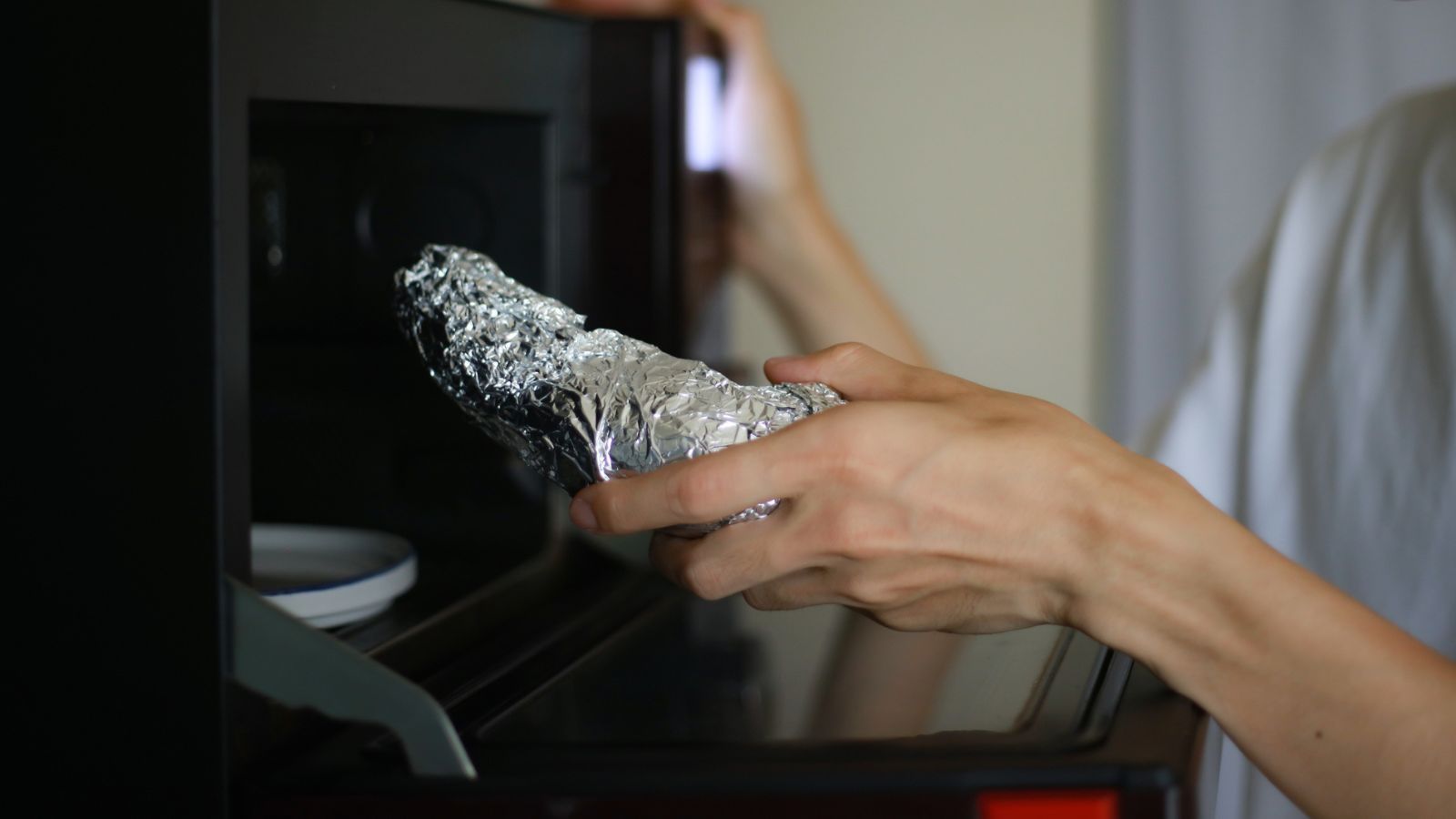
Never use foil as a full food wrapper in the microwave. This includes:
• Foil-wrapped sandwiches.
• Foil-wrapped baked potatoes.
• Foil-wrapped leftovers.
• Foil-covered plates.
• Foil pouches.
Instead, unwrap the food and place it on a microwave-safe plate. Cover it with a vented lid or damp paper towel if you want to reduce splatter.

What to do if aluminum foil sparks in the microwave
If foil begins sparking, stay calm and act quickly.
-
Press the stop or cancel button.
-
Keep the microwave door closed for a moment if you see flames.
-
Unplug the microwave only if you can do so safely and without reaching through smoke or fire.
-
Wait until the sparks or flames stop.
-
Let the appliance cool before opening it.
-
Remove the foil with oven mitts if it is safe to do so.
-
Check the inside for burn marks, melted coating, or damage.
Do not pour water into a microwave fire. Water can spread burning grease and may create an electrical hazard.
If the fire continues after the microwave stops, leave the area and call emergency services. A small fire extinguisher rated for kitchen fires may help, but only if you know how to use it and have a clear escape route.
After an arcing event, inspect the microwave carefully. A small dark mark may be superficial, but exposed metal, a damaged waveguide cover, peeling paint, or a strong burnt smell can indicate a repair issue. Do not use the appliance until a qualified technician confirms that it is safe.

Common mistakes to avoid
People often search “can you put aluminum foil in the microwave” after seeing mixed advice online. The confusion usually comes from confusing a limited exception with a general safety rule.
Avoid these mistakes:
• Do not test foil by running the microwave for a few seconds.
• Do not use crumpled foil.
• Do not let foil touch the oven wall.
• Do not place foil under food to catch drips.
• Do not microwave foil with metal utensils.
• Do not assume an aluminum tray is microwave-safe.
• Do not leave the appliance unattended when foil is allowed.
• Do not ignore a buzzing sound, flash, or burnt odor.
In practical kitchen testing, the safest habit is to remove foil before reheating leftovers. It takes only a few seconds and removes most of the risk. This small habit also prevents uneven heating and makes it easier to stir food safely.
Safer alternatives to aluminum foil in the microwave
You usually do not need foil for its most common jobs. Several microwave-safe materials work better.
To cover food
Use a vented microwave cover, glass lid, or microwave-safe ceramic plate. These options help prevent splashes while allowing steam to escape.
To prevent splatter
Use a damp paper towel or a cover made for microwave cooking. Avoid paper towels with metallic designs, glitter, or foil decorations.
To shield thin food edges
Adjust the microwave power instead of using foil. Lower power and longer cooking can help heat food more evenly. Stirring and rotating the dish can also reduce hot spots.
To reheat wrapped food
Remove all foil and place the food on a microwave-safe plate. For crisp foods, a toaster oven or conventional oven may work better than a microwave.
To catch spills
Place the dish on a microwave-safe plate or tray. Do not line the microwave floor with aluminum foil because it can reflect energy and cause arcing.
How to choose microwave-safe containers
A container marked “microwave-safe” has been tested for use under normal microwave conditions. It should not melt, crack, or release unsafe substances when used as directed.
Good choices include:
• Heat-resistant glass.
• Plain ceramic.
• Microwave-safe plastic.
• Microwave-safe paper products.
• Silicone products labeled for microwave use.
Avoid containers that are not clearly labeled. Some plastic containers can soften or warp. Disposable food packaging may also contain coatings, inks, or hidden metal.
Never use crystal, leaded glass, metal cookware, or containers with metallic paint. Be careful with sealed jars and tightly closed containers because pressure can build inside.
Expert safety guidance and important limits
U.S. food safety guidance warns that metal can reflect microwave energy and may cause uneven heating or arcing. Microwave manufacturers also provide model-specific rules, and those instructions should take priority over general advice.
There is no single rule that covers every microwave oven and every foil product. A foil tray approved for one appliance may not be approved for another. Packaging instructions also matter because the food maker may have tested a specific tray, power level, and cooking time.
This is why the most reliable answer to “can you put aluminum foil in the microwave” is: only when the manufacturer or package directions clearly allow it. If the instructions are missing or unclear, choose glass, ceramic, or another labeled microwave-safe material.
Frequently Asked Questions About Can You Put Aluminum Foil in the Microwave
Can you put a small piece of aluminum foil in the microwave?
Sometimes, but only if the microwave manual allows it. The foil must be smooth, small, away from the oven walls, and used only to shield a limited part of the food.
Can aluminum foil catch fire in a microwave?
Yes, it can catch fire if it sparks near food, grease, paper, or other flammable material. Crumpled foil and sharp edges create a higher risk of arcing.
Can you microwave aluminum foil for a few seconds?
You should not use a short cooking time as a safety test. Foil may spark almost at once, and even a brief arc can damage the microwave or ignite nearby material.
Can you put an aluminum takeout container in the microwave?
Only if the container is clearly labeled microwave-safe and the package gives proper instructions. When there is no label, transfer the food to a microwave-safe glass or ceramic dish.
Can you microwave food wrapped in aluminum foil?
No, not as a general practice. Remove the foil and place the food on a microwave-safe plate before reheating.
What should you do if foil sparks in the microwave?
Stop the microwave at once and keep the door closed if flames are present. After the appliance cools, remove the foil and check for damage before using the microwave again.
Is aluminum foil safer than plastic wrap in the microwave?
Not necessarily. Aluminum foil can spark, while some plastic wrap can melt or release unwanted substances if it is not microwave-safe. Use a product labeled for microwave use and keep it from touching the food unless the label says it is suitable.
Conclusion
So, can you put aluminum foil in the microwave? Most of the time, you should not. Foil can reflect microwave energy, create sparks, damage the appliance, and possibly start a fire.
A limited amount of smooth foil may be acceptable in some microwaves, but only when the manual or food package gives clear permission. For everyday reheating, use glass, ceramic, a vented cover, or a damp paper towel instead.
Make it a habit to remove foil before pressing Start. Check your microwave manual, follow package directions, and share your own kitchen safety tips in the comments.