How To Dispose Of A Microwave: Safe Options
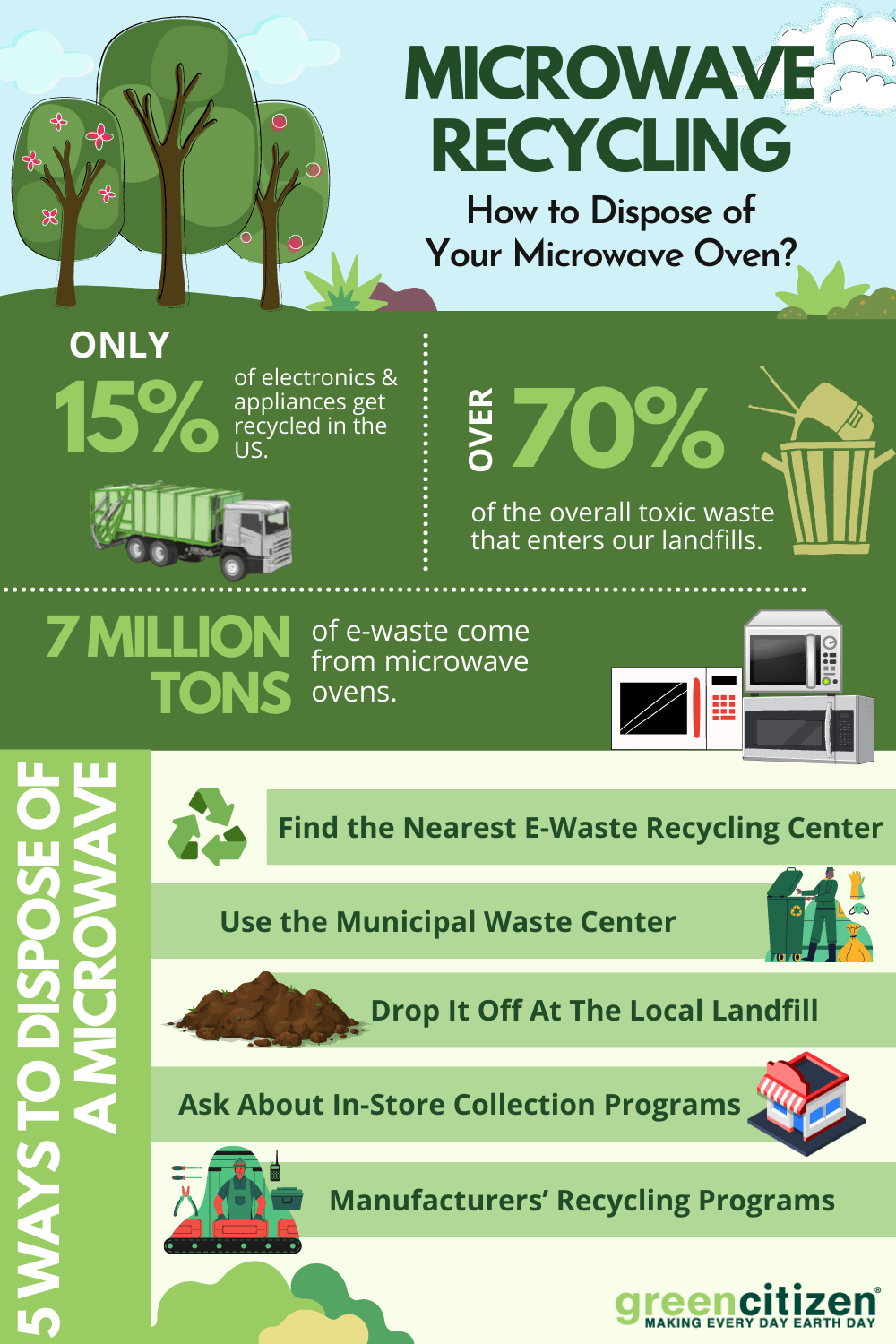
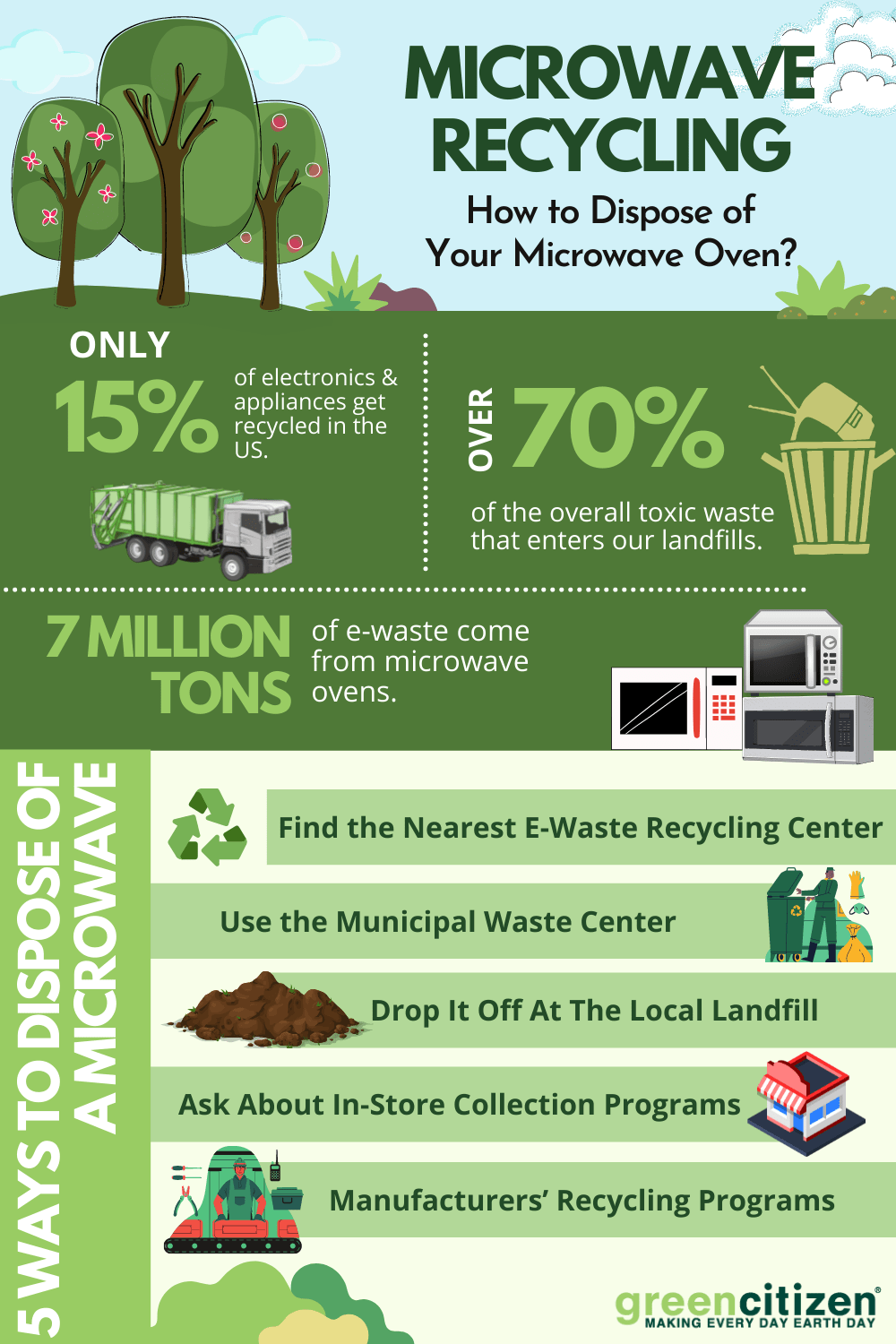
The safest way to dispose of a microwave in the U.S. is to reuse, donate, recycle, or take it to a local appliance or electronics drop-off site. Do not open the microwave or place it in a recycling bin unless your local program specifically accepts it.
Start by checking your city, county, or waste company’s rules. Search for “microwave disposal near me,” “appliance recycling,” or “electronics recycling” on an official local government website. Some areas accept microwaves at transfer stations or scrap-metal sites. Others require a scheduled bulky-item pickup.
A working microwave may have more value as a donation than as scrap. A broken unit should go through an approved appliance, metal, or e-waste program.

First, identify the type of microwave
Your disposal plan depends on where the microwave is installed.
| Microwave type | Typical disposal path | Extra concern |
|---|---|---|
| Countertop microwave | Donation, appliance recycling, scrap-metal drop-off, or local bulky-waste service | Easy to unplug and move |
| Over-the-range microwave | Appliance recycling or retailer haul-away | It is mounted and may need two people to remove it |
| Built-in microwave | Retailer, installer, appliance service, or local disposal program | Cabinet work or electrical changes may be needed |
| Microwave with a damaged cord | Appliance or e-waste recycling | Do not use or donate it |
| Commercial microwave | Commercial appliance recycler or waste contractor | Local household programs may not accept it |
A countertop microwave is usually the simplest to handle. An over-the-range or built-in model may be connected to a wall outlet, cabinet, vent, or mounting bracket. If removal involves hardwiring, gas equipment, cabinetry, or a heavy unit, use a qualified installer or appliance technician.
A microwave is an electrical appliance, not ordinary packaging. It contains metal, circuit boards, wiring, glass, and other materials that may be recovered. The U.S. Environmental Protection Agency recommends using responsible electronics recyclers and checking local rules because collection systems differ by community.

The best ways to dispose of a microwave
Choose the option that matches the microwave’s condition and your local rules. The best route is usually the one that keeps a working appliance in use and sends a broken one to a proper recovery facility.
1. Donate or give away a working microwave
Donation is often the simplest option when the microwave works well and is clean.
Before offering it, check that:
- The door closes fully.
- The door seal is not torn or loose.
- The inside has no fire damage.
- The power cord and plug are intact.
- The turntable and support ring work.
- The controls respond normally.
- The microwave heats food without unusual sparks, smoke, or burning smells.
Contact local charities, community centers, shelters, thrift stores, or mutual-aid groups before taking the appliance there. Many donation centers accept only certain appliance sizes or conditions. Some will not accept used microwaves because of testing, storage, or safety limits.
You can also offer a working unit through a local “buy nothing” group or community exchange. Describe its condition honestly. Include the brand, approximate size, age if known, and whether the buyer or recipient must pick it up.
Do not donate a microwave with a damaged door, exposed wire, burn marks, a missing waveguide cover, or a history of sparking.
2. Use a local appliance recycling program
Many local recycling centers accept small appliances, large appliances, or scrap metal. Acceptance is not automatic, so check before you drive there.
Look for these terms on your local solid-waste website:
- Appliance recycling
- Small appliance recycling
- Scrap metal drop-off
- Electronics recycling
- Household hazardous waste
- Bulky-item collection
- Transfer station
The EPA’s electronics recycling guidance explains that local programs and certified recyclers may handle unwanted electronics in different ways. A microwave may be managed as an appliance, electronic equipment, or scrap metal depending on the facility.
Ask the facility:
- Do you accept household microwaves?
- Is there a fee?
- Do you accept countertop and over-the-range models?
- Must the microwave be placed in a specific area?
- Do you offer pickup?
- Do you require proof of residency?
- Do you accept units that do not work?
3. Arrange retailer haul-away
Some appliance retailers offer haul-away when they deliver a replacement. The service may be free, paid, or limited to certain appliance types and delivery areas.
Ask about haul-away before placing the order. Confirm whether the retailer will:
- Remove a countertop unit only
- Disconnect and remove an over-the-range unit
- Handle a built-in model
- Take a broken microwave
- Carry the unit down stairs
- Recycle it after pickup
Do not assume a retailer will remove a microwave bought from another store. Policies vary by company and location.
4. Schedule bulky-waste pickup
Some cities and waste companies collect microwaves with bulky household items. This can be useful when you cannot transport the appliance.
Read the pickup rules closely. You may need to:
- Book a date in advance
- Pay a collection fee
- Place the microwave at the curb
- Keep it dry
- Put it out only during a set time
- Follow limits on the number of items
Do not leave the microwave on the curb without checking the rules. Unscheduled items may be rejected, damaged by weather, or taken by an unauthorized scavenger.
5. Take it to a scrap-metal recycler
A scrap-metal yard may accept a microwave because it contains steel, copper, aluminum, and other recoverable materials. Call first. Some yards accept microwaves only during specific hours or may not take appliances with certain components.
Do not dismantle the microwave yourself to increase its scrap value. The labor and safety risk are not worth it. Let the recycling facility handle separation and processing.
6. Use a household hazardous-waste program only when directed
Some local household hazardous-waste programs accept small appliances or electronics. Others do not. A microwave is not automatically household hazardous waste just because it contains electrical parts.
Use the program’s own acceptance list. Do not label the microwave as hazardous unless the local agency instructs you to do so.

How to prepare a microwave for disposal
Preparation takes only a few minutes, but it helps prevent damage and injury.
Step 1: Unplug the microwave
Unplug the unit from the wall. Pull the plug by its body, not by the cord.
If the plug, cord, or outlet is hot, burned, melted, or damaged, stop. Do not touch exposed wires. Contact a qualified electrician or ask the disposal service how to handle the unit.
Step 2: Let it cool
If the microwave was used recently, wait until it is cool. Remove food, containers, and the glass turntable after the unit has cooled.
Step 3: Clean out food and liquid
Wipe away food, grease, and spills. A clean appliance is easier to donate and safer to transport.
Do not spray cleaner into vents, controls, the plug, or the inside of the electrical cabinet. Use a damp cloth and dry the surfaces.
Step 4: Check for damage
Look at the door, hinges, seal, plug, cord, interior, and outer case. If you see fire damage, a cracked door, exposed wiring, or heavy rust near the door, do not donate the unit.
Tell the recycler about major damage when you schedule the drop-off or pickup.
Step 5: Secure loose parts
Remove the glass turntable and support ring if they come out easily. Wrap them in a towel or cardboard so they do not break.
Tape the power cord loosely to the side of the microwave. Do not cut the cord. Cutting it can create a sharp wire hazard and does not make the appliance safer to recycle.
Step 6: Protect the unit during transport
Keep the microwave upright when possible. Use two people for heavy models. Place it in a vehicle where it cannot slide or fall.
Do not place heavy items on top of the microwave. Keep the glass tray separate if it could move during transport.
How to remove an over-the-range or built-in microwave
Do not remove a mounted microwave alone. These units can be heavy, awkward, and attached to a wall bracket or cabinet.
For a plug-in model, removal may involve:
- Unplugging the unit.
- Supporting its weight from below.
- Removing mounting screws.
- Tilting or lowering the microwave from its bracket.
- Moving it with a second person.
The exact process depends on the model and installation. Read the owner’s manual before removal.
Stop and call a qualified professional if the microwave is hardwired, connected to a vent system that must be changed, mounted in a way you cannot identify, or too heavy to control safely. Turn off the correct circuit breaker before any work near hardwired electrical connections, but do not disconnect wiring unless you are qualified to do so.
If you rent your home, ask the landlord or property manager before removing a built-in appliance. The microwave may belong to the property owner.
Can you put a microwave in the trash?
Sometimes local waste services allow it, but you should not assume that they do.
A microwave may be accepted as regular trash, bulky waste, scrap metal, or electronics depending on the local system. Some waste companies prohibit appliances in curbside garbage. Others accept them only during special collection events.
Check your local solid-waste rules before putting the microwave in a trash cart or beside the curb. Use the official city, county, or waste-hauler website rather than relying on a general recycling label.
Even when a landfill accepts microwaves, recycling may recover more of the appliance’s materials. If recycling is available at a reasonable cost, it is usually the better choice.
What not to do with an old microwave
Avoid these common disposal mistakes:
- Do not open the metal cover. A microwave can contain a high-voltage capacitor that may retain a dangerous charge even after the unit is unplugged.
- Do not try to remove the capacitor, transformer, magnetron, or other internal parts.
- Do not burn the microwave. Burning electronics can release harmful smoke and damage the appliance beyond safe recovery.
- Do not place it in a curbside recycling bin unless your local program specifically lists microwaves as accepted.
- Do not donate a microwave with a broken door or fire damage.
- Do not leave it outside in an unauthorized location.
- Do not place a heavy microwave in a cardboard recycling bin.
- Do not assume a retailer will take it without confirming the service.
- Do not put a built-in microwave in the trash before checking ownership and removal requirements.
The high-voltage parts are the main reason to leave internal repairs and dismantling to trained technicians or approved recyclers. Unplugging the appliance makes it safer to move, but it does not make internal components safe to handle.
What is the cheapest way to dispose of a microwave?
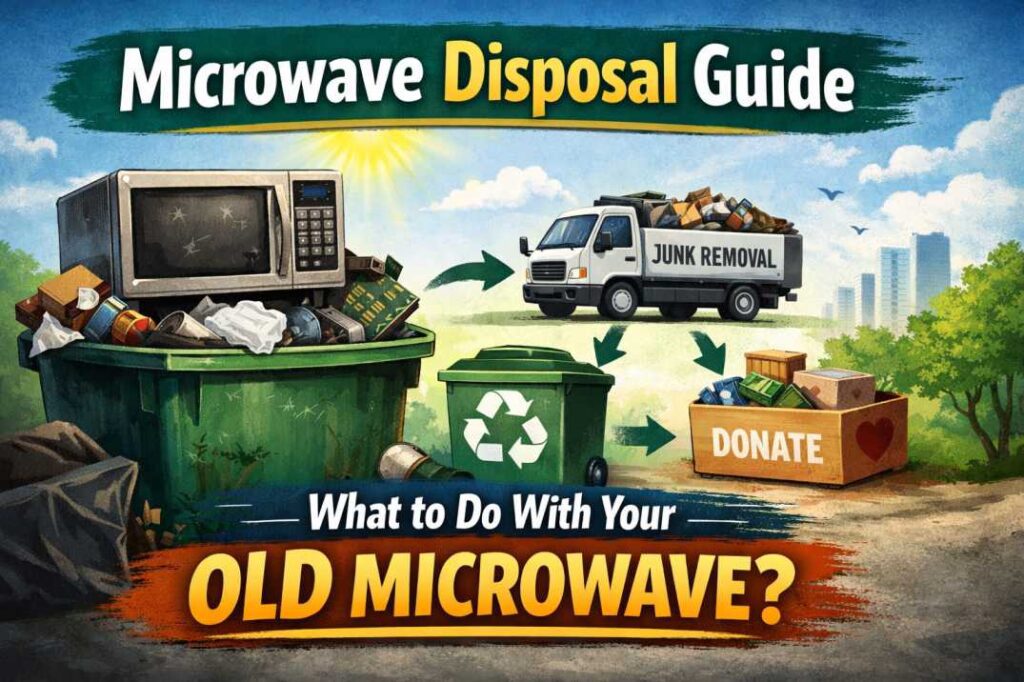
The cheapest option is often to give away a clean, working microwave or use a free local appliance drop-off. Some municipalities include appliance collection in normal service, while others charge a fee.
| Situation | Likely low-cost option |
|---|---|
| Clean and working | Give away or donate |
| Broken countertop model | Free municipal drop-off or scrap-metal site |
| Heavy or mounted model | Retailer haul-away with replacement |
| No vehicle | Bulky-item pickup or recycler pickup |
| Rural area | Save it for a scheduled recycling event |
| Rental property | Ask the landlord or property manager |
Fees vary by city, facility, weight, and pickup method. Call before traveling so you do not pay for transport to a site that rejects microwaves.

What to do if the microwave sparks, smokes, or has fire damage
If the microwave is sparking or smoking during use, turn it off and unplug it if you can do so safely. Do not use it again.
If there is an active fire, leave the area and call 911. Do not pour water into an energized appliance or attempt an internal repair.
Once the appliance is cool and safe to move, tell the recycling center or waste company that it has fire or electrical damage. They may give special handling instructions. Do not donate or resell a damaged unit as a working appliance.
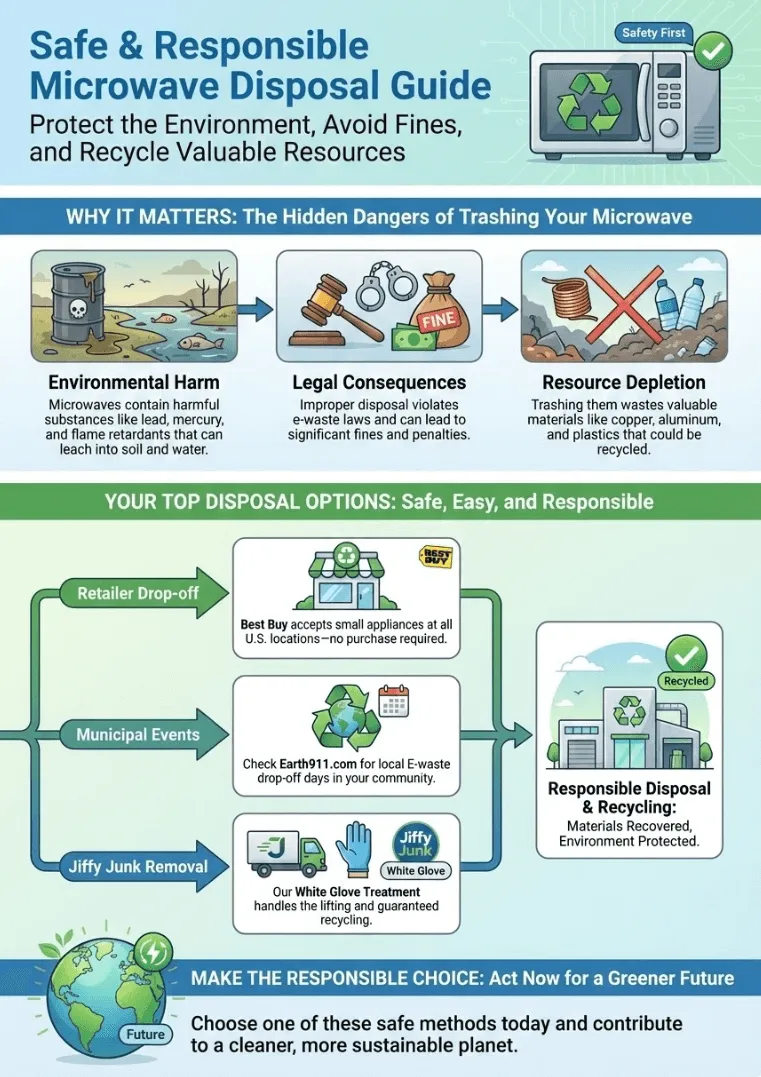
Quick takeaways
- Check local rules before using the trash, recycling bin, or curb.
- Donate a clean, working microwave when a local organization accepts it.
- Use an appliance, scrap-metal, electronics, or bulky-waste program for broken units.
- Confirm retailer haul-away terms before delivery.
- Unplug the appliance, remove food, and secure loose parts.
- Never open or dismantle a microwave because internal parts can remain dangerous.
- Get help removing over-the-range and built-in models.
Frequently asked questions
Can I recycle a microwave with curbside recycling?
Usually not. Most curbside recycling programs are designed for containers, paper, cardboard, and approved packaging. A microwave is an electrical appliance and may damage sorting equipment. Check your local program’s accepted-items list.
Does Best Buy or another retailer recycle microwaves?
Some retailers offer appliance recycling or haul-away, but acceptance rules and fees vary by store, product type, and delivery service. Confirm the policy with the specific retailer before you go or schedule delivery.
Should I remove the microwave’s battery before recycling?
Most household microwaves do not contain a user-removable battery. Do not open the appliance to look for one. If the unit has a separate battery-powered accessory, follow the battery disposal instructions from your local program.
Can I sell an old microwave?
Yes, if it works safely and has no damaged door, exposed wire, fire damage, or other serious defect. Describe its condition accurately and provide the approximate size and age. Do not sell a microwave that you would not use yourself.
Can I leave a microwave beside a dumpster?
Only if the property owner or waste service allows it. Many apartment and commercial dumpsters prohibit appliances. Ask the property manager or waste company about bulky-item collection instead.
Final recommendation
For a working microwave, first try donation or a local free-give group. For a broken microwave, call your city, county, transfer station, appliance recycler, or scrap-metal facility and confirm acceptance before transport. If the microwave is mounted, hardwired, damaged, or difficult to move, use a qualified professional or a pickup service.
The safest rule is simple: do not dismantle the microwave, and do not guess about local disposal rules.