Why Does Metal Spark In Microwave: Is It Safe?
Metal sparks in a microwave when electric fields create tiny arcs across sharp edges, gaps, or thin metal surfaces.
If you have ever seen blue flashes inside a microwave, you may have wondered, “why does metal spark in microwave?” The answer involves radio waves, electric fields, electrons, and the shape of the metal. This guide explains the science in simple terms, shows which metal items are risky, and shares safe steps to take when sparking starts.
Why Does Metal Spark in Microwave?
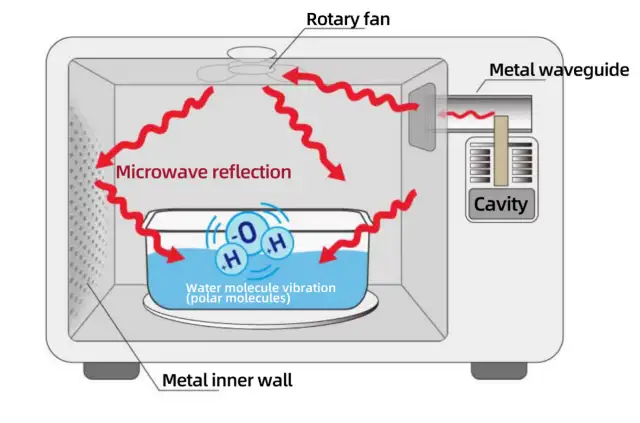
A microwave oven heats food with electromagnetic waves, often near 2.45 gigahertz. These waves make water molecules in food move rapidly, producing heat. Metal reacts to the same electric field in a very different way.
Metal contains free electrons that can move easily. When microwave energy reaches a metal object, the electric field pushes these electrons across its surface. The metal does not usually absorb much microwave energy. Instead, it reflects much of it.
The real problem begins when the electric charge gathers in one small area. Sharp points, jagged edges, thin strips, and small gaps can create a very strong electric field. If that field becomes strong enough, it can pull electrons through the air.
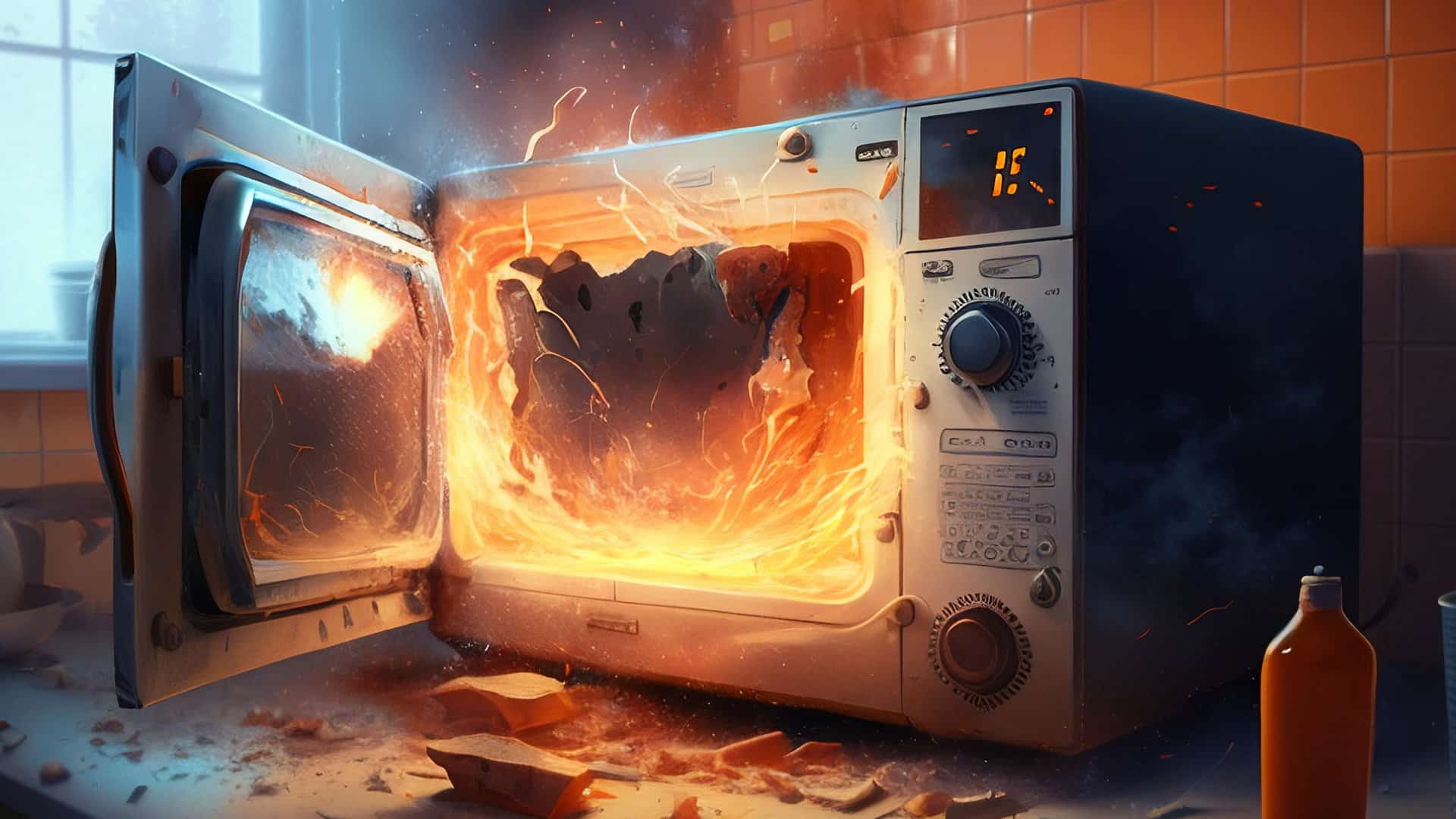
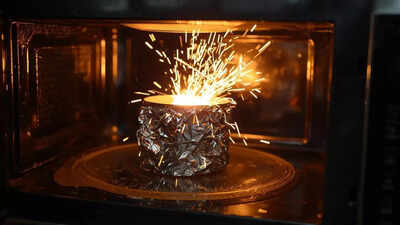
This creates an electrical arc, which looks like a spark. The spark may appear blue, white, or yellow. It can also make a snapping sound and leave a dark burn mark.
A simple way to picture this is to compare metal to water flowing through a pipe. A smooth, wide pipe spreads the flow. A narrow crack or sharp bend creates pressure in one spot. In a microwave, that pressure can become a spark.
How Microwaves Interact With Metal
Microwaves are a form of radio-frequency energy. They are not the same as visible light, but they follow similar principles. They travel through the oven cavity and bounce off metal walls.
The metal walls are useful because they keep the microwave energy inside the oven. They also reflect the waves toward the food. This is why the inside of a microwave is made from metal, even though loose metal objects can cause trouble.
When a separate metal object sits inside the oven, several things may happen:
• The metal reflects microwave energy instead of absorbing it.
• Electric charges move across the metal surface.
• Charge may collect at corners, points, folds, or damaged areas.
• A strong electric field may form between nearby metal surfaces.
• The air may become ionized, allowing an arc to jump across a gap.
The arc is similar to a very small lightning bolt. It happens when the electric field becomes strong enough to break down the air. Once the air becomes ionized, electrons move through it more easily.
This is the key reason why does metal spark in microwave is not answered by simply saying “metal and microwaves do not mix.” The shape, size, position, and condition of the metal all matter.

Why Sharp Edges and Thin Metal Are More Dangerous
Smooth, rounded metal surfaces often behave better than thin or pointed pieces. A spoon with a rounded bowl may not spark in every microwave, while a fork can spark quickly because its tines act like small antennas.
The highest-risk features include:
• Forks, knives, and other pointed utensils
• Crumpled aluminum foil
• Foil edges close to the oven wall
• Metal twist ties
• Metallic decorations on plates and cups
• Damaged metal racks
• Small pieces of metal separated by narrow gaps
A sharp point concentrates the electric field. This makes it easier for an arc to start. Thin foil is also risky because it can heat quickly and develop hot spots.
Crumpled foil creates many points and folds. Each fold can concentrate electrical energy. If two parts of the foil come close together, an arc may jump between them.
A smooth, solid object with no sharp points may not spark right away. However, that does not make it automatically safe. The object may reflect energy unevenly, damage the oven, or become extremely hot.

Why Does Metal Spark in Microwave When It Is Near Food?
Food can change the way a metal object behaves. Moist food absorbs microwave energy, while metal reflects much of it. This difference can increase the strength of the electric field in nearby areas.
A metal container may also trap steam. If the container has a tight lid, pressure can build as the food heats. This creates a separate hazard from sparking.
Food residue can make the situation worse. Grease, salt, sauce, or dried food may heat quickly on the metal surface. A small amount of residue can char and start smoking.
In some cases, food helps reduce sparking because it absorbs part of the microwave energy. In other cases, food can make an arc more likely by creating moisture, steam, or a conductive path.
This explains why the same metal object may behave differently from one heating cycle to another. The position of the item, the amount of food, the cooking time, and the oven design all affect the result.

Common Metal Items That Can Spark
Not every metal item carries the same level of risk. The safest approach is to follow the instructions printed in your microwave manual and on the food package.
Aluminum foil
Small, smooth pieces of foil may be allowed in some ovens for shielding parts of food. The foil must not touch the oven walls, and it must not be wrinkled or pointed.
Because instructions vary, never assume foil is safe just because a previous use caused no sparks.
Forks and knives
Fork tines and knife tips create sharp points. They can produce strong electric fields and start an arc. Keep them out of the microwave unless the manufacturer specifically permits them.
Metal-trimmed dishes
Gold, silver, or metallic paint on plates and cups can spark. The decorative line may be thin, uneven, or damaged. It can also heat enough to crack the dish or scorch nearby material.
Twist ties and wire
Wire twist ties often have thin metal strands or exposed ends. These ends can act like antennas and create sparks. Remove them before heating food.
Metal racks
Some microwaves include metal racks designed for that specific model. These racks may be safe because they have the correct shape, spacing, and placement.
A rack made for one oven should not be moved to another oven. The design and distance from the cavity walls matter.

Are Microwaves Damaged by Metal Sparks?
A brief spark does not always destroy a microwave, but repeated arcing can cause damage. The spark may burn the oven’s interior coating, damage the waveguide cover, or create carbon marks.
A carbon mark can act like a new electrical path. This may make future arcing easier. In serious cases, the waveguide cover can burn through, and the microwave may need professional repair.
Stop the oven immediately if you notice:
• Continuous sparks
• Flames or smoke
• A strong burning smell
• A loud buzzing or popping sound
• A damaged interior coating
• A scorched waveguide cover
If a fire starts, keep the microwave door closed and unplug the unit if you can do so safely. Do not open the door to remove burning food, because fresh oxygen may feed the flame. If the fire does not stop, leave the area and contact emergency services.

What to Do If Metal Sparks in Your Microwave
If you see a spark, stay calm and act quickly. Most small arcs stop when the microwave stops operating.
-
Press the stop or cancel button.
-
Unplug the microwave if it is safe to reach the plug.
-
Wait until the interior is cool.
-
Remove the metal item with care.
-
Check the cavity for burn marks, melted coating, or damage.
-
Wipe away food residue after the oven cools.
-
Read the manual before using the microwave again.
Do not restart the oven to “see if it happens again.” A second test can create more damage. If you see a hole, deep burn, exposed metal, or damage to the waveguide cover, stop using the appliance.
A small amount of surface discoloration may not affect operation, but it is still wise to monitor the oven. When in doubt, ask a qualified appliance technician for an inspection.
Can You Safely Use Any Metal in a Microwave?
The answer depends on the microwave and the object. Metal is not always forbidden. The oven cavity itself is metal, and some models include approved metal racks or browning accessories.
Manufacturers may also permit limited use of smooth aluminum foil. Such instructions usually include strict rules about size, placement, and contact with the oven walls.
Safe-use principles include:
• Follow the microwave manual.
• Use only accessories approved for that model.
• Keep metal away from the cavity walls unless instructions say otherwise.
• Never use crumpled or torn foil.
• Keep sharp points and exposed wires out of the oven.
• Never heat an empty microwave.
• Do not use metal containers with tight lids.
• Stop heating at the first sign of arcing.
The phrase “microwave-safe” applies to a specific product and use. A container may be safe for reheating but unsafe for grilling, convection cooking, or high-temperature use.

Why Does Metal Spark in Microwave but Metal Walls Do Not?
The metal walls of a microwave are part of the oven’s design. They form a sealed cavity that reflects microwave energy and helps keep it inside. The walls also have broad, smooth surfaces with few exposed sharp points.
A loose metal item is different. It may have corners, dents, gaps, or a thin coating. It may sit close to another surface and create a place where electrical charge gathers.
The oven is engineered around its metal walls. A fork, foil ball, or metal-trimmed bowl was not necessarily engineered for that environment. That difference is why a microwave can safely have metal walls while an everyday metal item may spark.
The same principle appears in electrical systems. A well-designed wire carries current along a planned path. A damaged wire with an exposed end can produce a dangerous arc.
Practical Lessons From Real Kitchen Use
A common mistake is to judge safety by appearance. A smooth metal bowl may look harmless, while a small decorative stripe may seem too thin to matter. In practice, thin metallic coatings can spark faster than a rounded, solid object.
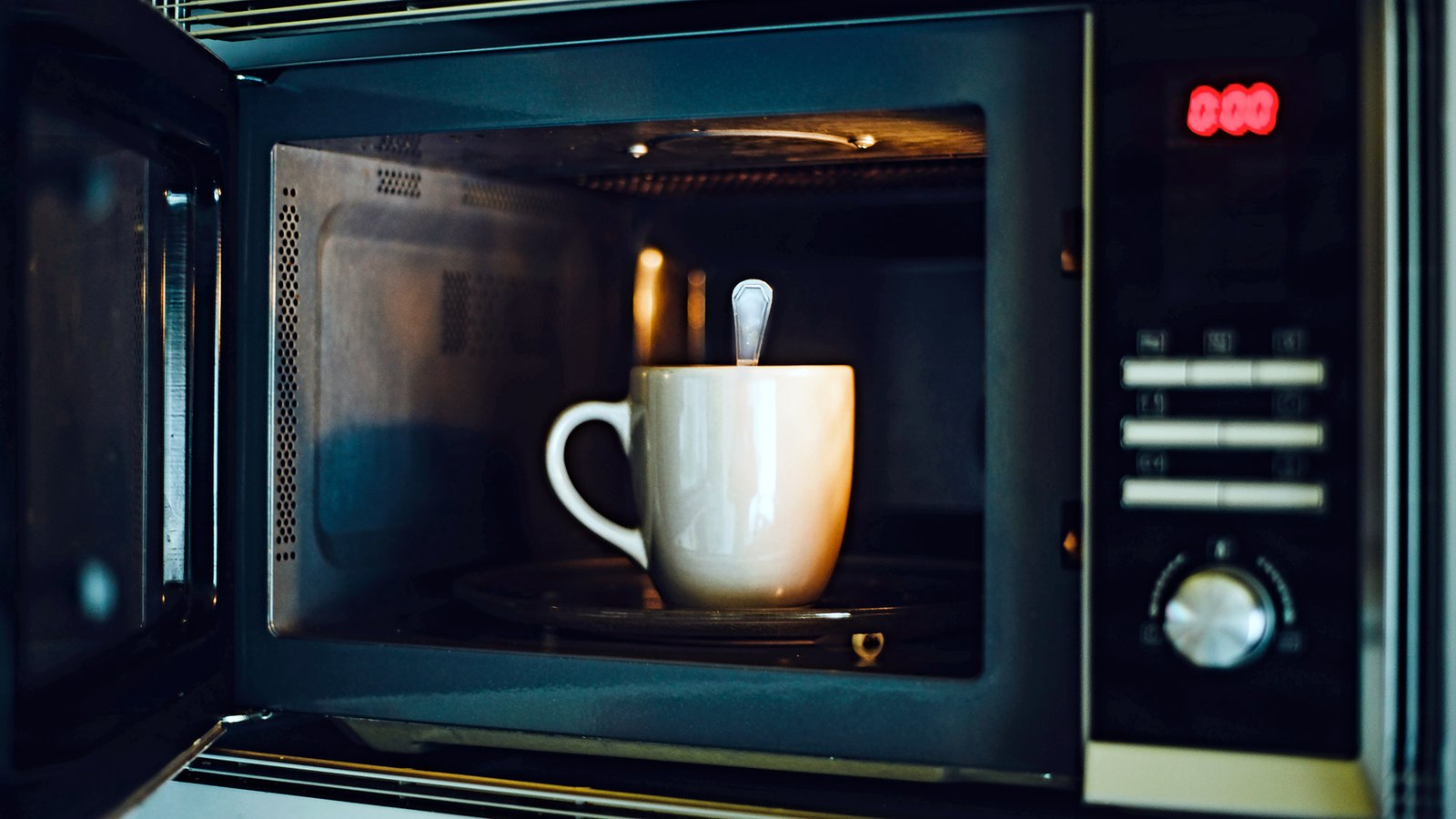
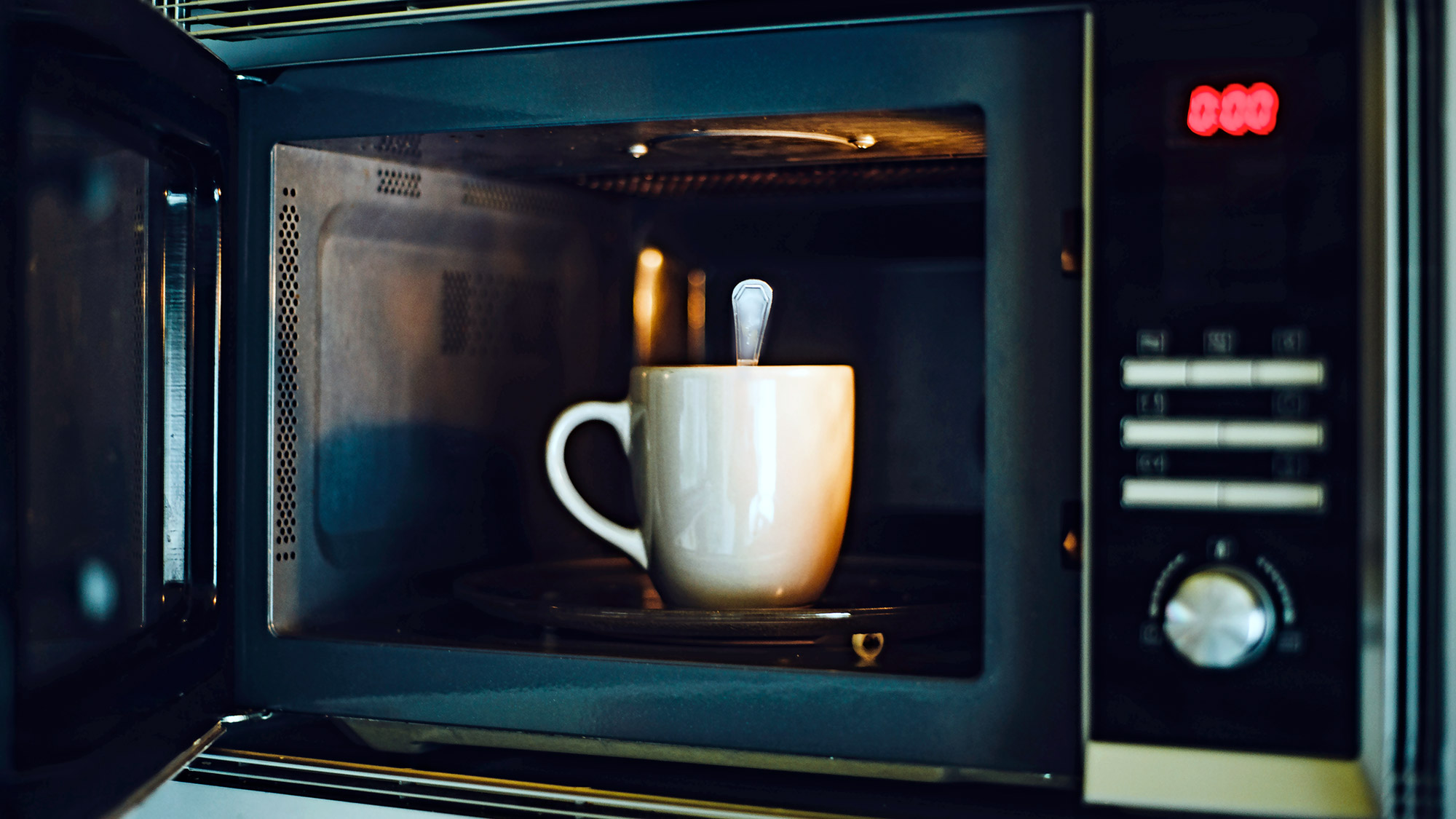
Another mistake is leaving a metal spoon in a cup because it did not spark the first time. The result can change with the spoon’s angle, the cup’s shape, the food or drink level, and the cooking time.
I recommend treating every unexpected spark as useful feedback, not as a harmless experiment. Stop the cycle, inspect the oven, and choose glass, ceramic, or a labeled microwave-safe container instead.
These simple habits prevent most problems:
• Transfer food from takeout containers with metal handles or foil lining.
• Remove twist ties before heating leftovers.
• Check dishes for metallic rims or painted patterns.
• Cover food with a microwave-safe lid or vented cover.
• Use short heating periods and stir food when needed.
• Keep the oven clean and inspect it often.
The safest replacement for questionable metal is usually heat-safe glass or plain ceramic without metallic decoration.
The Science of Arcing in Simple Terms
An arc forms when electrons jump through air. Under normal conditions, air blocks the movement of electrons. A strong electric field can change that by stripping electrons from air molecules.
This creates ionized air, sometimes called plasma. Plasma conducts electricity, so the arc can continue for a short time. The bright flash is the visible result of this fast movement of charged particles.
Microwaves do not make metal radioactive. They also do not usually melt metal during a short heating cycle. The danger comes from concentrated electrical energy, local heating, fire, and damage to the appliance.
The exact behavior is hard to predict without testing a specific object in a specific oven. Microwave power, cavity design, food load, metal shape, and object position all matter. For that reason, general advice cannot replace the manufacturer’s instructions.
Frequently Asked Questions About Why Does Metal Spark in Microwave
Why does metal spark in microwave ovens?
Metal reflects microwave energy and allows electric charges to move across its surface. Sharp edges, points, folds, and gaps can concentrate the charge until it jumps through the air as an arc.
Is it safe to use aluminum foil in a microwave?
Sometimes, but only when the microwave manual or food instructions allow it. Foil must be smooth, small, and kept away from the oven walls and other metal surfaces.
Can a microwave explode because of metal?
Metal usually causes sparks, fire, or appliance damage rather than a true explosion. A sealed metal container can also build dangerous steam pressure, so it should never be heated with a tight lid.
Why do forks spark more than spoons?
Fork tines create sharp points where electric fields become concentrated. A spoon has a smoother, rounded shape, but it can still spark in some conditions and should not be used unless the manufacturer permits it.
What should I do if my microwave starts sparking?
Stop the microwave at once and unplug it if safe. Remove the object after cooling, inspect the oven for damage, and do not use it again if there are flames, deep burn marks, exposed metal, or a damaged waveguide cover.
Are metal microwave racks safe?
A rack supplied with a microwave may be safe when used as directed. Do not use a rack from another model because its size, shape, and spacing may create dangerous arcing.
Conclusion
Why does metal spark in microwave? Metal reflects microwave energy, moves electrical charges across its surface, and can create intense electric fields at sharp edges, folds, and gaps. Those fields may ionize the air and produce a visible arc.
Metal is not automatically unsafe in every microwave. Approved racks and carefully used foil may be allowed, but ordinary forks, crumpled foil, twist ties, and metal-trimmed dishes are common risks.
When in doubt, choose plain glass or ceramic, follow the manufacturer’s instructions, and stop the oven at the first sign of sparking. Share this guide with someone who has seen a microwave flash, and explore your appliance manual for model-specific safety advice.