When Was Microwave Popcorn Invented: A Brief History
Microwave popcorn was invented in stages in the United States. The idea began in 1945, when American engineer Percy Spencer discovered that microwave energy could pop corn. The first practical microwave-popcorn packages appeared in the late 1970s, and microwave popcorn became a major grocery product in the early 1980s.
So, the short answer depends on what “invented” means:
- 1945: Microwave energy was first shown to pop popcorn.
- 1946–1947: Patents helped establish microwave cooking as a usable technology.
- Late 1970s: Special microwave popcorn packaging was developed.
- 1981–1984: Microwave popcorn reached American grocery shelves in a form close to what consumers use today.
The short history of microwave popcorn
Microwave popcorn did not appear in one single moment. It grew from two separate inventions: the microwave oven and the heat-safe popcorn bag.
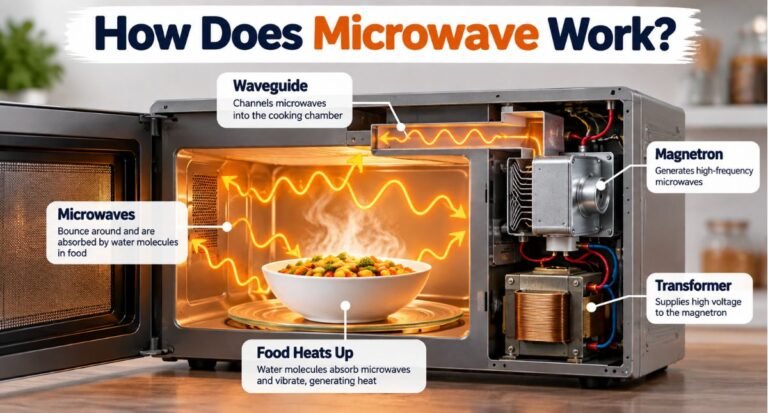
In 1945, Percy Spencer worked for the Raytheon Company in the United States. While testing a magnetron, the device that creates microwave energy, Spencer noticed that heat from the equipment had melted a candy bar in his pocket.
He then tested other foods. According to accounts from Raytheon and the Smithsonian Institution, Spencer placed popcorn near the microwave equipment and saw the kernels pop. This was one of the first recorded demonstrations that microwave energy could cook food.
That experiment proved the basic idea. It did not yet create the packaged microwave popcorn sold in stores today.
A simple timeline
| Year | Development | Why it mattered |
|---|---|---|
| 1945 | Percy Spencer observed popcorn popping near microwave equipment | Showed that microwave energy could pop corn |
| 1946 | Raytheon applied for a patent related to microwave cooking | Helped turn the discovery into a cooking technology |
| 1947 | The first commercial microwave oven, the Radarange, was introduced | Made microwave cooking available outside laboratories |
| Late 1970s | Companies developed packages designed for microwave cooking | Made packaged popcorn more practical |
| 1981–1984 | Microwave popcorn products entered and grew in U.S. grocery stores | Created the modern consumer product |
The key point is that popping popcorn with microwaves and selling microwave popcorn in a bag were different achievements.
Who invented microwave popcorn?
Percy Spencer is usually credited with discovering that microwave energy could pop popcorn. However, he did not invent the modern microwave-popcorn bag by himself.
The finished product required work from food companies, packaging engineers, and patent holders. They had to solve several problems:
- How to hold the kernels, oil, and seasoning in one package
- How to heat the oil without burning the paper
- How to spread heat across the kernels
- How to let the bag expand as the popcorn popped
- How to make the package safe for home microwave ovens
The bag was especially important. A plain paper bag could catch fire or heat unevenly. Modern microwave popcorn packaging uses layered paper, food-safe coatings, and a heat-susceptor material.
A susceptor is a material that absorbs microwave energy and changes it into heat. In a popcorn bag, it helps heat the oil and the bottom of the bag. This supports more even popping than loose kernels in a regular bowl.
Because several inventions were involved, it is more accurate to say that microwave popcorn was developed over time rather than invented by one person on one date.
When did microwave popcorn become a commercial product?
Microwave popcorn became a commercial product in the late 1970s and early 1980s.
Food companies had sold ready-to-pop popcorn before then, but many early products were not convenient for home microwave use. Some required the consumer to add oil and transfer the ingredients to a separate container.
The modern format—a sealed bag containing popcorn kernels, oil, and flavoring—became practical as microwave ovens became common in American homes.
General Mills introduced a microwave popcorn product under the Betty Crocker brand in 1981. Other major brands followed or expanded their microwave popcorn lines during the early 1980s. Orville Redenbacher’s microwave popcorn became widely known during this period as well.
This explains why different sources give different invention dates. One source may refer to Spencer’s 1945 popcorn experiment. Another may refer to the first patent for microwave cooking. A food-history source may use the early 1980s, when microwave popcorn became a recognizable supermarket product.
Why was microwave popcorn not sold widely in 1945?
The first microwave ovens were too large and costly for most homes.
The Radarange, introduced in 1947, was about the size of a large appliance and cost far more than most families could afford. It also used much more power than modern countertop microwave ovens.
Home microwave ovens became more practical in the 1960s and 1970s as manufacturers made them smaller and less expensive. Once more American households owned microwaves, companies had a reason to develop foods designed for them.
The timing also mattered. Popcorn is a good fit for microwave cooking because:
- The kernels contain a small amount of water.
- Microwave energy heats that water.
- Steam builds inside the kernel.
- Pressure causes the kernel to burst.
- The starch expands into popcorn.
The food was simple. The challenge was creating a package that could control the heat.
How does microwave popcorn work?
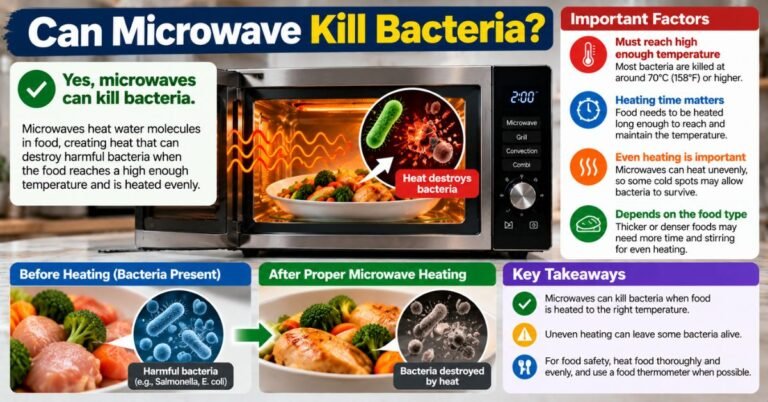
Microwave popcorn works because each kernel contains moisture inside a hard shell.
When the microwave heats the kernel, the water turns into steam. Pressure rises until the shell breaks. The soft starch inside then expands and cools into the white, airy shape people eat.
The oil in the bag serves several purposes. It helps transfer heat, adds flavor, and coats the popped corn. The seasoning is usually mixed with the oil or placed in the bag before cooking.
The bag also helps direct heat. Its special bottom panel can become hot when exposed to microwaves. That panel warms the oil and kernels near the base of the bag.
Why do some kernels remain unpopped?
Unpopped kernels usually lack enough moisture, receive uneven heat, or become trapped in a cool part of the bag. Kernel quality, bag design, microwave power, and cooking time all affect the result.
A microwave oven rated at 1,200 watts may heat a bag faster than an older oven rated at 700 watts. That is why the package instructions usually provide a time range instead of one exact cooking time.
Do not keep heating the bag until every kernel pops. The first sign of a problem is often the smell of burning oil or scorched popcorn. Stop the microwave when the pauses between pops become longer—often about two seconds, depending on the package instructions.
What was the first microwave popcorn brand?
No single brand can be named with complete confidence as the first in every definition of the term. Early products, patents, and test-market launches used different formats and dates.
General Mills is widely associated with one of the first major supermarket microwave popcorn products in the United States. Its Betty Crocker microwave popcorn appeared in 1981. Pillsbury and other food companies also developed microwave popcorn products during the same period.
Orville Redenbacher’s microwave popcorn became a leading brand in the 1980s. Act II also became well known as microwave popcorn grew into a large food category.
The safest historical answer is:
The first commercial microwave popcorn products emerged around 1981, but the technology behind them began with Percy Spencer’s 1945 discovery.
That wording avoids treating one product launch as the entire invention.
Was microwave popcorn invented before the microwave oven?
No. Microwave popcorn depends on microwave cooking technology, so its development followed the discovery and early development of the microwave oven.
Percy Spencer’s popcorn experiment happened in 1945. The first commercial microwave oven appeared in 1947. Consumer microwave ovens became widespread decades later.
Popcorn itself is much older. People had been popping corn with heat long before electricity or microwave ovens existed. The invention was not popcorn; it was the use of microwave energy and specialized packaging to pop it quickly at home.
Is microwave popcorn safe to eat?
Microwave popcorn is generally designed to be heated in a microwave oven according to the package directions. The main risks come from overheating the bag, touching hot oil, or using packaging in a way the manufacturer did not intend.
Follow these basic safety steps:
- Use the cooking time and power setting printed on the package.
- Stay nearby while the bag cooks.
- Stop the microwave when popping slows.
- Open the bag away from your face because steam can escape suddenly.
- Use care when touching the bag; the bottom may be very hot.
- Do not reuse the bag.
- Do not place a microwave-popcorn bag in a conventional oven unless the package specifically permits it.
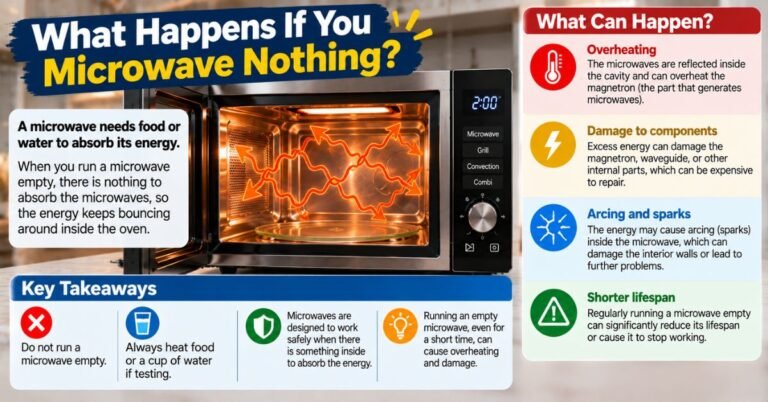
- Never leave the microwave running with an empty bag or an overheated package.
If the bag smokes, smells strongly burned, or catches fire, stop the microwave. Keep the door closed if flames appear, unplug the appliance if it is safe to do so, and let the fire go out. Do not use water on an electrical or oil fire.
Does microwave popcorn contain dangerous chemicals?
The answer has changed over time because manufacturers have changed ingredients and packaging.
In the past, some microwave popcorn products used diacetyl, a flavor chemical associated with a serious lung disease in workers exposed to high airborne levels. Major manufacturers moved away from diacetyl as a butter flavoring in microwave popcorn during the 2000s.
Older bags also used certain grease-resistant chemicals known as PFAS. The use of some of these substances in food packaging has been reduced or phased out in the United States, but packaging rules and product formulas can change.
Consumers should check the current ingredient label and contact the manufacturer if they need information about a specific product. A general history of microwave popcorn cannot establish the ingredients in every brand or every year.
The practical lesson is simple: check the package you have, rather than relying on claims about all microwave popcorn products.
Why does microwave popcorn sometimes burn?
Burning usually results from too much heat, too much time, uneven heating, or a microwave oven with a higher power rating than the package assumes.
Try these steps:
- Check the wattage of the microwave oven.
- Use the package’s recommended power setting.
- Start with the shorter end of the time range.
- Listen for the popping rate to slow.
- Stop the oven when pops are about two seconds apart.
- Let the sealed bag rest briefly before opening it.
Do not rely only on the preset “popcorn” button. Some sensor programs may work well, but results vary by microwave model, bag size, kernel moisture, and brand.
What is the difference between microwave popcorn and regular popcorn?
The kernels are similar, but microwave popcorn is packaged with oil, seasoning, and a bag designed for microwave heating.
Regular popcorn kernels are usually sold plain. You can cook them in a pot, air popper, or microwave-safe bowl with a loose cover. A microwave-popcorn bag is a complete cooking package.
| Type | Main advantage | Main limitation |
|---|---|---|
| Microwave popcorn | Convenient and pre-seasoned | Less control over ingredients and portion |
| Stovetop popcorn | More control over oil and flavor | Requires a pan and attention |
| Air-popped popcorn | Uses little or no added oil | May need seasoning added after cooking |
| Plain kernels in a microwave bowl | Flexible and simple | Requires a suitable bowl and cover |
Never place loose kernels inside a commercial microwave-popcorn bag after removing its original contents. The bag’s design and susceptor are part of the product and should not be treated as a reusable cooking tool.
Key takeaways
- Microwave popcorn began as an American microwave-cooking experiment in 1945.
- Percy Spencer is credited with discovering that microwave energy could pop corn.
- The first commercial microwave ovens appeared in 1947 but were not common in homes.
- Practical microwave-popcorn packaging developed much later.
- Major grocery products appeared around 1981, with rapid growth during the early 1980s.
- The most accurate answer is that microwave popcorn was discovered in 1945 and commercialized about 1981.
Frequently asked questions
When was microwave popcorn invented?
Microwave popcorn was invented in stages. Percy Spencer demonstrated microwave-popped popcorn in 1945, while the packaged product sold in American grocery stores emerged around 1981.
Who discovered that microwaves could pop popcorn?
American engineer Percy Spencer discovered it while working with microwave equipment at Raytheon. His experiment helped show that microwave energy could cook food.
When did microwave popcorn become popular?
Microwave popcorn became popular in the United States during the early and mid-1980s, as home microwave ovens became more common.
Was Percy Spencer the inventor of the microwave popcorn bag?
No. Spencer is associated with the microwave-popping discovery. The modern bag required later work by food companies and packaging engineers.
Can you make popcorn in a microwave without a popcorn bag?
Yes. Plain kernels can be cooked in a microwave-safe bowl with a suitable vented cover. Use a container made for microwave cooking, and never seal it tightly because steam needs a way to escape.
Sources for the history
The timeline above is based on documented accounts and historical records from:
- Smithsonian Institution: The History of the Microwave Oven
- Nobel Prize: Percy Spencer and microwave cooking history
- U.S. Patent and Trademark Office patent records
- Raytheon historical materials
- Historical product and brand records from General Mills and Orville Redenbacher
The exact “first” commercial product can vary by source because companies developed microwave popcorn, its bag, and its retail launch at different times. The clearest answer is therefore a range: 1945 for the discovery, the late 1970s for practical packaging, and about 1981 for commercial microwave popcorn.