Are Microwaves Banned In Russia: The Real Answer
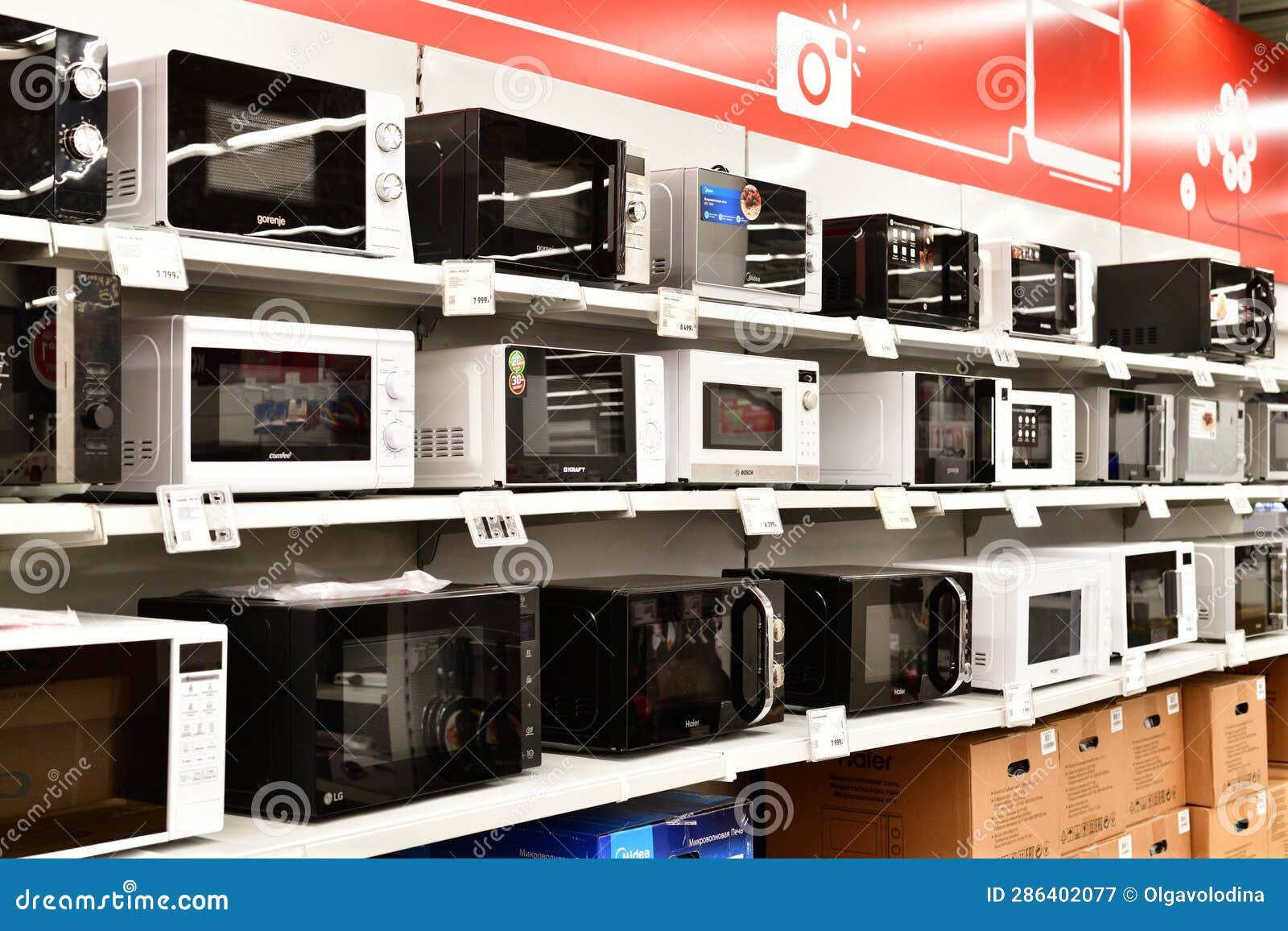
If you live in the United States and have seen posts claiming that Russia banned microwave ovens, the short answer is no. Russia does not have a general ban on household microwaves. Russian homes, shops, and appliance sellers use and sell microwave ovens under normal electrical and safety rules.
The rumor often mixes up modern Russia with the former Soviet Union. It also repeats an old claim that the Soviet Union banned microwaves in 1976 because they were dangerous. Reliable evidence does not support the idea of a lasting nationwide ban.

Are microwave ovens banned in Russia?
No. Microwave ovens are not banned in Russia.
Russia allows the sale and use of microwave ovens. Like other electrical appliances, they must meet technical and safety requirements for the market where they are sold.
The rules may cover areas such as:
- Electrical safety
- Electromagnetic compatibility
- Product labeling
- Construction and insulation
- Fire protection
- Consumer information
- Import and manufacturing requirements
These rules do not mean that microwaves are illegal. They work much like appliance standards in the United States.
Russia is part of the Eurasian Economic Union, or EAEU. Products sold across that market can be subject to EAEU technical regulations, including rules for low-voltage equipment and electromagnetic compatibility. A microwave oven may need the correct conformity marking and documents before it can be sold.
The EAEU technical regulation on low-voltage equipment and the EAEU regulation on electromagnetic compatibility are examples of the type of rules that apply to electrical goods.

Where did the Russian microwave ban story come from?
The story usually comes from claims about a supposed Soviet ban in 1976. Posts often say that Soviet scientists found microwave ovens harmful and that the government later banned them.
That claim has several problems.
First, the Soviet Union was not the same country as modern Russia. The Soviet Union existed from 1922 to 1991. Russia became the Russian Federation after the Soviet Union ended. A claim about an alleged Soviet policy would not automatically prove that Russia has such a policy today.
Second, the alleged ban is often supported by recycled online articles rather than a clear law, government order, or archived national regulation. Many versions repeat the same wording and cite no original Soviet document.
Third, the claim often confuses safety research with a legal ban. Governments have studied microwave radiation, heating, food quality, and appliance safety for decades. Research or regulation does not equal prohibition.
Some older Soviet and Eastern European safety rules may have addressed microwave exposure and equipment design. That would be normal for a powerful electrical device. It does not establish that all household microwave ovens were banned throughout the Soviet Union.
The strongest conclusion is simple: the viral “Russia banned microwaves” story is not supported by reliable evidence of a current nationwide ban.

What rules apply to microwaves in Russia today?
Microwave ovens sold in Russia must follow the product rules that apply to electrical equipment in the EAEU market. The exact requirements can depend on the model, voltage, importer, and intended use.
A compliant product may need:
- A suitable conformity assessment.
- Safety information in the required language.
- Electrical specifications for the local power system.
- Proper labeling and manufacturer or importer details.
- Protection against electrical shock and unsafe leakage.
- Compliance with electromagnetic compatibility rules.
Russia generally uses a 220-volt electrical system at 50 hertz. That detail matters to anyone importing a microwave from the United States.
Most household appliances made for the US use 120 volts at 60 hertz. A simple plug adapter changes the shape of the plug, but it does not change voltage or frequency. Plugging a US microwave into a Russian outlet without a suitable transformer or compatible design can damage the appliance or create a serious safety risk.
The reverse is also true. A Russian microwave may not be safe to use in a standard US outlet unless its label clearly supports US voltage and frequency.
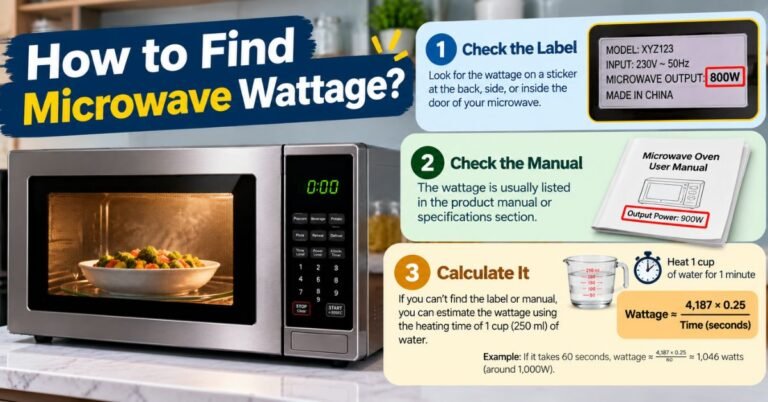
For imported equipment, check the rating plate before use. Look for:
- Input voltage
- Frequency
- Power consumption
- Manufacturer information
- Required certification or conformity marks
- Installation instructions
Do not rely only on the plug shape. The electrical rating is the deciding factor.

Are microwave ovens safe to use?
A working microwave oven is generally considered safe when it is used as directed and kept in good condition. The US Food and Drug Administration regulates microwave ovens sold in the United States and sets limits for microwave radiation leakage.
The FDA explains microwave oven radiation and safety. The agency states that microwave ovens must meet a federal performance standard and that the energy is not the same as ionizing radiation from X-rays.
A microwave heats food by producing electromagnetic energy that makes certain molecules, especially water molecules, move. This movement produces heat. It does not make food radioactive.
Still, safe use matters. The main risks from microwave ovens are usually burns, fires, damaged equipment, and uneven heating—not a secret radiation effect.
Follow these basic rules:
- Do not operate the oven when the door, hinges, or seals are damaged.
- Do not bypass the door safety switch.
- Do not run the oven empty unless the manual allows it for a specific function.
- Use containers labeled as microwave-safe.
- Never heat sealed containers without venting them.
- Do not heat eggs in their shells.
- Use care with hot liquids, which can become superheated and erupt when moved.
- Stir and rest food when needed to reduce cold spots.
- Follow special instructions for infant formula and other sensitive foods.
- Keep the oven clean and remove grease buildup.
A damaged door does not mean the appliance is automatically leaking dangerous radiation. It does mean the oven should not be used until a qualified technician checks it or the appliance is replaced.

Why do some people think microwaves are dangerous?
The concern often comes from three different ideas being blended together:
Microwave energy is not the same as nuclear radiation
“Radiation” is a broad term. Radio waves, visible light, infrared heat, X-rays, and gamma rays are all forms of electromagnetic radiation, but they do not have the same energy or effects.
Microwave ovens use non-ionizing radiation. X-rays use ionizing radiation, which has enough energy to remove electrons from atoms. The two should not be treated as interchangeable.
Heating can change food
Microwave heating can change the temperature, texture, and chemical makeup of food, just as boiling, baking, grilling, or frying can. The fact that food changes during cooking does not show that microwave cooking is uniquely harmful.
The nutritional effect depends on the food, cooking time, temperature, and amount of water used. In some cases, quick microwave cooking may preserve certain nutrients better than longer cooking methods. In other cases, overheating can reduce quality. The result is food-specific.
Uneven heating can create a real safety issue
Microwaves may heat food unevenly. This matters most for foods that can carry harmful bacteria, such as leftovers, meat, poultry, and some ready-to-eat meals.
Use a food thermometer when safety depends on the internal temperature. Stir food, rotate it when possible, cover it as directed, and let it stand after heating. The outside of a dish may feel hot while the center remains cold.
How can you check whether a claim about a microwave ban is true?
When you see a claim that a country banned microwaves, check the wording and the source before sharing it.
1. Identify the country and time period
Ask whether the claim concerns:
- Modern Russia
- The former Soviet Union
- A different country
- A short-term rule
- A military or workplace policy
- A product import restriction
- A nationwide consumer ban
These are not the same thing.
2. Look for the original law
A real nationwide ban should have a government notice, regulation, court record, or official publication. An article that only links to another article is not strong proof.
3. Check whether the source names a real document
Look for:
- The document title
- The issuing authority
- The date
- The legal number
- The exact wording
- An archive or official copy
A vague reference to “Soviet research” does not establish a ban.
4. Separate safety standards from prohibition
A country may limit radiation leakage, require product testing, or control imports. Those actions regulate an appliance. They do not necessarily ban it.
5. Check ordinary market evidence
If microwaves are widely sold by appliance retailers, used in homes, and covered by local manuals and repair services, that is strong practical evidence against a current nationwide ban. It does not replace a legal source, but it helps expose a misleading claim.
6. Watch for repeated wording
Viral posts often copy one another. Ten websites repeating the same paragraph may represent one unsupported source, not ten independent confirmations.

Could a microwave be restricted without being banned?
Yes. A microwave may be restricted in a specific setting without being illegal for household use.
Examples include:
- A landlord limiting appliances in a rental unit
- A workplace banning personal cooking devices
- A dormitory restricting high-power appliances
- A customs rule affecting a particular imported model
- A retailer refusing to sell a model without local certification
- A building limiting equipment because of wiring capacity
- A manufacturer recalling a defective product
These are narrow restrictions. They should not be described as a national ban unless the rule applies across the country.
The same distinction applies in the United States. A city, building, employer, or school may restrict an appliance even though the appliance is legal nationwide.
Can Americans use a Russian microwave in the United States?
Usually, not without checking the electrical rating first.
A typical US household outlet provides about 120 volts at 60 hertz. Russia commonly uses about 220 volts at 50 hertz. A Russian microwave designed only for 220 volts should not be plugged directly into a US outlet.
A voltage converter may also be unsuitable. Microwave ovens can draw substantial power, especially when starting or operating at full output. A small travel converter may overheat or fail.
Before importing or using one:
- Read the rating plate.
- Check whether the appliance supports 120 volts, 220 volts, or both.
- Check the required frequency.
- Confirm the converter's continuous and peak power rating.
- Ask a qualified electrician if the information is unclear.
- Do not use a damaged cord, plug, or case.
In most cases, buying a microwave made for the local electrical system is safer and simpler than adapting a high-power imported appliance.

Common mistakes when discussing the Russia microwave claim
The most common mistake is treating an unsupported historical story as current law.
Other errors include:
- Calling the Soviet Union “Russia” without explaining the difference.
- Treating a technical safety rule as a ban.
- Assuming a lack of one online source proves a legal fact.
- Using a retailer listing as the only evidence.
- Confusing microwave radiation with ionizing radiation.
- Claiming that microwaved food becomes radioactive.
- Ignoring voltage differences when discussing imports.
- Treating a damaged appliance as safe because the oven still heats.
A careful answer uses the narrowest claim supported by evidence: there is no credible basis for saying that microwave ovens are generally banned in modern Russia.

Frequently asked questions
Are microwaves illegal in Russia?
No. Household microwave ovens are not generally illegal in Russia. They are sold and used under electrical, product, and safety requirements.
Did the Soviet Union ban microwaves in 1976?
The widely repeated claim is not supported by a clearly documented nationwide Soviet ban. Some posts cite alleged rules or research without providing an original government document. The claim should not be treated as established fact.
Does Russia ban microwave radiation?
No general ban on microwave radiation exists in the sense claimed by viral posts. Microwave energy is used in communications, industry, medicine, and household appliances. Devices remain subject to technical and safety controls.
Does microwaving food make it radioactive?
No. Microwave ovens heat food with non-ionizing electromagnetic energy. They do not turn food into a radioactive substance.
Are microwave ovens safer in the United States than in Russia?
There is no basis for a broad claim that one country's household microwaves are inherently safer. Safety depends on the appliance's design, certification, condition, installation, and use.
Should I stop using my microwave?
Not because of the Russia rumor. Stop using it if the door or seal is damaged, the oven sparks, it smells like burning, the cord is damaged, or it shows other signs of electrical failure. Replace it or have it checked by a qualified technician.
Bottom line
Microwave ovens are not banned in Russia. The claim usually comes from an unsupported or distorted story about the former Soviet Union and a supposed 1976 ban. Modern Russian microwave ovens are regulated like other electrical appliances, and normal safe-use rules apply.
For a US reader, the practical issue is not the rumor. It is whether the appliance is in good condition and rated for the local voltage and frequency.